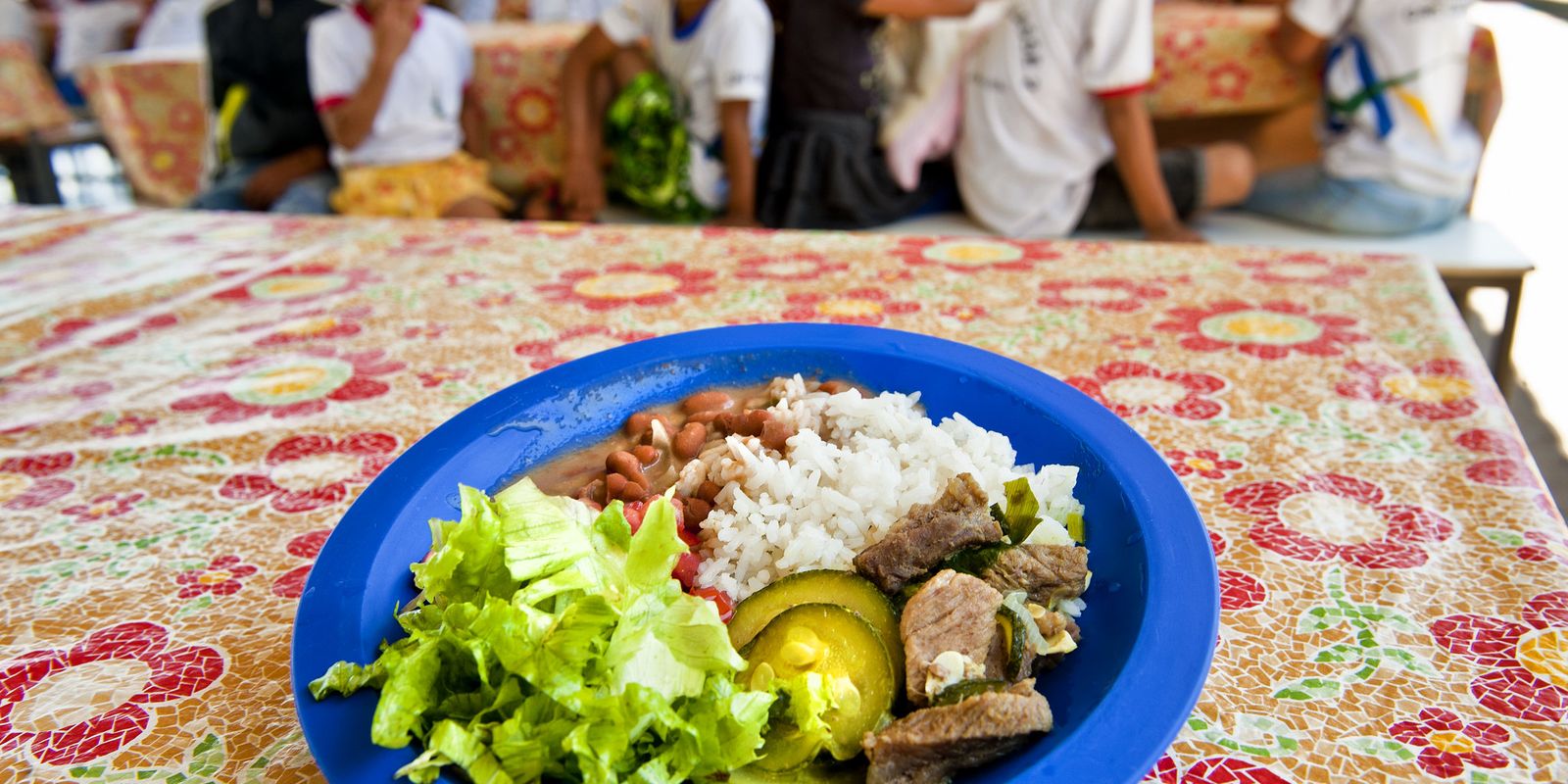
A report by the United Nations Education, Science and Culture (UNESCO) released this September reinforces the importance of improving the quality of meals served in schools. Although almost half of children in the world have access to school feeding, the organization warns that there is still not enough attention to the nutritional value of the food offered.
The document argues that it is necessary to prioritize balanced meals, prepared with fresh products and accompanied by food education actions. It also shows that school meals can increase enrollment and 8% school attendance by up to 9%, as well as improve pedagogical performance.
The report warns of the direct relationship between lack of monitoring and discharge of childhood obesity, which has more than doubled since 1990, while growing global food insecurity.
The publication “Education and Nutrition: Learning to eat well”, Produced in partnership with the Health and School Nutrition Research Consortium, highlights that in 2022 almost a third of school meals did not have the participation of nutritionists in planning. Only 93 of the 187 evaluated countries had standards to regulate food in schools – and only 65% of them controlled the sale of products in canteens and automatic machines.
“UNESCO understands that the largest supply of food fresh It can go through greater appreciation of family farming and local culture. It is a matter of regional identity, the appreciation of the small farmer, to maintain the resource in the community and make the economy circulate in the region. All this based on a healthy eating, “says Lorena Carvalho, UNESCO Education Officer in Brazil.
Positive examples
Among the highlighted initiatives is the National School Feeding Program (PNAE) in Brazil, which began to restrict the use of ultra -processed. For the numbers to advance more, UNESCO advocates greater monitoring of the government.
“Brazilian law no longer allows the high incidence of ultra -processed foods in school feed, so I believe it is necessary to have more supervision,” adds Lorena.
“They are easier products to conserve. They are valid for greater validity. So the risk of spoiling in the canteen is lower. School feeding is an investment. And some secretariats invest their own resources, do not use FNDE’s resources exclusively [Fundo Nacional de Desenvolvimento da Educação]”He added.
In China, the inclusion of vegetables, milk and eggs in rural schools has expanded nutrient intake and school attendance. In Nigeria, the school feeding program based on local production increased by 20% enrollment in primary education. UNESCO also cites experiences in India, where the introduction of fortified millet in school meals has improved the attention and memory of adolescents.
Next Steps
The organization argues that governments prioritize fresh and local foods, reduce ultra -processed products and include food education in school curricula. Still in 2025, practical tools and training programs focused on public managers and educators will be launched.
The report is part of the global monitoring of education (GEM), which follows the advances of countries in relation to sustainable development objectives (ODS 4), on quality education.