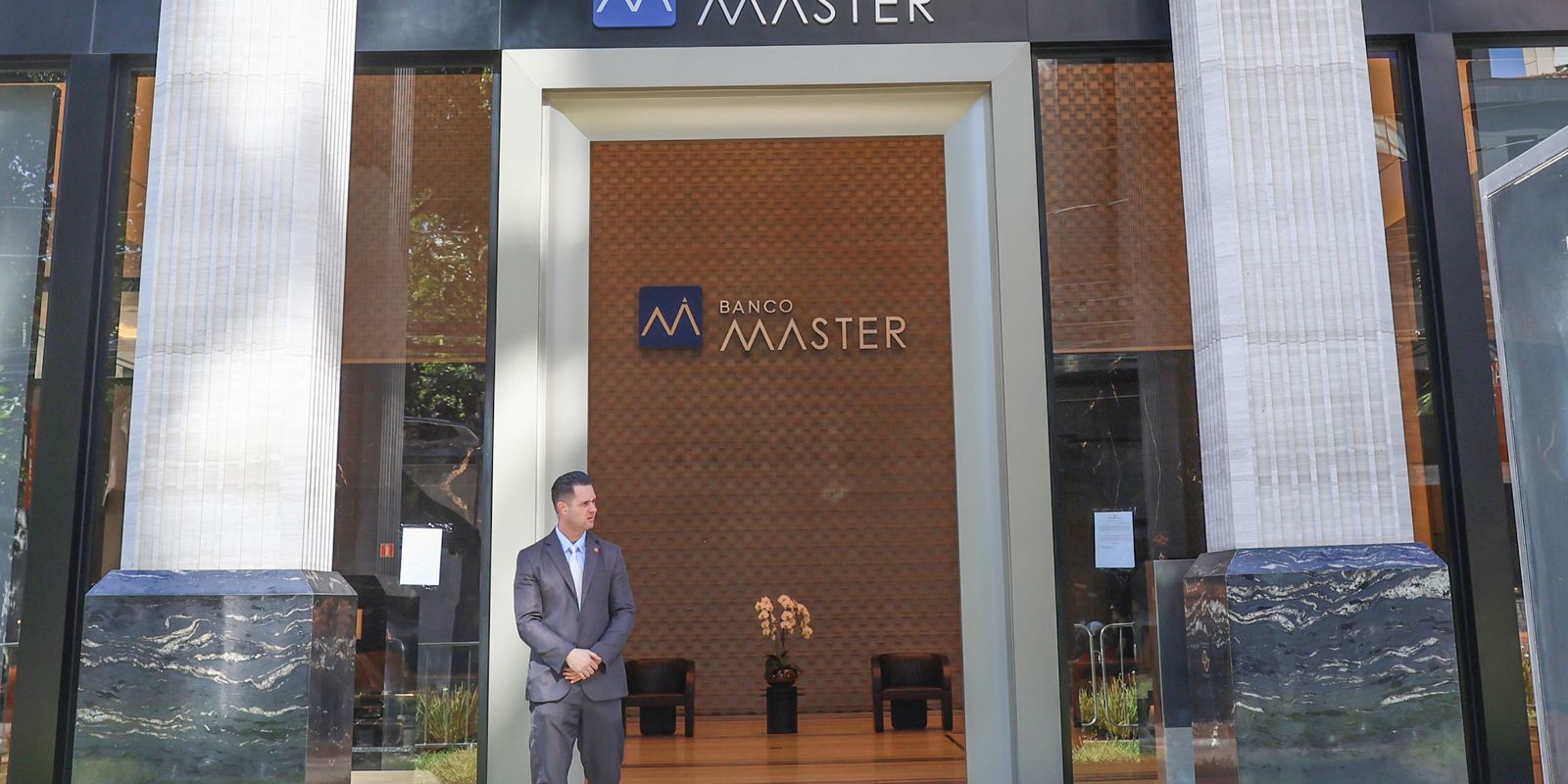
Master Bank settlements, decreed by the Central Bank (BC) in November 2025, and from investment manager Reagon Thursday (15) revealed one of the most serious episodes in the Brazilian financial system. The case involves suspected billion-dollar fraud, use of investment funds to hide losses, rescue attempts via a public bank and tensions between the Federal Supreme Court (STF) and the Federal Audit Court (TCU) with the BC and the Federal Police (PF).
Controlled by banker Daniel Vorcaro, Master grew quickly by offering Bank Deposit Certificates (CDB) with profitability well above the market average. To support the model, according to investigators, the bank began to take excessive risks and structure operations that artificially inflated its balance sheet, while real liquidity (money immediately available to reimburse investors) deteriorated.
PF investigations and BC reports indicate that Master’s collapse was not only financial, but also institutional. The connection with the manager Reag Investimentos, the attempted sale to Banco de Brasília (BRB) and the pressure on control bodies transformed the case into a complex chess game, with a direct impact on investors and the credibility of institutions.
1. How the financial scheme worked
- Between 2023 and 2024, Master would have diverted around R$11.5 billion through triangulations.
- The bank lent resources to supposedly orange companies that invested the money in funds from the Reag Investimentos management company.
- These funds purchased assets of low or no real value, such as certificates from the extinct Banco Estadual de Santa Catarina (Besc), at inflated prices.
- Central Bank identified six suspicious Reag funds, with combined assets of R$102.4 billion.
- Money circulated between funds linked to the same intermediaries until it reached the final beneficiaries.
2. Pyramid scheme
- To postpone default, the bank granted loans with a grace period of up to five years.
- New CDBs were used to pay old investors, characterizing a Ponzi scheme (financial pyramid).
- Master even offered CDBs of up to 140% of the Interbank Deposit Certificate (CDI) rate, a level considered unsustainable.
- With the first suspicions about the bank’s credibility in 2024, funding dried up and the cash flow collapsed.
3. Sale of portfolio to BRB
- In search of liquidity, Master simulated the purchase of a credit portfolio worth R$6 billion from the company Tirreno.
- Operation existed only in accounting terms, without payment or real credit.
- BC analyzed the portfolio’s CPFs and concluded that the operations did not exist.
- The same portfolio was resold to BRB for R$12 billion after manipulating the interest rate.
- In September, the Central Bank blocked the attempt to sell part of Banco Master to BRB.
- Master’s proposed sale to BRB, according to the investigation, sought to merge balance sheets and dilute fraud in a public bank.
4. Intervention and liquidation
- Central Bank limited Master funding to 100% of the CDI, paralyzing growth.
- Since April 2025, the Credit Guarantee Fund (FGC) has started to cover overdue CDBs through an emergency line.
- Controller tried to raise funds by selling personal assets, without success.
- The bank was liquidated when it was unable to pay even 15% of its weekly wages.
5. Role of Reag Investimentos
- Funds managed by Reag appear as a central piece in supporting the scheme.
- Reag is suspected of facilitating the formation of orange companies to lend to funds
- Funds are being investigated for allegedly valuing fictitious assets and dispersing resources.
- The subsequent liquidation of the manager by the BC is seen as a direct consequence of the Master case.
- After the second phase of Operation Compliance Zero, BC decrees the liquidation of Reag Investimentos
6. Tension between public bodies
- Although it concentrates only 0.5% of the financial system’s assets, the Master’s liquidation triggered tensions between public bodies.
- Settlement generated simultaneous questions in the STF, TCU and Congress about BC’s technical decisions.
- BC reached an agreement with TCU to inspect documents, as long as they do not compromise banking secrecy and the prerogatives of the monetary authority.
- Minister Dias Toffoli, from the STF, who took on legal actions related to the Master, tried to make a confrontation that would include the BC’s Director of Inspection, but gave up and ordered the PF to collect only additional statements from Vorcaro and the former president of the BRB.
- After determining that all the material seized by the PF in Operation Compliance Zero would be kept in custody at the STF, Toffoli authorized the analysis by the Federal Police, with support from the Attorney General’s Office.
7. Impact on customers
- With the liquidation of the Master, it is up to the FGC, a fund formed by bank resources, to reimburse around 1.6 million customers.
- FGC estimates it will disburse around R$41 billion, around a third of the fund’s assets.
- The amount is the largest redemption in the history of the fund, limited to R$250,000 per CPF or CNPJ.
- Payment depends on the consolidation of the list of creditors by the liquidator, which has not yet been done two months after the liquidation.
- Reag funds do not have FGC protection, but shareholders can choose another manager to manage resources.
- 18 state and municipal pension funds that invested R$1.86 billion in Master funds and Letras Financeiras will not be reimbursed because these investments are not covered by the FGC
8. Why is this case historic?
- Episode exposed oversight failures, misuse of funds and pressure on institutions.
- Scandal raises doubts about audits, rating agencies, which attested to Master’s financial health, and the limits of financial supervision.
- The case should become a reference for regulatory changes and the debate on governance in the financial market.