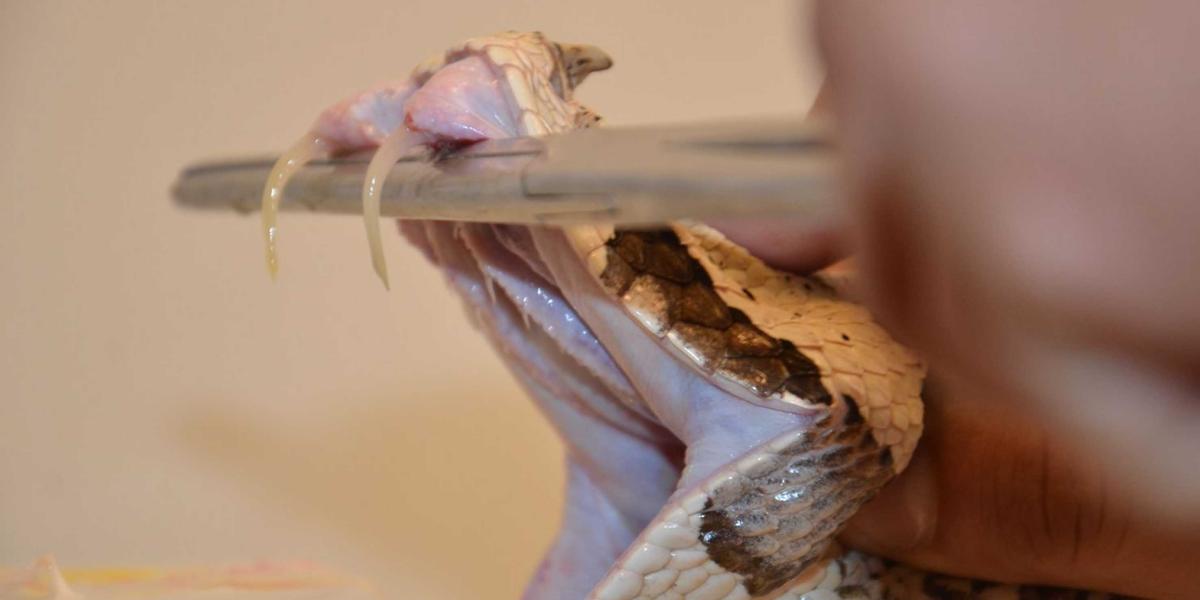
Scientists from the National Autonomous University of Mexico (UNAM) participated in the design of a antidote against snakebite, which is based on antibodies and surpasses current products because it protects against cobras, mambas and rinkhals, some of the most lethal species in Africa.
The members of the Institute of Biotechnology (IBt) of the National University, Edgar Neri Castro, Alejandro Alagón Cano and the master’s student Alid Guadarrama Martínez, published the research in the journal Nature under the name “Nanobody-based recombinant antivenom for cobra, mamba and rinkhals bites”.
Shirin Ahmadi and Nick J. Burletfrom the Technical University of Denmark, presented the study led by Andreas H. Laustsen, laboratory leader at that institution. 33 scientists from different countries participated in the project, with the collaboration of Melisa Benard Valle, who did her postgraduate studies at this university entity and currently works in Denmark.
Attack the problem
According to Neri Castro, snake bites cause thousands of deaths and disabilities as it is an unaddressed problem, mainly in low-income communities.
So big is the problem that the World Health Organization (WHO) recognizes it as one of the 21 neglected tropical diseases; However, snakebites kill more people than all other untreated diseases combined.
Each species of snake generates a different mixture of toxins that attack the nerves, tissues or blood, a situation that complicates the creation of an efficient treatment for all, making the diversity of the venom complicate the treatment.
This means that antivenoms are limited by batch variation, in addition to causing side effects, but, above all, there is a lack of broad coverage of snake species.
Advantages over other antidotes
The antidote is based on engineered and improved nanobodies in the laboratory using antibodies from alpacas and llamas, an approach that surpassed traditional antidotes by preventing the destruction of body cells and tissues in animal models, avoiding their death and reducing local necrosis, one of the effects of snake bites that are most forgotten in medicines.
In the future, its manufacturing can be done without animals involved, since it was made in the laboratory; This situation helps make the product more affordable and proves that a small, defined mixture of antibodies is capable of replacing other animal plasma products, which validates a modular platform.
The next thing will be optimize your mass creation and move towards clinical application, making them achievable in the field. With this, it is demonstrated that biotechnology transforms the treatment of snake bites, achieving safer, more effective therapies within the reach of those who need them most, saving lives.