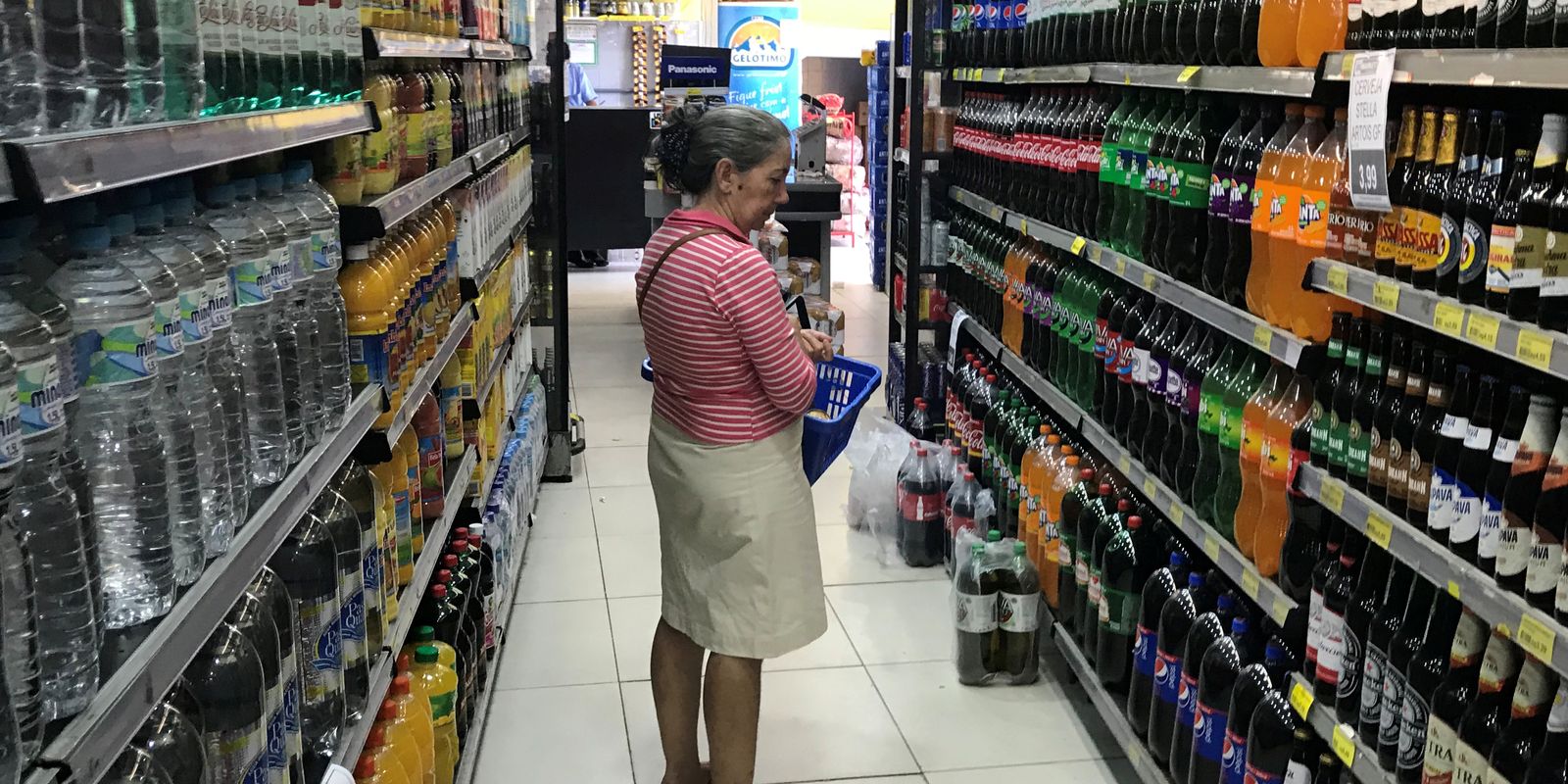
The share of ultra-processed foods in Brazilians’ diets has more than doubled since the 1980s, rising from 10% to 23%. The warning comes from a series of articles published this Tuesday (18) by more than 40 scientists, led by researchers from the University of São Paulo (USP). 
The collection published in the Lancet magazine shows that this is not an isolated phenomenon in Brazil. Data from 93 countries show that the consumption of ultra-processed foods has increased over the years in all countries, with the exception of the United Kingdom, where it remained stable at 50%. The European country is only surpassed in this proportion by the United States, where ultra-processed foods make up more than 60% of the diet.
Carlos Monteiro, researcher at the Center for Epidemiological Research in Nutrition and Health (Nupens) at USP and leader of the work, warns that this growing consumption is restructuring diets around the world, and it does not happen by chance:
“This change in the way people eat is driven by large global corporations, which make extraordinary profits by prioritizing ultra-processed products, supported by strong marketing strategies and political lobbying that block public policies to promote adequate and healthy eating.”
In thirty years, this consumption tripled in Spain and North Korea, reaching rates of approximately 32% also in China, where the share of ultra-processed foods in family purchases was just 3.5%, rising to 10.4%. In Argentina, the increase was smaller over the same period, but went from 19% to 29%.
The articles highlight that the increase was noticed in low, middle and high income countries, with the latter already starting from high levels, while nations with lower incomes registered more significant increases.
According to the researchers, this reproduces a pattern also perceived within countries: ultra-processed foods began to be consumed by people with higher incomes, but later spread among other audiences.
The researchers emphasize, however, that the problem is multifactorial, influenced by income, but also by cultural issues. Some high-income countries have a significant consumption rate, such as Canada, with 40%, while other nations, with a similar pattern, such as Italy and Greece, remain below 25%.
The report recalls that these products became common in some high-income countries after the Second World War, but they became a global phenomenon, and their consumption accelerated, starting in the 1980s, with globalization. In parallel, global rates of obesity and diseases such as type 2 diabetes, colorectal cancer and inflammatory bowel disease have also increased.
Scientific evidence produced over this time indicates that diets rich in ultra-processed foods are associated with excessive calorie intake, worse nutritional quality and greater exposure to additives and harmful chemicals. Additionally, researchers did a systematic review of 104 long-term studies and 92 of them reported increased risk of one or more chronic diseases, including cancer, cardiovascular and metabolic diseases.
“The body of evidence supports the thesis that the replacement of traditional dietary patterns with ultra-processed ones is a central factor in the global increase in the burden of multiple diet-related chronic diseases,” explain the scientists. They say research into human health effects will continue, but this should not delay public health policies and actions at all levels “aimed at restoring, preserving, protecting and promoting diets based on whole foods and their preparation as dishes and meals, which are long overdue,” the scientists emphasize.
What are ultra-processed foods?
The term “ultra-processed” began to become popular after the creation of the new classification by Brazilian researchers in 2009. It divides foods into four groups, according to the degree of modification, after going through industrial processes:
- Unprocessed or minimally processed foods are sold in their natural form, or only after some process that maintains their basic structure, such as freezing, fractionation, grinding, packaging, etc. Examples: fruits and vegetables; packaged meats and fish, grains and cereals.
- Processed ingredients. They are produced from fresh foods and generally used in the preparation of other foods. Examples: soybean oil, sugar and salt.
- Processed foods: These are products from group 1, added to ingredients from group 2 or modified using methods similar to homemade ones. For example: canned vegetables and fish, pasta, 100% fruit juices, etc.
- Ultra-processed foods: commercial products resulting from the mixture of cheap fresh foods with chemical additives, highly modified by industrial processes. These additives have the function of making them highly durable, ready to eat and super palatable. Example: stuffed cookies, soft drinks, instant noodles and flavored yogurts.
The creation of the new classification was also headed by Carlos Monteiro, leader of the global report published this Tuesday. He reinforces that the objective of the classification is to facilitate understanding of “how processing affects the quality of our diet and our health” and contribute to the creation of guidelines, such as the Brazilian Population Food Guide, created by Nupens for the Ministry of Health, which incorporated the new classification in its second edition.
“For 20 years studying changes in food production in Brazil, linked to the increase in obesity, we realized that food processing had changed its purpose. It stopped being about preserving food and became about creating substitutes for food, made from cheap ingredients and additives”, he highlights.
Recommendations
The researchers also present proposals to reduce the consumption of these products and call for large companies to be held responsible for the role they play in promoting unhealthy diets. One of the main recommendations is that the additives used, such as colorings and flavorings, be marked on the packaging, as well as excess fat, salt and sugar.
Another measure considered essential is the prohibition of these products in public institutions, such as schools and hospitals. At this point, Brazil is cited as an example, because of Brazil’s National School Feeding Program (PNAE), which has been reducing the supply of these products and established that 90% of food offered in schools must be fresh or minimally processed, starting next year.
The authors also propose stricter restrictions on advertising, especially those aimed at children, and highlight that, in parallel with the reduction in the supply of ultra-processed foods, it is necessary to increase the availability of fresh foods. One suggested strategy is the surcharge on certain ultra-processed foods to finance fresh food intended for low-income families.
The series of publications also reinforces that the increase in consumption of these foods is not the fault of individual decisions, but the responsibility of large global corporations. According to the authors, these companies use cheap ingredients and industrial methods to reduce costs, and drive consumption with aggressive marketing and attractive designs.
With annual global sales of US$1.9 trillion, ultra-processed products represent the most profitable sector of the food industry. These profits, according to the researchers, “fuel the growth of corporate power in food systems, allowing these companies to expand their production, political influence and market presence, shaping diets on a global scale.”