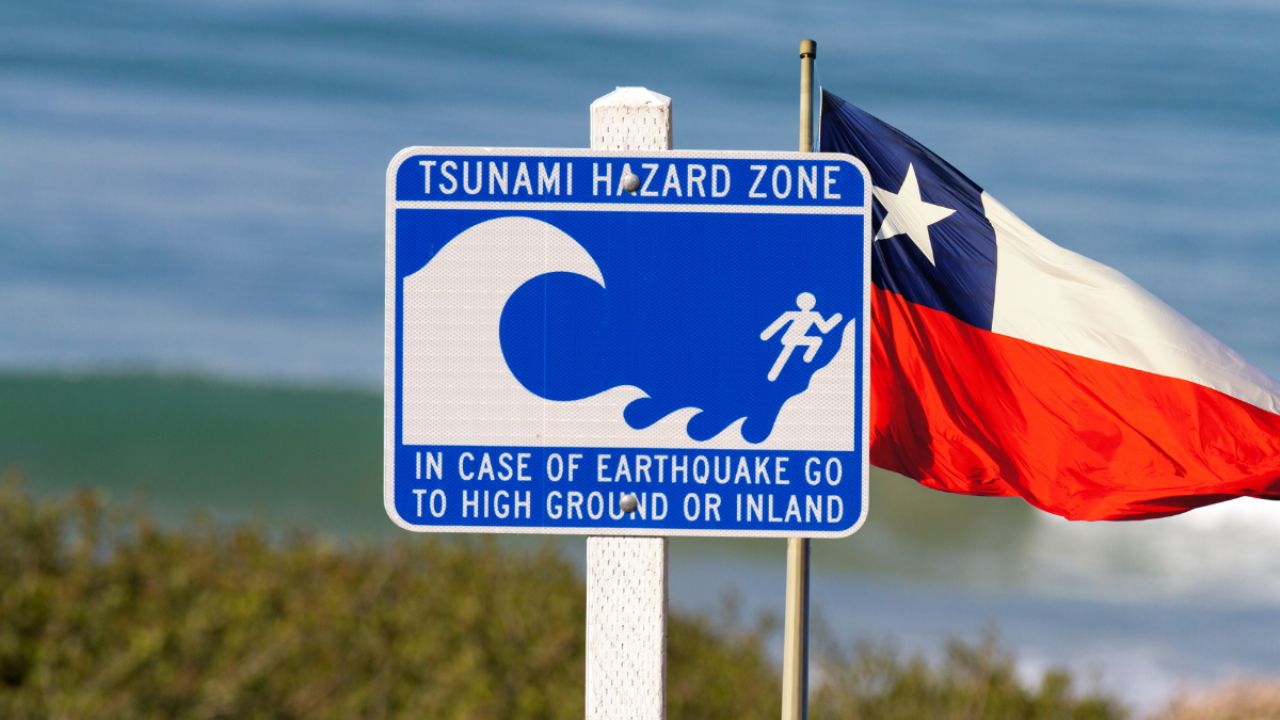
The early morning of this Wednesday, July 30, a Earthquake Of great magnitude in the Russian Peninsula of Kamchatka lit the alarms throughout the Pacific coast. The telluric movement, which reached a magnitude of 8.8, activated an alert of tsunami In several countries, including Chile. From the early hours of the day, the National Disaster Prevention and Response Service (Senapred) began to coordinate preventive evacuations on the Chilean coastal edge.
According to the Hydrographic and Oceanographic Service of the Navy (SHOA), it is estimated that the first waves could impact the Chilean coast on different times, depending on the location. On Easter Island, the arrival of the tsunami Around 9.25 (local time), while in the continent, the first records would be given after 14.00. The areas of Arica, Iquique, Pisagua and Patache are already under intensive surveillance.
What is known until now
The authorities have reported that the waves could have a height of between 1 and 3 meters. Although giant waves are not expected such as those shown in films, specialists insist on not underestimating the phenomenon. Geophysicist Cristián Farías explained that this type of tsunamis They can cause significant damage due to the energy with which the sea enters the continent.
The Easter Island It was the first to activate evacuation sirens. From very early, the inhabitants began to go to high areas, following the protocol already established for these cases. The journalist René Campusano, from the island, said that the atmosphere was of calm and organization. “The community is trained to react to this type of emergencies,” he said.
From Santiago, the president Gabriel Boric He led a National Committee meeting for disaster risk management. Together with technical and security agencies, the president reaffirmed the importance of complying with the official indications. “Our priority is to protect human lives,” he said in a transmission from the currency.
Although the alert keeps a large part of the coastal population, Chili It has a solid experience in the management of events of this type. From the devastating earthquake of 2010, monitoring systems have been strengthened and a culture of prevention has been promoted that today is tested.