For Jorge León, head of geopolitical analysis at Rystad Energy, these blows to the economy will not guarantee a regime change, but he admits that it is possible that social peace in Venezuela will be affected.
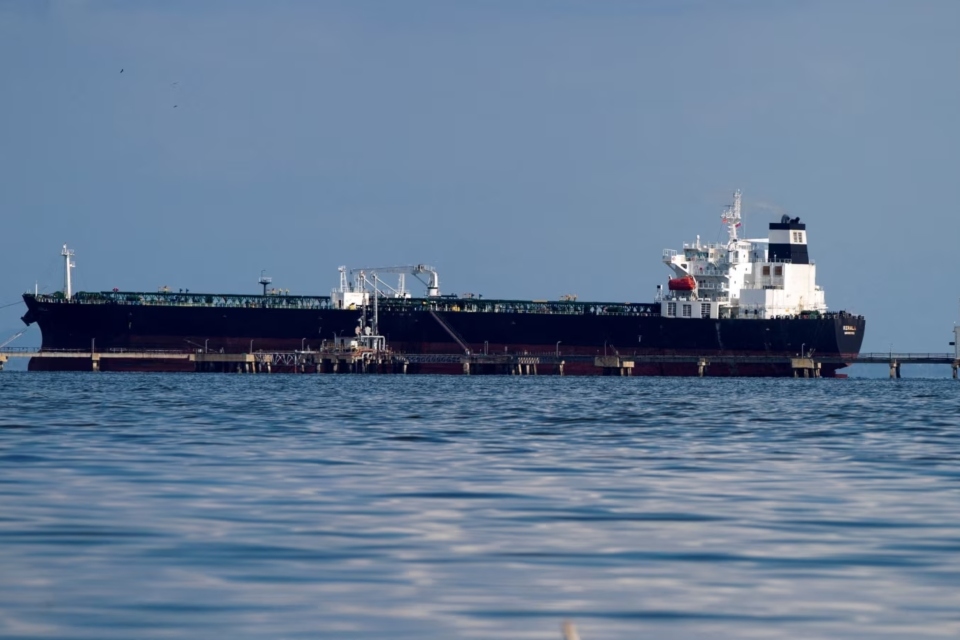
US President Donald Trump ordered a naval blockade of sanctioned oil tankers that have Venezuelan soil as their origin or destination, something that according to analysts, could affect the economy of the South American country, which is highly dependent on oil.
US President Donald Trump announced on Tuesday a naval blockade of “sanctioned oil tankers” leaving or heading to Venezuela, in a new escalation of his pressure campaign on Caracas.
“Today I am ordering a total and complete blockade of all sanctioned oil tankers entering and leaving Venezuela,” Trump wrote on his Truth Social platform, days after US forces seized an oil tanker off the Venezuelan coast.
Venezuela exports around 750,000 barrels a day, explains Jorge León, head of geopolitical analysis at Rystad Energy, who highlights that of that figure, about 550,000 barrels a day go mainly to China and the largest amount of this flow of Venezuelan oil to China was used in what is called the ghost fleet.
“Right now there is a physical blockade. The ghost fleet cannot pass, it cannot export those flows. Therefore, the impact on the real economy of Venezuela can be devastating,” said León, highlighting Venezuela’s dependence on oil both for earning foreign currency and for economic generation.
*Read also: Maduro Administration denounces to the UN naval blockade of Venezuela ordered by Trump
For the analyst, these blows to the economy will not guarantee a regime change, but he admits that it is possible that social peace in Venezuela will be affected. “The problem with these situations is that one cannot know how it is resolved in an eventual breakdown of social peace,” he added.
It should be noted that the North American sanctions are specifically against Venezuela and the sanctioned ships, but the rest of the countries may or may not accept these sanctions. However, León assures that if they do not accept, the price is very high.
“If they do not accept, they have consequences in the American market and in the case of Chevron, for example, in the case of Eni, the Italian oil company, they have clearly decided that it is not worth continuing to produce in Venezuela because that closes the doors to the American market and the use, for example, of American dollars, by the international monetary system. That is very important,” he indicated.
*Journalism in Venezuela is carried out in a hostile environment for the press with dozens of legal instruments in place to punish the word, especially the laws “against hate”, “against fascism” and “against the blockade.” This content was written taking into consideration the threats and limits that, consequently, have been imposed on the dissemination of information from within the country.
Post Views: 303