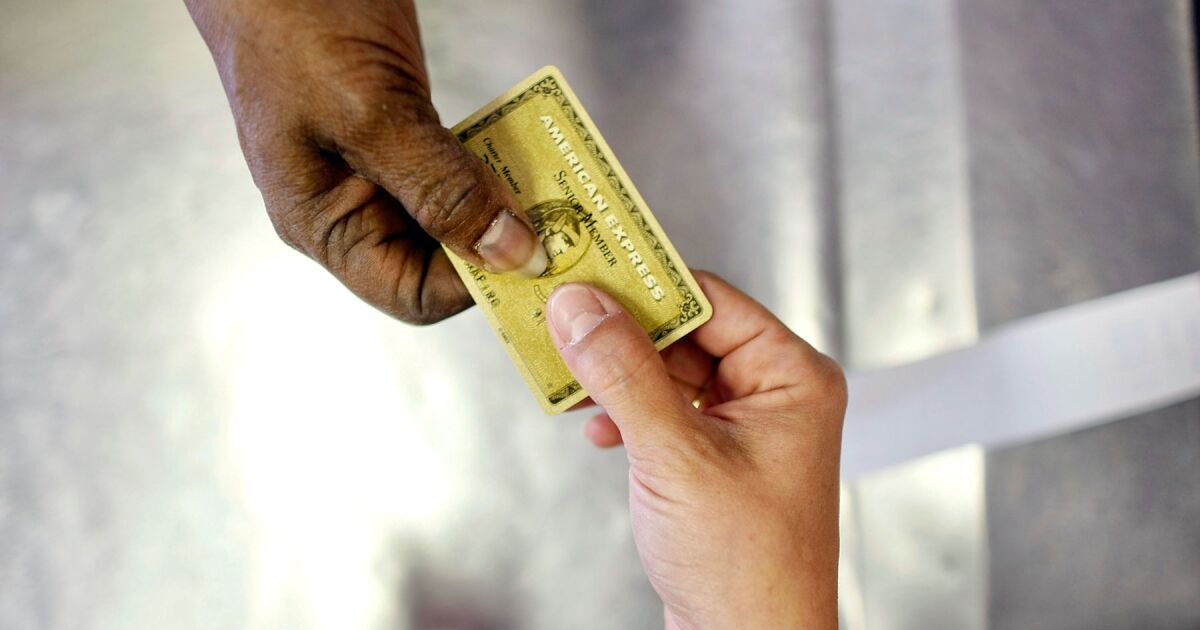
Gonzali highlighted that another consequence is that although cardholders will momentarily feel relief in paying interest, when they want to look for a new card they will find that banks will no longer lend them money and will turn to other less regulated or illegal schemes.
“The other options that are unregulated or less regulated are going to be worse,” he said.
On the other hand, people who do pay on time will lose benefits that banks usually give such as points or cashback.
An analysis by the Vanderbilt Policy Accelerator research center indicates that capping card rates at 10% means savings of $100 billion, although it would also imply a reduction of $27 billion in customer rewards.
“So, something that seems very good in the end could affect issues of banking, financial inclusion and even issues related to promoting consumption,” Vértiz added.
Although President Trump set a deadline of January 20 for banks to implement this rate cap, if from this Wednesday the banks ignore it, they are not breaking the law either, since this initiative must be approved by Congress.
The largest banks, by assets, in the United States are: JP Morgan, Bank of America, Citigroup, Wells Fargo, Goldman Sachs and Morgan Stanley.
The shares of these banks have registered falls on Wall Street although Franklin Templeton estimates that a rebound in the shares could be seen if the measure is not taken to Congress.
“If at the end of the day the banks decide to do nothing and see that it was just noise, we could surely see a revaluation in the following days,” Gonzali said.
Both experts rule out that the measure of putting a cap on the interest rate on cards will have an impact on the financial system in Mexico.
“I don’t think it will have direct repercussions for Mexico,” Gonzali said.