The president of the United States, Donald Trump, reaffirmed Friday that his administration does not seek a regime change in Venezuelaalthough he launched harsh military warnings against the government of Nicolás Maduro.
In the midst of a tension escalation in the Caribbean, unprecedented in recent years, Trump said that if Venezuelan planes place US forces in a “dangerous position”, they could be demolished.
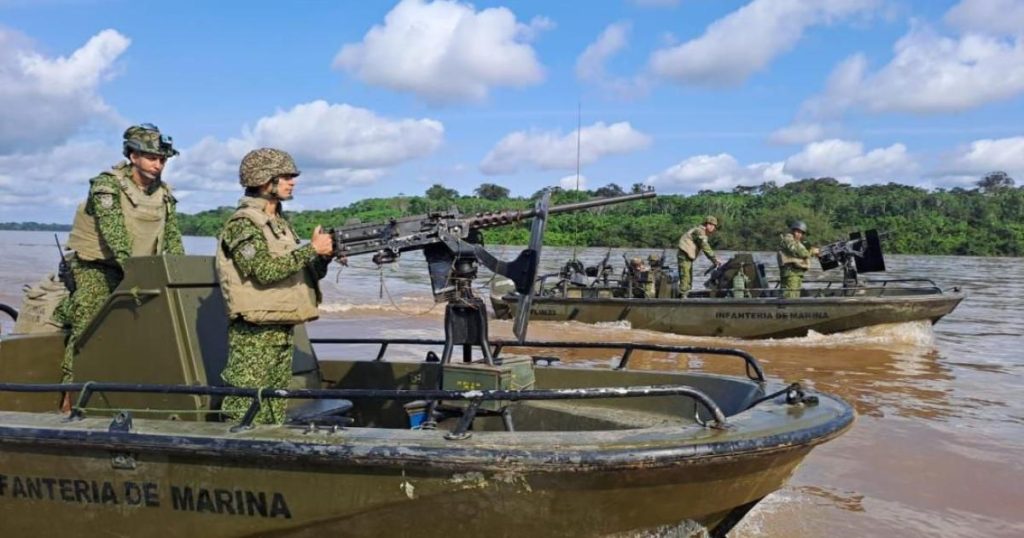
The warning occurs while the Republican Administration ordered the deployment of 10 additional F-35 furtive furtive in Puerto Rico to reinforce the military presence in the region, supposedly to combat drug trafficking.
“We are not talking about a regime change, but we are talking about the fact that you had a choice that was very strange, to put it gently,” Trump said, minimizing the idea of a direct political intervention, but reinforcing the military force over Venezuela.
Although he denied an interest in overthrowing the Venezuelan president, the US president did not hesitate to affirm that if the Venezuelan fighters put their strength at risk, they will be demolished. “
Two Venezuelan military aircraft flew near an American navy ship, according to the Pentagon
The message occurs after two Venezuelan F-16 aircraft survived the destroyer USS Jasson Dunham in International Waters of the Caribbean, to which the Pentagon described as a “provocative maneuver” to interfere with operations against drug trafficking.
In recent days, the United States attacked an alleged narcolanche linked to the train cartel of Aragua, which according to Washington has links with the Maduro regime, causing the death of its eleven crew.
Trump justified the military deployment and aggressiveness in the region, arguing that drug trafficking was causing the death of hundreds of thousands of Americans due to overdose, comparing it with military low. “He thinks you are in a war and you lose 300 thousand … we will not allow that to happen,” he said.
Maduro responds with mass mobilization and warnings of armed struggle
Faced with these threats, President Nicolás Maduro replied with a firm and mobilizing speech, ensuring that the United States must “abandon his plan of a violent regime change in Venezuela and throughout Latin America and the Caribbean” and called to respect regional sovereignty and peace.
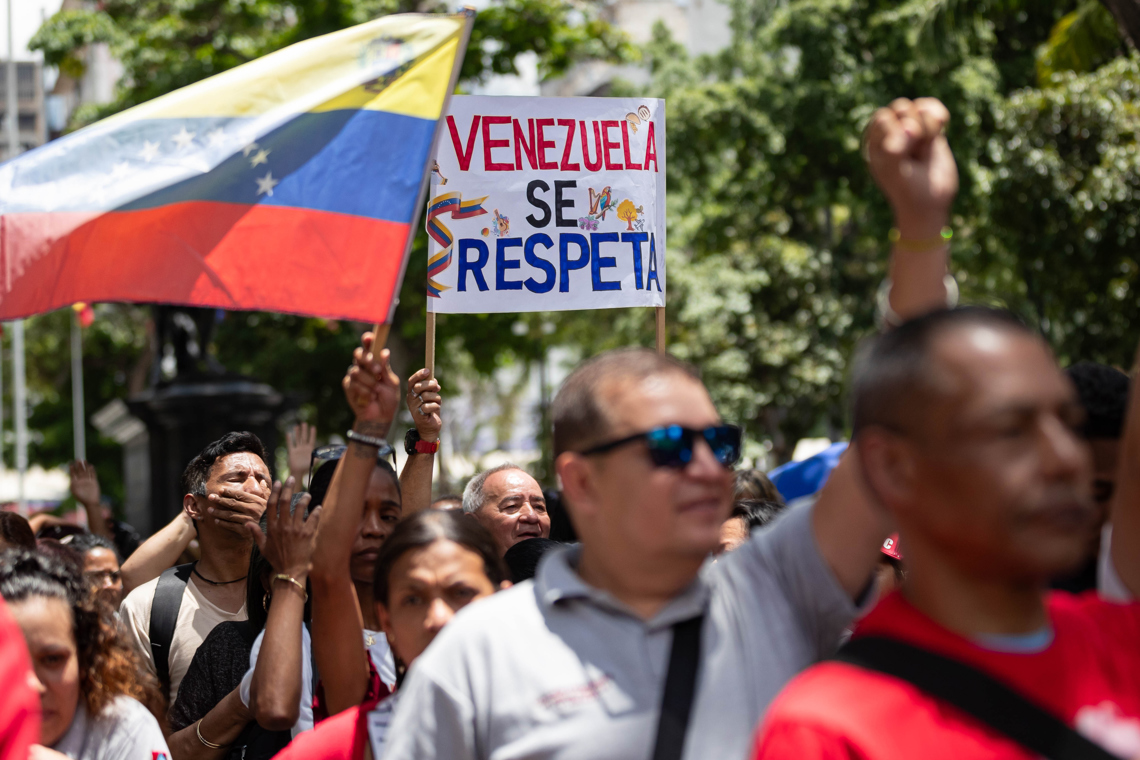
During an act of operational activation of the Bolivarian National Militia (MNB), transmitted by the state television, Maduro called on his people and militias to prepare for any aggression.
The president emphasized that Venezuela is in the political and communicational struggle phase, but warned that “if it were attacked, it would go to an armed, planned and organized staging” in defense of sovereignty, territorial integrity and peace.
As part of this strategy, Maduro announced the beginning of the first day of operational and organizational activation of the militia made up of eight million citizens. This mobilization includes induction in thousands of communal circuits to strengthen national defense against perceived external threats.
The president, who governs after a questioned elections in July 2024 in which he was a winner without showing the electoral ballots that prove it, also rejected the accusations of drug trafficking launched by Washington, qualifying them as “the greatest lie” and clarifying that Venezuela is free of production and processing of cocaine, while effectively fighting the drug trafficking in its territory.
However, in a conciliatory tone, the Venezuelan president commented: “Trump respects, none of the differences we have had can lead to a military conflict,” underlining the willingness to dialogue whenever Venezuelan sovereignty is respected.
Brazil expresses concern for tension on the border and calls peace
Within the framework of the climb, Brazil expressed its concerns about the possible affectation in its land border with Venezuela.
Washington launches offensive against drug trafficking and points to Caracas as responsible
The Brazilian defense minister, José Múcio, transmitted his concern on Friday so that this border does not become a “trench” or conflict zone.
Brazil, which defines itself as a peaceful country, has invested in its armed forces to defend its territory, but without the intention of getting involved in the Venezuelan-American conflict.
These statements were known after a meeting between President Luiz Inacio Lula da Silva and Brazilian military commanders, where the national defense position was reaffirmed without getting involved in others.
Also the foreign ministers of the Latin American and Caribbean states (CELAC) They expressed on Friday their “deep concern” against the military deployment of the United States in the region, according to a statement released by Venezuelan Foreign Minister, Yván Gil, through his Telegram channel.