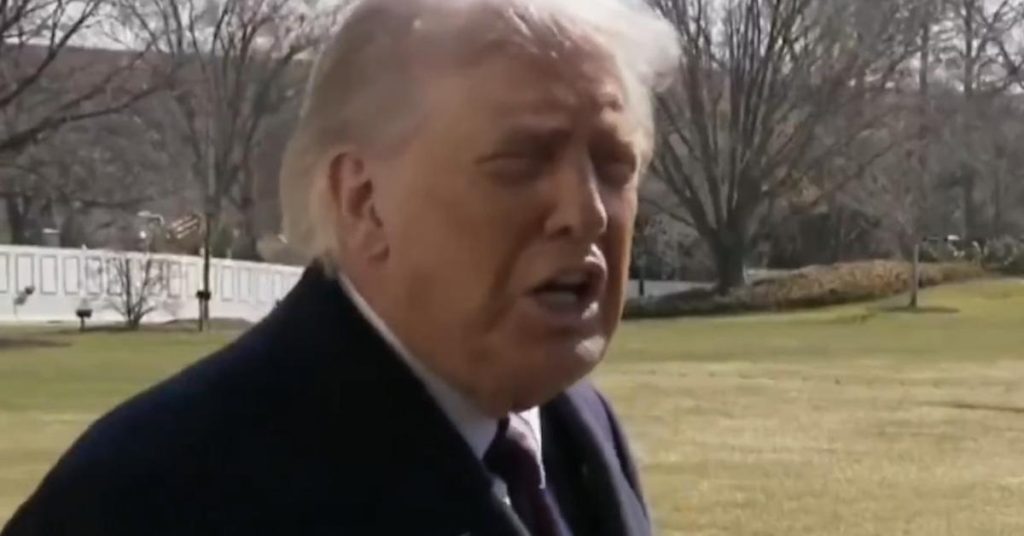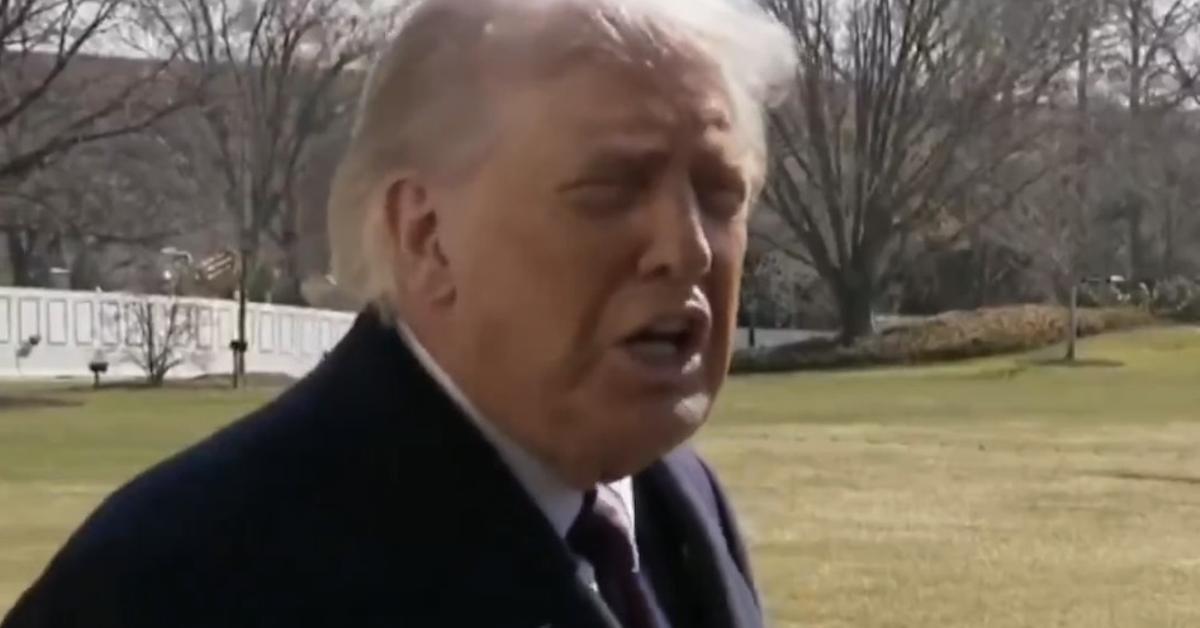
Madrid/The President of the United States, Donald Trump, confirmed this Friday that his Secretary of State, Marco Rubio, is in talks with the Cuban regime and suggested that his country could carry out a “friendly takeover” of the Island. “The Cuban Government is talking to us. They are in serious trouble. They have no money, they have nothing right now, but they are talking to us. And maybe we will have a friendly takeover of Cuba,” the president told the press. outside the White Housewith the background sound of the helicopter that was waiting for him.
Faced with the commotion of the journalists, who tried to continue asking questions, he insisted: “We could very well end up having a friendly takeover of Cuba.” Trump called the island, “to put it mildly, a failed nation.”
The president continued: “Since I was a child, I have heard things about Cuba and everyone wants to change it, I see that that can happen.” Marco Rubio, he asserted, “is taking care of it at the highest level.” And he stressed: “They don’t have money, they don’t have oil, they don’t have food, right now it is a nation in serious trouble and they want our help.”
His words confirmed what was published this Thursday by the Miami Herald: that advisors to the Secretary of State – the sources did not specify whether the Secretary of State himself – They met with Raúl Castro’s grandsonRaúl Guillermo Rodríguez alias The Crabin Basseterre, capital of Saint Kitts and Nevis, where the summit of the Caribbean Community (Caricom) was held.
“They have no money, they have no oil, they have no food, it is a nation in serious trouble right now and they want our help.”
The central topic of the conversations was, said the Miami newspaper, “the possibility of gradually relaxing US sanctions in exchange for Cuban leaders implementing changes on the island month by month.” A Caribbean diplomat confirmed to Herald that in private meetings with them, on the sidelines of the summit, “Rubio made it clear that the talks with the Cuban Government were very advanced and that they did not want to do anything that would prolong the regime,” although, according to another source, no specific agreement had yet been closed.
The main American media this Friday welcomed on their pages analysis by various experts that differ in the hypotheses of what a transition on the Island pushed by the United States would be like.
Among them, stands out the article by Michael Crowley, a reporter who usually accompanies the Secretary of State on his trips, published in The New York Timesand which exposes the opinions of several experts on the situation. Most analysts consider that Trump and Rubio advocate a gradual opening of the regime towards economic and political freedoms, more in the style of the Venezuelan option after the capture of Nicolás Maduro, although there is one voice that is out of tune: that of Jason Marczak.
An expert on Latin America at the Atlantic Council in Washington, Marczak believes that the Trump Administration could be more willing to take the risk of a chaotic transition, unlike what happened in Venezuela. The key is, he believes, in oil and the little relevance of the Island.
Faced with the need for stability that the Venezuelan oil industry demanded, Cuba has nothing beyond an isolated economy with hardly any goods to export. “Unrest there would have little economic impact beyond its shores,” he maintains.
As for Washington’s other great fear, a wave of migration, it could be alleviated with the same humanitarian aid that has already begun to be sent with the cooperation of the Catholic Church through Cáritas, adds Marczak. In his opinion, the option Delcyhas no signs of prospering: “The majority of Cubans have never lived under any regime other than the communist one.”