This is a golden opportunity to reform the system and leave it ready for the future
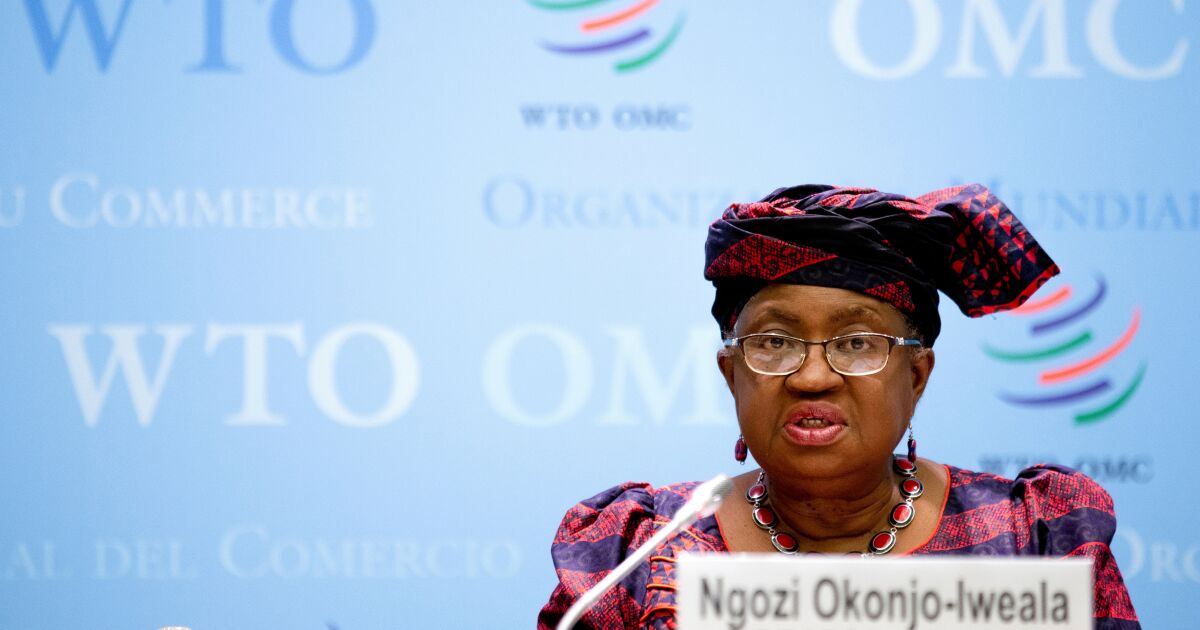
Ngozi Okonjo-Iweala, WTO general director.
The diagnosis coincides between members and experts. The WTO drags obsolete rules, blocked decisions and disputes that accumulate without exit. In almost three decades, 631 cases began and 4 out of 10 still do not have a resolution.
The United States leads the list of litigation as a plaintiff and as a defendant, followed by the European Union and China. Mexico appears with 40 disputes, some without a solution for more than 10 years.
An example is the lawsuit with China for supporting its textile industry. On October 15, 2012, Mexico requested consultations before the OMC considering that Beijing granted undue advantages to producers and exporters of clothing and fibers. The list of measured measures was long: tax exemptions, tariffs and VAT reduction to buy machinery, cheap loans from state banks, reduced electrical rates, transport support and even direct payments of government agencies.
According to Mexico, these practices functioned as prohibited subsidies that displaced national exports in the United States through low prices and loss of sales.
Until the end of 2024, panels are established in 376 disputes, with reports in 297. Of those, two thirds ended in appeals. And there appears the largest crack, because since December 2019, the appeal body does not work because the United States blocked the appointment of new judges. There are 31 cases waiting and none can advance. The system that must give certainty is paralyzed.
Beyond disputes
But Okonjo-Iweala warns that WTO cannot be reduced to being a referee of lawsuits, or tariff guard. The organism must be ready for global challenges: interrupted supply chains, subsidies that alter the competition, sustainability of the oceans and the climate challenge. As an example, the agreement reached on fishing subsidies, approved after eight years of blocking. For her, that achievement shows that the institution can still deliver results.
The director recognizes that criticisms are valid. Developing countries ask for more space to industrialize, while others demand transparent rules against agricultural subsidies. The rule of absolute consensus, where each member has veto power, has blocked key decisions.
“We need a mechanism that allows us to move forward without everything is arrested for ideological reasons,” he said in Geneva. Therefore, the next ministerial conference, number 14 in 2026, will be decisive. It will be held in Cameroon and there the Ministers of Commerce must face the political dimension: decide whether they sacrifice individual interests so that the WTO survives.
Where should the reform go?
Norwegian ambassador Petter Olberg coordinates the reform route. Has summarized the consensus in three axes: Governanceto avoid veto paralysis; equitybecause poor countries demand a fair part of commerce; and adaptationbecause climate change, artificial intelligence and economic security are already part of the commercial map.
José Viñals, former director of Standard Chartered, asks that the WTO is the anchor of global trade and win agility so that new rules are not slowed to be approved.
Paul Polman, Excueo de Unilever, goes further: “WTO must put humanity again in the center.” It proposes that each decision pass a sustainability filter and that the multilateral agreements, where a group of countries progresses and others are added later, are the way to avoid impossible consensus between almost 200 governments.
The union voice also weighs. Eric Munsey, from the International Trade Union Confederation, claims that the reform includes decent works and fair wages. “Free trade cannot continue to mean a race towards the bottom,” he warned.
From Africa, the expert Lola Ayorinde-Ekogo remembers that much of the trade in the continent is informal and in the hands of men. For her, any change must be modern, inclusive and with clear rules for digital trade.
Others underline the loss of trust. Nigerian businessman Ike Chioke describes it with a metaphor: “A compass that no longer inspires confidence stops serving.” He believes that WTO must rebuild legitimacy and design mechanisms to respond to permanent crises, such as pandemics or technological disruptions, because otherwise it will be outdated in the face of the power of great digital platforms.
Okonjo-Iweala has already drawn its priorities for a second mandate: preserve what works, reform what not and prepare the body for the future. The WTO opened a unit dedicated to emerging technologies and published a report on the impact of artificial intelligence on commerce.
He says that the reform is not what the WTO can give to the countries, but what each country is willing to put so that the institution remains relevant.