The president donald trump This Tuesday, he ordered a total blockade of “sanctioned oil tankers” entering or leaving Venezuela, a measure that Caracas described as a “grotesque threat” and that analysts believe could bring the region closer to a scenario of open war.
The decision of the US president, accompanied by an unprecedented military deployment in the Caribbean and the Pacific, intensifies pressure on the government of Nicolás Maduro in a new blow to international law and hemispheric stability.
For maximum gravity, in your message on the Truth Social network The Republican coined the Venezuelan government a “foreign terrorist organization,” which in practice translates into greater punitive freedom against Caracas.
Trump’s order comes days after US forces seize the tanker Skipperwith crude oil worth about 95 million dollars, off the Venezuelan coast, in an operation that Washington justified as part of its campaign against drug trafficking.
However, the announcement of the naval blockade went further: the US president assured that Venezuela “is surrounded by the largest navy ever assembled in the history of South America” and that the fleet “will only continue to grow” until Caracas returns “all the oil, land and other assets that were previously stolen from us.”
The Pentagon avoided giving details about how the measure will be implemented, but military sources confirmed that at least 11 warships, including an aircraft carrier, operate in the region along with maritime patrol aircraft.
The military presence has coincided with more than two dozen attacks against civilian vessels, described as drug boats, in international waters. These attacks have left at least 95 dead, according to reports from US legislators, who question the legality of these actions.
Venezuela denounces “reckless threat”
After Trump’s announcement, the Maduro government reacted firmly. In an official statement, Caracas accused Washington of violating international law, free trade and free navigability.
Vice President Delcy Rodríguez described the measure as “a reckless and serious threat” and assured that Washington’s objective is “to steal the wealth that belongs to our homeland.”
Rodríguez stressed that Venezuela will denounce the situation before the United Nations and confirmed that the country “will never again be a colony of empire or any foreign power.”
Maduro, for his part, called for a “powerful Bolivarian congress” for January, with the participation of the Bolivarian National Armed Forces, in what he described as an effort to prepare the country’s comprehensive defense.
In addition, he called on workers in the oil and gas industry to organize “a great global protest” against the Trump Administration and in defense of “freedom of trade in Venezuela and the entire world.”
The Bolivarian leader asked the “oil working class” to defend the “right to freedom of trade” of Venezuelan oil in “all international scenarios” and also “speak with the shipowners of all the ports of the world” to prepare the protest against Washington and its intention to “impose the patent of marque again throughout the world.” points out EFE.
The president of Venezuela, Nicolás Maduro, calls on the oil and gas industry to organize “a great global protest” against the US Government and in defense of the “freedom of trade of Venezuela and the entire world.”https://t.co/M9hQ5FM1RA
— EFE News (@EFEnoticias) December 16, 2025
Impact on the oil market and in Venezuela
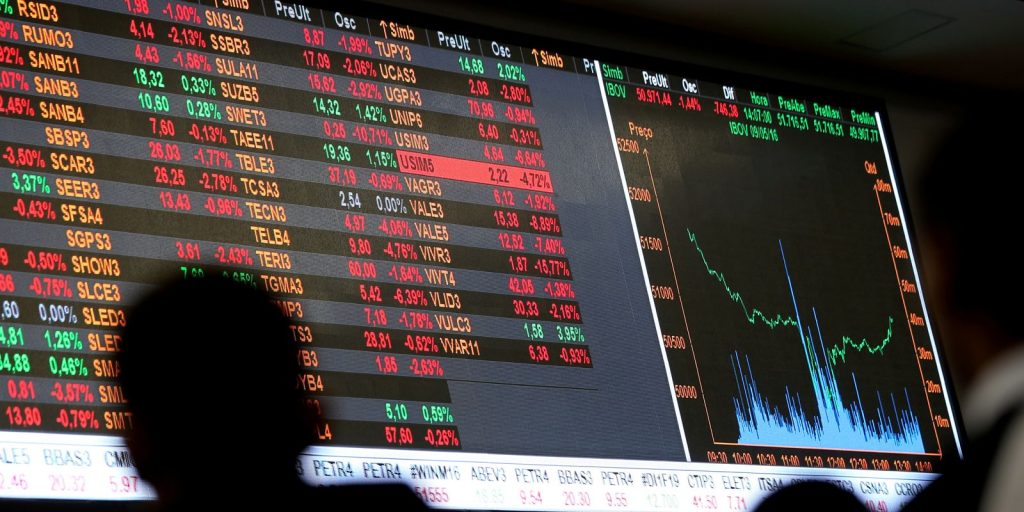
As expected, Trump’s announcement shook international markets. US crude oil futures rose more than 1% in Asian trading, amid expectations of a reduction in Venezuelan exports.
Venezuela, a member of OPEC and holder of the largest proven oil reserves in the world, produces nearly one million barrels per day, of which around 850,000 are exported.
Most of these exports go to China, while a smaller part reaches the United States through the Chevron company, which maintains authorized operations despite Washington sanctions.
Analysts warn that an effective blockade could force Venezuela to stop part of its production due to lack of storage capacity.
In fact, press reports citing naval tracking sites claim that oil tankers heading to the South American country to resupply have turned around due to fear of being seized by US forces.
This blockade situation would aggravate the internal economic crisis, in which the minimum wage reached half a dollar per month, according to the exchange rate of the Central Bank of Venezuela (BCV). This amount is complemented by government bonuses of up to $160, paid at the current rate of the issuing agency to public employees and without impact on the calculation of labor benefits.
The minimum wage, which does affect work benefits such as vacations, settlement and profits, has remained at 130 bolivars since March 2022, when it was equivalent to about $30 per month.
Risk of open war and an uncertain scenario for Venezuela
The seriousness of the moment lies in the fact that the naval blockade announced by Trump is dangerously close to the limits of an armed conflict, after the extensive military deployment in the area.
The United States has historically reserved the “foreign terrorist organization” designation for non-state actors, but Trump claimed that the “Venezuelan regime” fits into that category, a statement that experts consider, at the very least, legally questionable.
Trump’s chief of staff, Susie Wiles, confirmed in an interview that the attacks on boats are part of a plan to force Maduro’s surrender. “He wants to continue flying boats until Maduro admits defeat,” he said bluntly.
For his part, the UN High Commissioner for Human Rights, Volker Türk, warned that increasing US military pressure could worsen the humanitarian situation in Venezuela and called for an immediate de-escalation.
While Washington initially insisted that the campaign sought to stop drug trafficking, there is now open talk of a regime change and Venezuela returning to the United States the oil and other assets that Trump considers were previously stolen.
Although the US president’s reference is not entirely clear, analysts point out that it could even point to nationalizations carried out decades ago, long before Chavismo came to power. This supports the Maduro Government’s discourse that Washington’s real objective is the looting of Venezuelan resources.
Caracas, which does not enjoy a majority regional support to confront US aggressiveness, denounces that it is an attempt at colonization and the unknown now is how the blockade will be applied and if it will be extended to non-sanctioned vessels.
If the naval siege is maintained, the loss of almost a million barrels of crude oil per day could alter the global energy balance, with China hit, and push Venezuela into an even deeper crisis, since its GDP is based on fuel income for nearly 90%.
Meanwhile, the opposition, although divided, alleges legitimacy before the July 2024 polls, elections that the ruling party claims to have won without documenting its victory through records that it never showed to public opinion.