Madrid/Is an operation similar to that of Venezuela planned in Cuba? To this question from the press aboard Air Force One that was taking him back to Washington from Florida, Donald Trump responded: “I don’t think we need any action,” because the regime in Havana is going to fall alone.
“Cuba seems like it is about to fall. I don’t know how they are going to be able to support themselves, they have no income. They received all their income from Venezuela, from Venezuelan oil,” said the US president. “Many Cuban-Americans are going to be very happy with us,” he added.
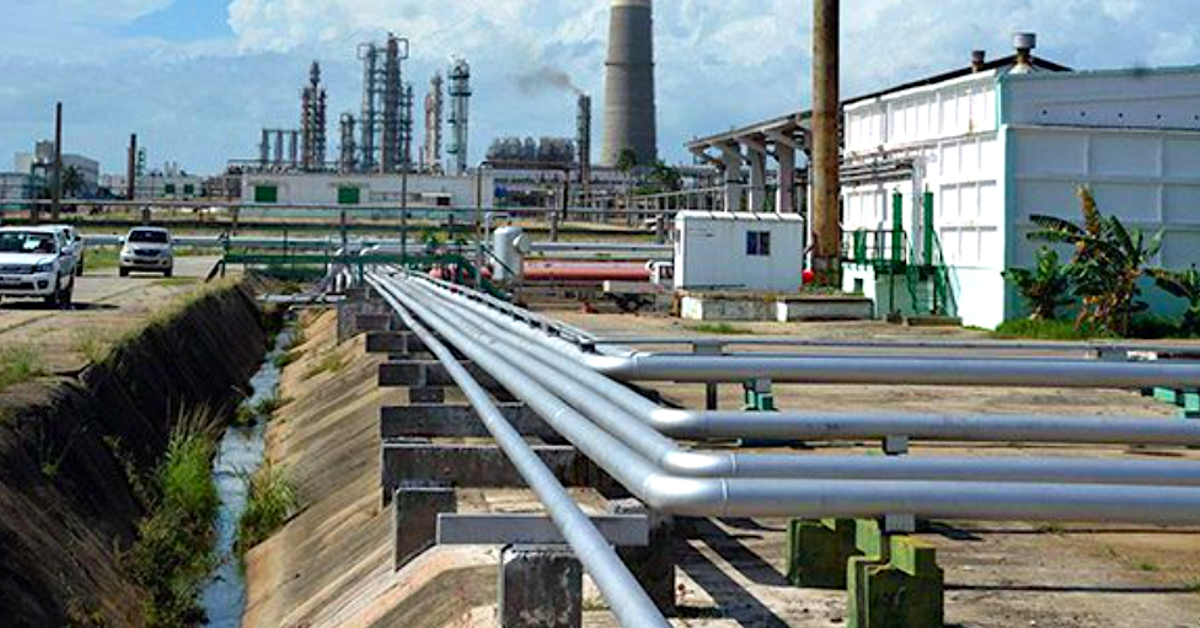
The damage that the possible lack of crude oil can cause to the Plaza de la Revolución is evident, although the question is whether alternatives will be found. The Island’s oil needs are about 110,000 barrels per day (bpd), of which 40,000 are national production, mostly for the thermoelectric and industrial sector, University of Texas expert Jorge Piñón reminds this newspaper.
The Island’s oil needs are about 110,000 barrels per day (bpd), of which 40,000 are national production, mostly for the thermoelectric and industrial sector.
The specialist breaks down the demand with data from the National Office of Statistics and Information (Onei) in 2023, although there may be changes in these two years. According to these figures, 67% of the needs (about 74,000 bpd) are for crude oil and fuel oil and 18% (20,000) are for diesel. In addition, 5,000 bpd of gasoline and the same amount of liquefied petroleum gas (LPG) are needed – 5% of each – and 6,000 bpd of “others”, until reaching 100%.
“We approximately estimate today a deficit of 50,000 to 70,000 bpd,” explains Piñón, referring to 2025. “Diesel and LPG are the two critical fuels, not only because of their economic impact but also social and political,” explains the specialist, who specifies what each of them is used for. The first directly impacts distributed generation, transportation, agriculture and hydraulic sources; while the second is essentially dedicated to cooking food.
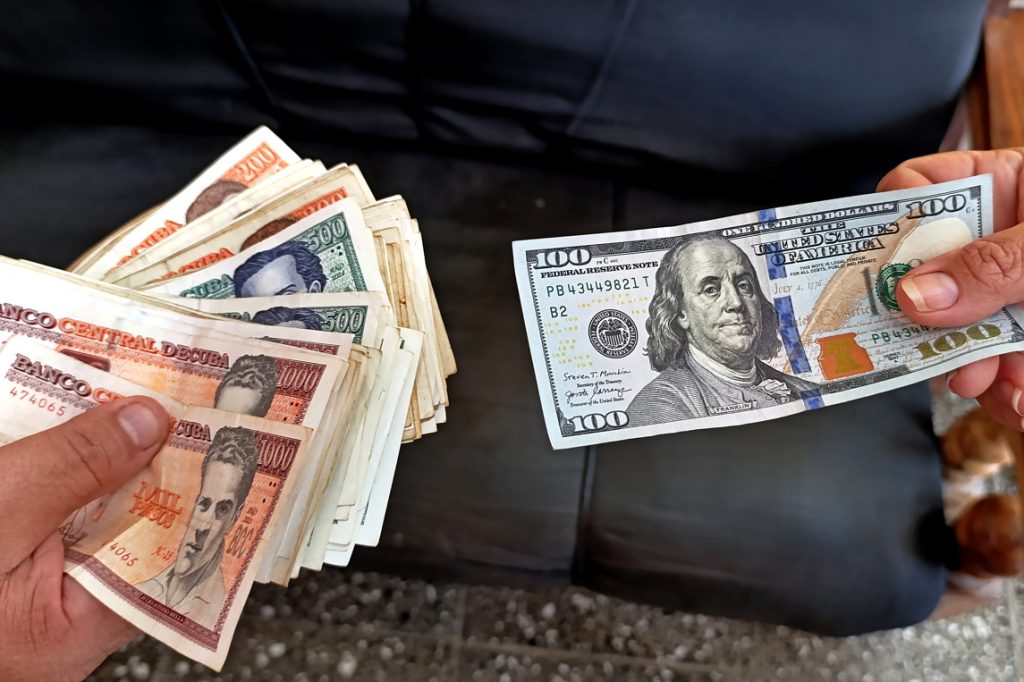
According to information from Piñón, Venezuela has sent about 35,000 bpd in the last quarter of 2025 to Cuba, compared to 5,500 from Mexico and 7,500 from Russia: a total of 48,000 bpd. This amount forces Havana to buy between 10,000 and 15,000 bpd of diesel and LPG abroad, with the aggravating factor that it must do so by paying in cash and in advance, one million dollars a day at today’s prices ($87 per barrel of diesel and 27 for LPG).
Much more forceful, Piñón told the newspaper The New York Times: “It is a death sentence if tomorrow Venezuela cuts off the oil supply to Cuba.”
He New York newspaper He has consulted with other specialists what could happen in these circumstances for Cuba. “There is a belief among Republicans like [el secretario de Estado Marco] Rubio that once the supply of Venezuelan oil is cut off, the Cuban economy will collapse and trigger a popular uprising,” says Ricardo Zúñiga, a former key US official in the thaw who has also worked with the Trump Administration, which questions the theory. “What we have seen in Cuba is that there seems to be no limit to the severity of the situation, as long as there is no uprising.”
Another source of NYTMichael Bustamante, doubts that action will be taken against Cuba for two reasons: it has no economic interest for the United States and it does have a geographical proximity that would lead thousands of people to enter its territory in the event of a crisis. “If Rubio or others pursue a ‘Cuba is next’ approach, it will be more difficult for them to convince Trump,” he believes. Furthermore, and in this he agrees with Piñón, it is possible that Washington has too much work in Venezuela to deal with Cuba, nor is there a possible interlocutor on the island as there was in Caracas – in reference to Delcy Rodríguez. “Cuba is much more of a one-party state, something that Venezuela never was,” Bustamante emphasizes.
It is possible that Washington has too much work in Venezuela to deal with Cuba, nor is there a possible interlocutor on the island as there was in Caracas – in reference to Delcy Rodríguez
The critical official Carlos Alzugaray adds another argument. “We don’t like being intimidated and we don’t like people like Rubio doing it. Most people here want change, but they want it here, not imposed from outside,” said the former diplomat who hopes, however, that the regime will take note to “reform.”
The Argentine channel Tele Noticias also spoke with Raudiel Peña, Cubalex lawyer, who warns of an “immediate impact” from the fall of Maduro: “It will be the loss of an ally.” “But we have to see how the situation goes from now on. One thing is the departure of Maduro and another thing is the fall of the regime. The latter would be a hard blow for Cuba in terms of losing an economic and political ally in the region. But Chavismo is still there, for now,” he said, in addition to underlining his conviction that “militarily” Cuba will not be an objective.
Another actor that enters the game is China, to which 90% of Venezuelan crude oil exports went, including those sold by Cuba. Trump also talked about this. “We are in the oil business. We are going to sell it to you. We are not going to say that we are not going to give it to you. (…) We will sell large quantities of oil to other countries, many of which are already using it,” he said yesterday.
Marco Rubio clarified that Washington does not want to allow “Venezuela’s oil industry to be controlled by United States adversaries” such as China, Russia and Iran.
According to official data, officially direct purchases from PDVSA were about 729 million dollars in 2024 compared to 94 million between January and November 2025. However, “Venezuelan oil represents less than 5% of China’s total imports,” says the head of the Institute of Energy Policy at Xiamen University, Lin Boqiang, in statements reported by the Hong Kong newspaper. South China Morning Post.
Those barrels are mostly headed to independent refiners in eastern Shandong province that import the heavy crude at discounted prices due to sanctions, and process it for applications such as asphalt.
“We do not believe that this weekend’s events will materially alter global oil markets and, consequently, global economic forecasts.”
Several experts consulted by the EFE agency assure that Beijing had already planned for eventualities such as those that occurred and will not suffer if it is not able to import from Venezuela. “We do not believe that this weekend’s events will materially alter global oil markets and, consequently, neither will global economic forecasts,” they point out.
The political level is different, since in Beijing it may be difficult for one of its greatest allies in Latin America to approach the United States, but the experts return to Chinese pragmatism.
“Beijing will condemn the US actions. But I doubt China will do much more than that,” predicts Bonnie Glaser, vice president of the American think tank German Marshall Fund of the United States, in statements to local media. “Venezuela is not among China’s priority interests, and there are many more disadvantages than advantages in carrying out actions that complicate Trump’s ability to score a victory,” the analyst emphasizes.