The president of the United States, Donald Trump, confessed on June 10, 2023, during a speech in North Carolina, that his policy “hostile towards Venezuela was with the intention of appropriating the large Venezuelan oil reserves”, which explains the incessant actions of aggressions and economic suffocation against the nation.
In his speech, he asked the audience: “How do we think we are buying oil from Venezuela? When I go (from the White House), Venezuela was ready to collapse. We would have taken over it. We would have taken all its oil. But now we bought oil from Venezuela. We are doing a very rich dictator. Can you believe it?, Nobody can believe it.”
Trump with these words criticized the administration of Joe Biden to make certain oil transactions more flexible with the South American country in an attempt to position themselves again as a presidential candidate for a second period and minimize the news about personal accusations against him.
The president had refined a “personal obsession” with Venezuelan oil: in 2019 he stopped buying national crude and came to say that “he had the right to control Venezuela’s resources, because they were part of the United States.”
He issued six executive decrees to block all PDVSA operations and assets, as part of his “maximum pressure” policy.
Remember the Venezuelan anti -lock observatory that on January 23, 2019, Trump said, in an interview, that in his policy of aggressions against Venezuela he placed “all the options on the table”, including a “military intervention in the South American country”, a situation that now, during his second presidency, seems to want to realize when sending warships, airplanes and marines to the Caribbean sea, close to the Venezuelan coast.
The hydrocarbon trade between the two countries resumed in 2022, when, following the global energy crisis caused by the Russian-Ukrainian conflict, the Biden administration morigeró the sanctions, allowing American oil firms and other Western countries to extract hydrocarbons, collaborating in the reactivation of the national oil industry.
However, back in the White House, Trump has implemented new policies that seek to limit Venezuela to export oil and generate income. This has been manifested through sanctions to the Venezuelan oil industry and companies from other countries that trade with it.
Among its measures, the US canceled permits to export crude and derived from Venezuela to Repsol and other oil companies associated with PDVSA.
Global Oil Terminals, the Italian ENI, the French Maurel & Prom and India Reliance Industries had received permits from the previous US government, from Democrat Joe Biden, to operate with Venezuelan crude in her refineries around the world, despite the sanctions of Trump’s mandate.
The current political crisis motivated the cancellation of licenses to Chevron in March of this year. It is evident that the United States policy with Trump is not only to “take” Venezuelan oil and many other natural wealth of the country, such as gold and drinking water, but also to use economic pressure and, in some cases, military pressure to destabilize the government of President Nicolás Maduro and promote a change in the country.
“If there is no change of government, the United States will end up being a Venezuela with steroids. Our country is going to hell,” he said.
Interventional genesis. Interference policies, and now guerrostal, of the United States governments to Venezuela have systematically intensified since the last 15 years.
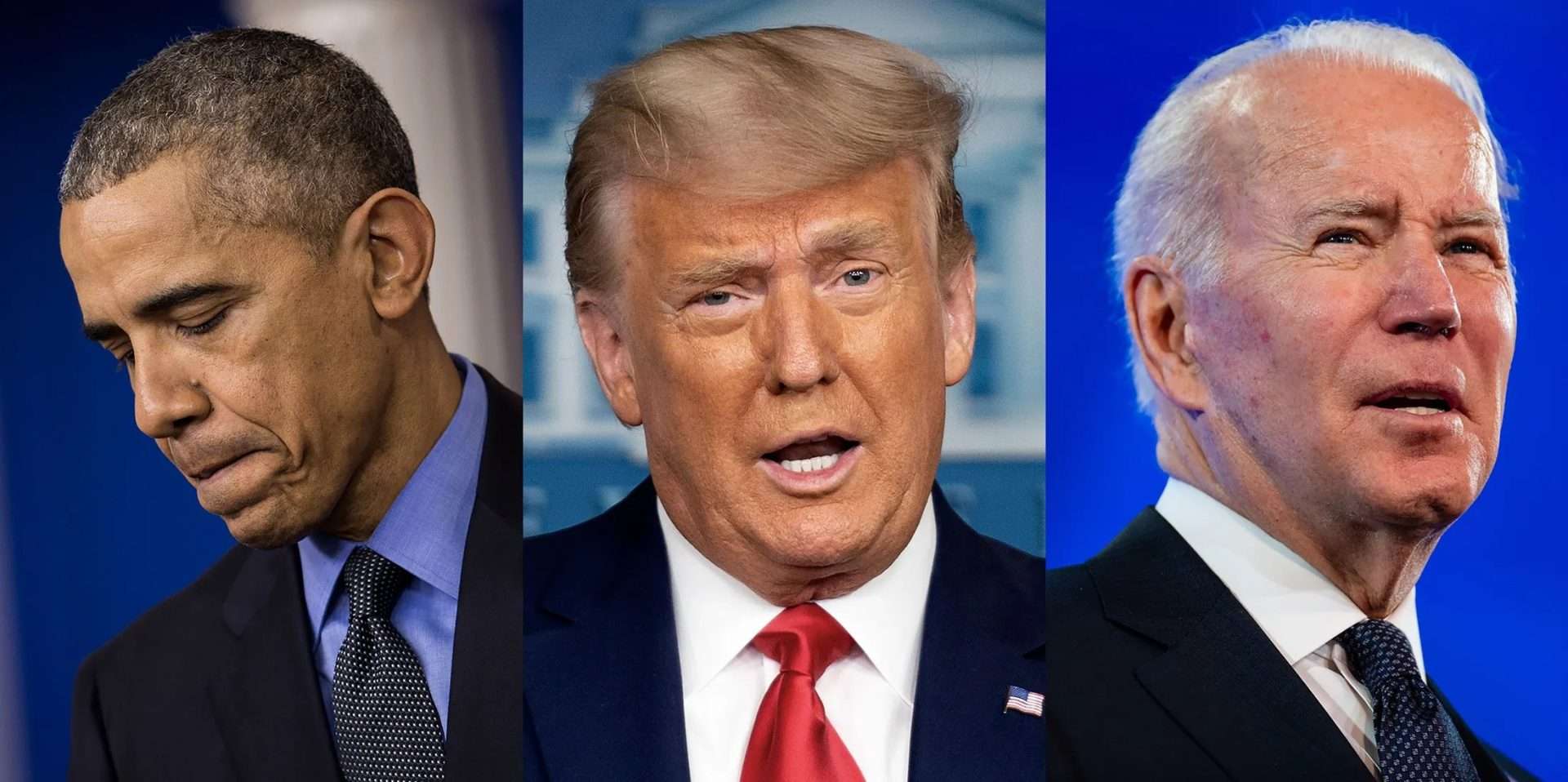
Barack Obama (2009-2017), Trump’s first mandate (2017-2021), Joe Biden (2021-2025) and Trump’s second presidency (2025-2029) have “combined” an suffocating trilogy for the Venezuelan economy.
The siege intensified when Obama signed, on March 9, 2015, an executive order in which he declared a “national emergency for the unusual and extraordinary threat to national security that Venezuela represents.”
This would lead to implementing another stronger strategy when applying 930 sanctions against Venezuela, being 2018 and 2019 the years with the highest number of aggression measures, and that has been growing, leaving Venezuela as the fourth country with more sanctions (1,042), imposed in just 10 years.
Trump has seen, despite having just eight months in the White House, his intention to continue towards a third term, which would give him more time to meet his declared goal.
2017-2021
- Economic and financial sanctions: The Trump administration imposed an unprecedented number of sanctions, especially the oil industry. The turning point was the 2019 embargo, which prohibited US companies from buying Venezuelan crude and blocked PDVSA assets in the United States, including the Citgo subsidiary.
- Recognition of the opposition: in 2019, the USA and other countries recognized Juan Guaidó as the “legitimate interim president”, in an effort to delegitimize President Nicolás Maduro.
- Measures against gold and other sectors: the sanctions expanded to other sectors of the economy, such as mining, in particular the production of gold, in order to cut other sources of financing for the government.
- Strong rhetoric and threats: rhetoric was consistently hard, referring to Maduro as a “dictator” and not ruling out any option, including the military.
- Ahocoterrorism accusations: the Department of Justice offered reward for Nicolás Maduro and other senior officials of the Venezuelan government.
Data
- Rhetoric and accusations of narcoterrorism: a very strong rhetoric has been maintained against the Maduro government, which is accused of being involved in drug trafficking and being a threat to US safety. The reward for his “capture” and that of other senior officials was increased.
- Increased military presence in the Caribbean: Trump has intensified military operations in the Caribbean under the pretext of fighting drug trafficking. The deployment of warships and attacks on boats that, according to the US, transported drugs from Venezuela have been included. This has significantly raised tension with the Venezuelan government denouncing these operations as an attempt to justify a military intervention.
- Focus on migration: Venezuelan migration to the United States has become a central theme, and tougher measures for migrants have been implemented, with an approach to deportation.
- Possible resumption of oil sanctions: although the license has been maintained for Chevron to operate in Venezuela under certain conditions, there have been threats to end this exception.