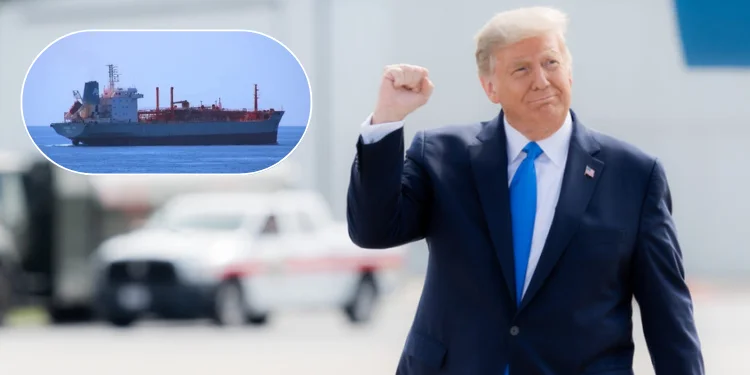
MIAMI, United States. – Donald Trump put an end to the additional tariffs imposed on countries that provide fuel to Cuba on February 20, by signing the executive order “Ending certain tariff actions”.
On January 29, the president of the United States had signed another executive order, “Addressing threats to the United States by the Government of Cuba”which created a “tariff system” to impose additional tariffs on imports from countries that sell or supply oil to Cuba, directly or indirectly, under the International Emergency Economic Powers Act (IEEPA).
Now, the executive order of February 20 implies that the tariff mechanism designed to punish countries that send oil to the Island is no longer in force and must stop being collected, although The “national emergency” declared regarding Cuba remains in force.
In that sense, the new order specifies that “all other actions” adopted in previous orders, as long as they do not impose rights ad valorem under the IEEPA nor are steps necessary to implement them, will not be affected by the new provision. Likewise, it clarifies that the national emergencies declared or described in these orders, including the one related to Cuba, remain in force.
Earlier, the same Friday, the Supreme Court of the United States had determined that the IEEPA did not authorize the president to impose tariffs, and, in this way, he overturned the levies dictated by trump under the aforementioned standard. The ruling established that tax power rested with Congress and that the IEEPA did not contain a clear delegation to create customs levies.
The new executive order of February 20 does not expressly mention the Supreme Court’s decision, but states that, “in light of recent events,” the additional rights under the IEEPA were no longer in effect.
The text instructs heads of departments and agencies to “take all appropriate measures” to end those fees and immediately begin the process to stop collecting them. It also authorizes the appropriate secretaries to make necessary modifications to the Harmonized Tariff of the United States by notice in the Federal Register.
However, the document emphasizes that the measure affects only the rights ad valorem additional taxes imposed under the IEEPA. It expressly indicates that it does not alter other tariffs, including those applied under Section 232 of the Commercial Expansion Law of 1962 or Section 301 of the Trade Law of 1974, nor does it impact other orders signed on February 20.
In practical terms, the immediate effect is that the tariff instrument created in Executive Order 14380 to penalize third countries for sending oil to Cuba is terminated in its IEEPA component. However, the declaration of “national emergency” regarding Cuba remains active, and the February 20 order does not prevent the Administration from resorting to other legal bases to adopt trade measures other than additional tariffs under the IEEPA.
The White House presented the January decree as a tool to “establish a process” that would allow tariffs to be imposed on imports from countries that supply oil to Cuba, under a logic of national security and foreign policy.
That design—punish third countries through a tariff ad valorem additional tariffs on the US border – depends on the president having the authority to impose tariffs under the aforementioned laws. With the ruling of this February 20, the Supreme Court closed the door to the IEEPA as a basis for that specific instrument.