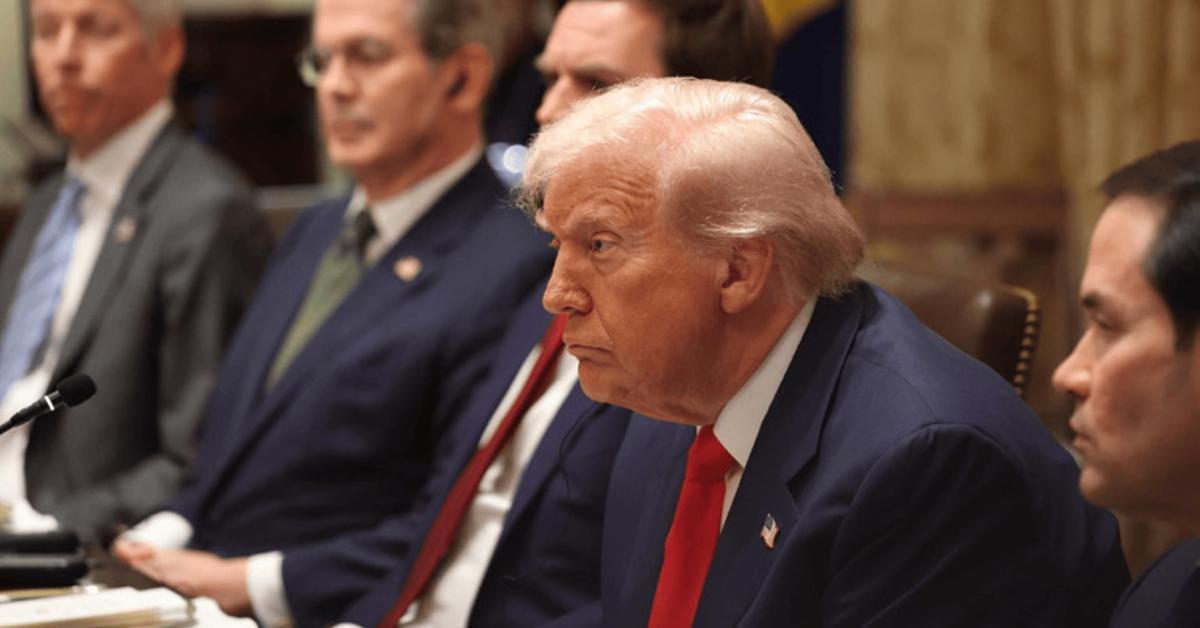
Havana/The President of the United States, Donald Trump, and the Secretary of State, Marco Rubio, sent a direct message to the Cuban Government this Friday during a meeting at the White House with senior executives of the oil sector. At the meeting – called to accelerate investments in the Venezuelan energy industry after the recent political changes in Caracas – both officials linked the Island’s economic crisis with the loss of Venezuela’s oil and financial support and placed Havana before what they described as an “unpostponable” dilemma.
Trump was explicit. When referring to Cuba before businessmen, he stated that the country is going through a “very difficult” situation and that for years it depended on Venezuela to obtain oil and resources. That scheme, he stressed, “is over.” In his diagnosis, the Island will no longer have that flow of money or the preferential supply of crude oil that supported the Cuban state apparatus for decades. “They are doing very badly,” he summarized, alluding to the economic fragility of both countries and what he described as unproductive models.
The US president framed his comments about Cuba within a broader explanation of the new regional energy dashboard. Washington seeks to attract private capital to reactivate the Venezuelan oil industry under new rules, with security guarantees for the companies and without intermediation of the old political power in Caracas. In this context, Trump made it clear that Venezuelan oil will no longer function as a lifeline for ideological allies. The signal, directed to both executives and governments in the region, was clear.
“They can have a real country, with a real economy, where their people can prosper, or they can continue with a failed dictatorship”
Rubio, for his part, reinforced the message with an even more energetic tone. According to the Secretary of State, the people who hold power in Cuba face a fundamental decision: “they can have a real country, with a real economy, where its people can prosper, or they can continue with a failed dictatorship.” For the head of US diplomacy, the island’s central problem is not external, but the result of a leadership obsessed with political control and reluctant to allow basic economic freedoms.
The secretary recalled that the Cuban model was sustained first thanks to subsidies from the Soviet Union and, after its collapse, by Venezuelan support. “Those sources no longer exist,” he stated, referring to a pattern of dependency that, in his opinion, prevented the modernization of the economy and postponed structural reforms. The consequence, he added, is a prolonged crisis that is expressed in blackouts, shortages, inflation and mass emigration.
Rubio also sought to distance himself from any direct intervention. He assured that the United States does not seek to destabilize Cuba and that any worsening of the economic situation will be the result of the regime’s refusal to open spaces of economic and political freedom. The US administration, he insisted, does not intend to impose a model, but rather to make it clear that there will be no bailouts or indirect subsidies for systems that refuse to reform.
The American discourse reinforces the idea that the future of the Island involves profound internal changes
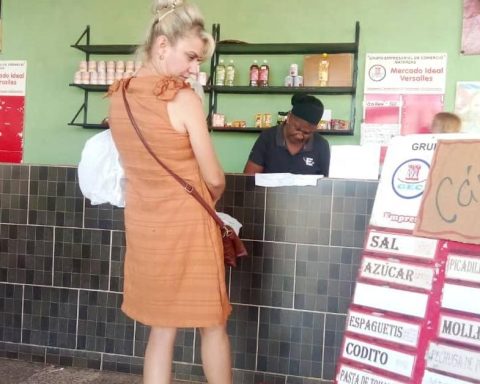
In Havana, the Government has repeatedly attributed the crisis to US sanctions, but avoids recognizing the weight that Venezuelan oil had for years in sustaining the electrical system and the economy in general. The progressive reduction of these shipments had already hit the Island before the recent events in Venezuela; Now, Washington’s message points to a definitive cut off of any expectation of similar external aid.
For the Cuban diaspora, mentioned indirectly during the meeting as a key actor in an eventual reconstruction, the US discourse reinforces the idea that the future of the Island involves profound internal changes. Trump and Rubio reiterated their support for Cubans in exile who have denounced persecution and expropriations, and suggested that this human and financial capital could play a decisive role if a real opening were to occur.