A phone call between the presidents of the United States and Venezuela, a massive military deployment in the Caribbean and a wave of migrant deportations keep the scene between Washington and Caracas hot.
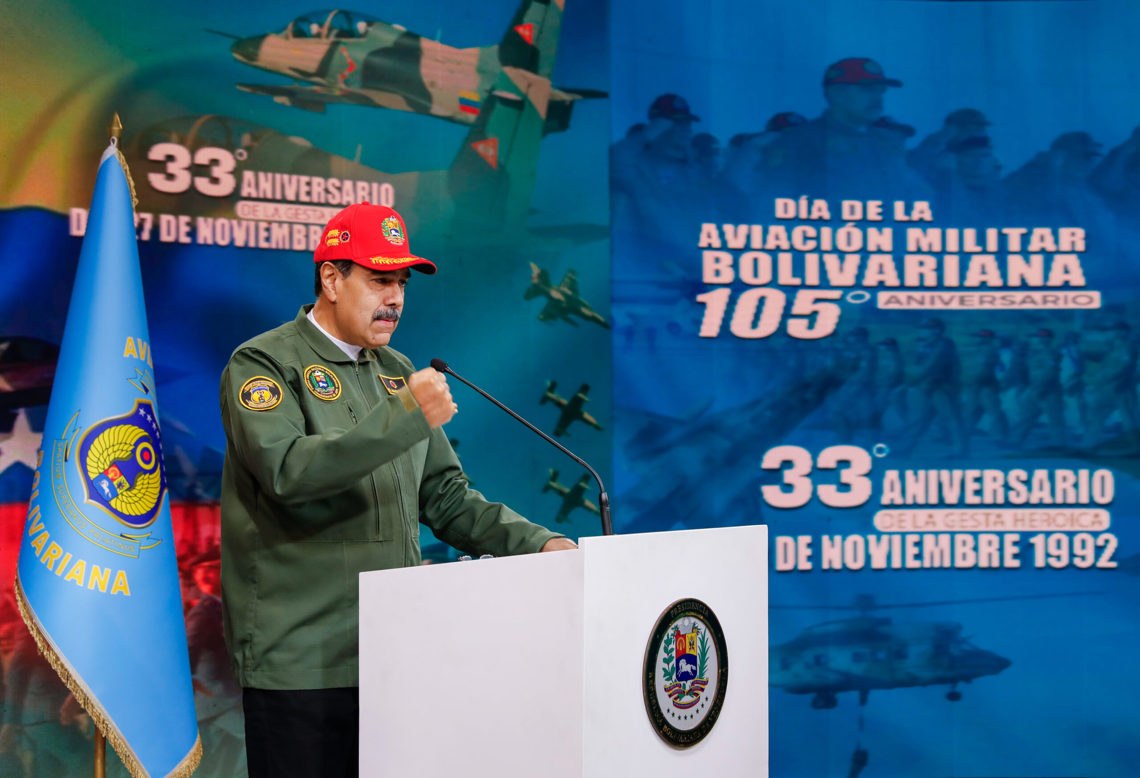
As revealed this Friday The New York TimesUS President Donald Trump and his Venezuelan counterpart, Nicolás Maduro, held a telephone conversation to explore a possible meeting. However, no results were achieved.
The Secretary of State, Marco Rubio, a renowned critic of Chavismo, participated in the call. Although neither of the two governments has officially confirmed the dialogue, they have not denied it either.
The alleged contact occurred before Washington designated the so-called Cartel of the Suns – linked by the US to Maduro – as a terrorist organization. The Venezuelan president has described the accusation as “an invention.”
Sources familiar with the conversation leaked to the Spanish newspaper The Country that the call took place under “correct” terms and that it could be a first step to continue the dialogue in a context of “high tension.”
Military deployment in the Caribbean and radars near Venezuela
Meanwhile, the US Army will install a new radar in Trinidad and Tobago, just 11 kilometers from the Venezuelan coast, Prime Minister Kamla Persad-Bissessar confirmed. According to her, the device will monitor activities inside and outside its territory.
Maduro accused Trinidad of lending itself to Washington’s “war plan,” but Persad-Bissessar denied that his country is a military base against Venezuela. However, it allowed joint exercises with 350 US Marines in mid-November.
The operation is part of the largest US naval deployment in the Caribbean since the Gulf War (1990-1991), according to the Center for Strategic and International Studies. The USS Gerald Ford aircraft carrier, the largest in the world, is already in the area, accompanied by guided missile destroyers, nuclear attack submarines and F-35 aircraft.
For his part, the US Secretary of Defense, Pete Hegseth, defended the bombings against vessels suspected of drug trafficking, which have left at least 83 dead since September.
Media like Washington Post and cnn revealed that, in an attack on September 1, the US launched a second missile to kill two survivors clinging to the wreckage of a boat. According to reports, Hegseth ordered to “kill all” the occupants.
The official dismissed the information as “false” and assured that the operations are legal. Venezuela denounced the attacks as “human rights violations.”
Meanwhile, social organizations in the Dominican Republic accused President Luis Abinader of committing a “historic affront” by allowing the United States to use its territory for anti-drug operations, including the San Isidro Air Base.
The groups, including the Caamañista Movement and the Communist Labor Party, described the measure as a “shameful concession” that reduces the country to a “colony of the empire.”
Air chaos and deportations amid tension
Venezuela repatriated 136 migrants from the US this Friday, the second return flight in a week marked by the massive cancellation of international flights.
The repatriation trip occurs two days after the National Institute of Civil Aeronautics of Venezuela revoked the flight concession to the international airlines Iberia, TAP, Avianca, Latam Colombia, Turkish Airlines and Gol, which it accused of “joining the terrorist actions” promoted by the United States.
The six companies had temporarily canceled their flights to Venezuela after a warning from the US Federal Aviation Administration, which urged “extreme caution” when flying over Venezuelan territory and the southern Caribbean, in the midst of the air-naval deployment ordered by Trump in Caribbean waters.
This Friday, Avianca announced the suspension of the sale and operation of flights to and from Venezuela, while Air Europa canceled the two frequencies scheduled for next Tuesday between Madrid and Caracas “for reasons beyond its control.”