El Pardo, Spain. – At the entrance of the Mingorrubio cemeterybetter known as The Brownby the name of the community in which it is located, has stopped being anonymous since the socialist government of Spain decided to exhume the remains of Francisco Franco of the “Valley of the Fallen” monument and enter them there with his wife Carmen Polo.
His Mausoleum, although majestic, is not the center of mass pilgrimagebut of discreet tributes from those They long for the times of the dictatorship when the Republic ruled in Spain.
Flowers and red and yellow flags, cover the front part of the mortuary space that gives entrance to a small necropolisbut it usually looks impressive in the eyes of the first-time visitor.
He Mausoleum of Francisco Franco came to give fame to an internal road in which at the end of it, a building covered in black marblewelcomed in a discreet and without resonance way the one who for 31 years was the master of the destiny of the Dominican Republic and decided without consequences on the life or death of thousands of his compatriots.
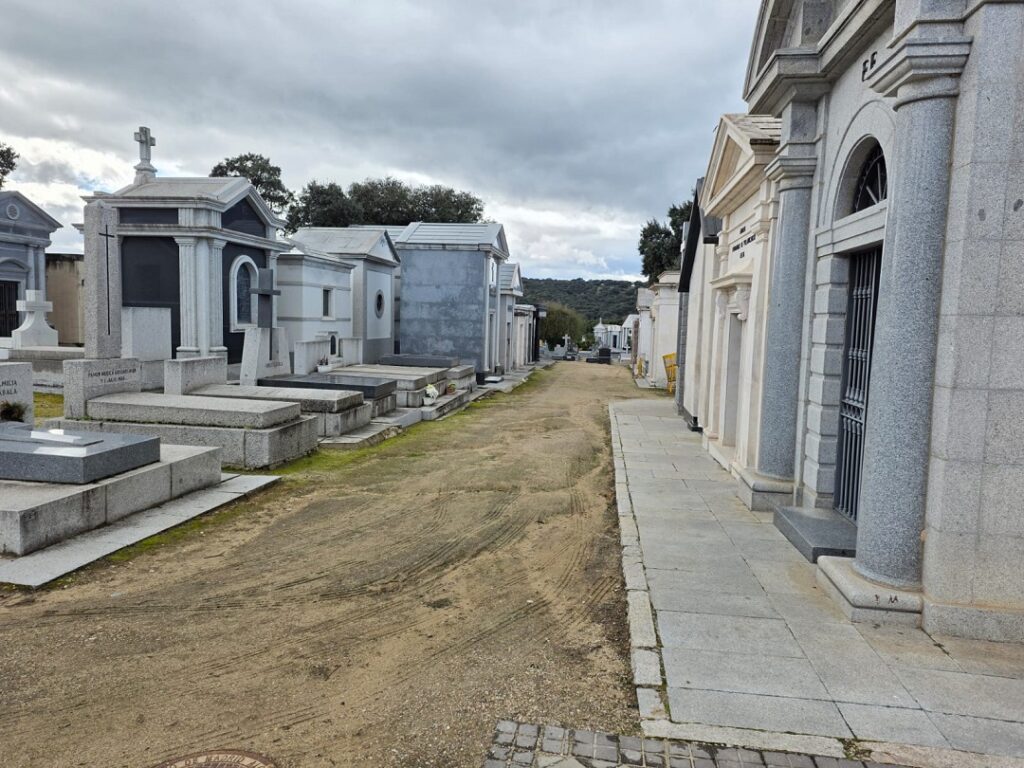
The remains of the bloody Dominican dictator rest there Rafael Leonidas Trujilloin a mausoleum that stands in one of the most sober corners of the El Pardo cemetery. There is no special signage leading to it. It is reached by walking between gray granite pantheonsaustere tombstones and small family mausoleums that share the same contained, almost bureaucratic aesthetic, typical of Madrid cemeteries.
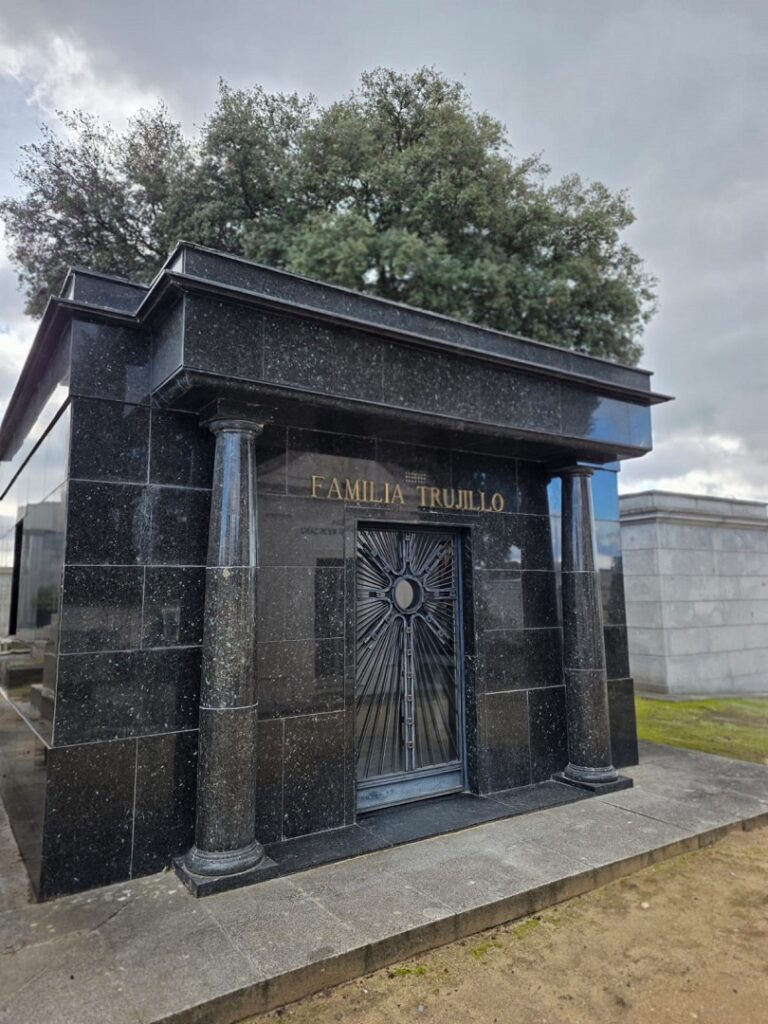
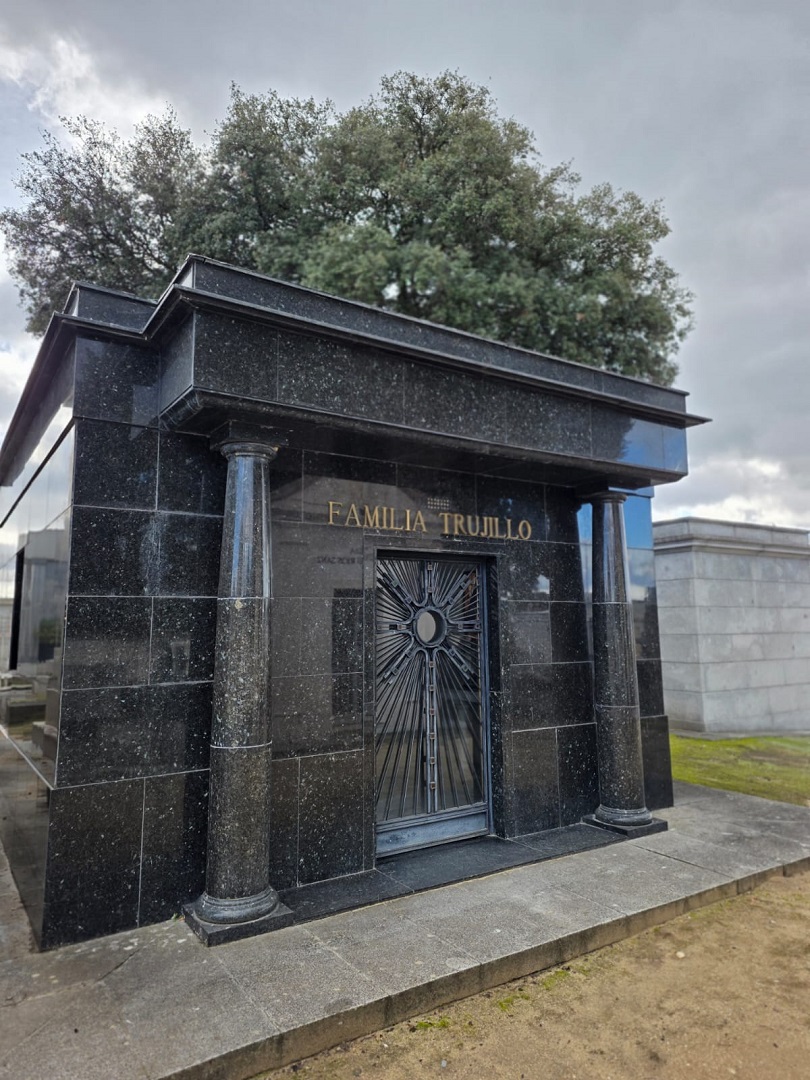
It was Saturday and the cemetery office was closed. There was no one to indicate where the tomb of the dominican dictator. Guided by references from former visitors, we finally found that building covered in black marble and with a single graphic indicationin golden letters: “Trujillo Family”.
He environment is quietbarely interrupted by the murmur of the visitor or by the wind that shakes the crowns of the ancient trees, some of them centuries old.
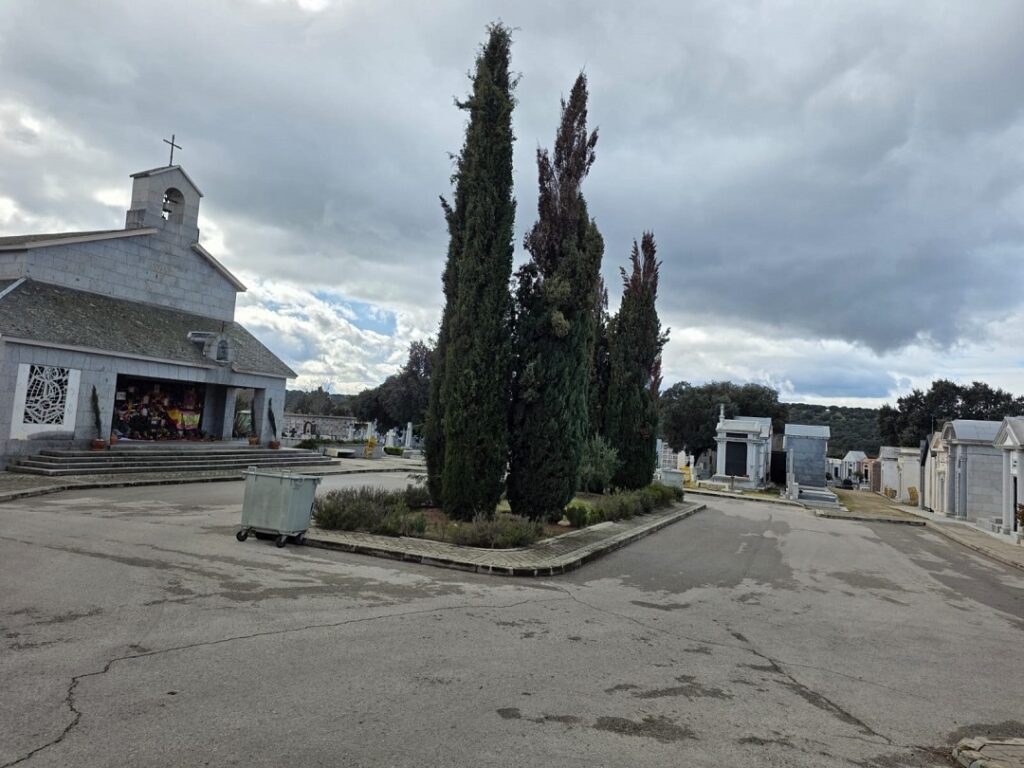
Robust oaks cast dense shadows on the graves, creating a constant gloom even in daylight hours.
The weather was almost freezing, but the day showed no signs of rain. The cold breeze It increased the atmosphere of contemplation in that place where the mortal remains of two dictators who in life respected and admired each other rest.
Fate brought them together in the holy field where their remains try to rest with the peace they denied to many.
The mausoleum: sobriety without greatness
He Mausoleum of the Trujillo Family It is a compact block of dark marble, polished but without ostentatious shine. Its façade is reminiscent of a small classical temple with two lateral columns they support a straight pediment, without ornamentation, without patriotic symbols or military references.
In the center, a metal door with geometric design protects the interior. About it, in golden and discreet letters, barely highlight the last name that for decades dominated Dominican political life.
Above the inscription remain the perforations of a sheet that was removed from the place, a space that was left empty after the stones were removed. five stars with which they wanted to refer to their past glories.
There are no statuesno reliefs, no marble angels. The tumba does not seek to visually impose itself on the others. On the contrary, it seems determined to go unnoticed, as if the weight of history forced architecture to renounce all grandiloquence.
Around it, other family mausoleums, made of light stone, some more deteriorated, reinforce the idea of anonymity. The one from Trujillo does not occupy a privileged position in the cemeterywhich apparently now does have a high-ranking tenant known to Spain, General Francisco Franco.
Faith and contradiction within
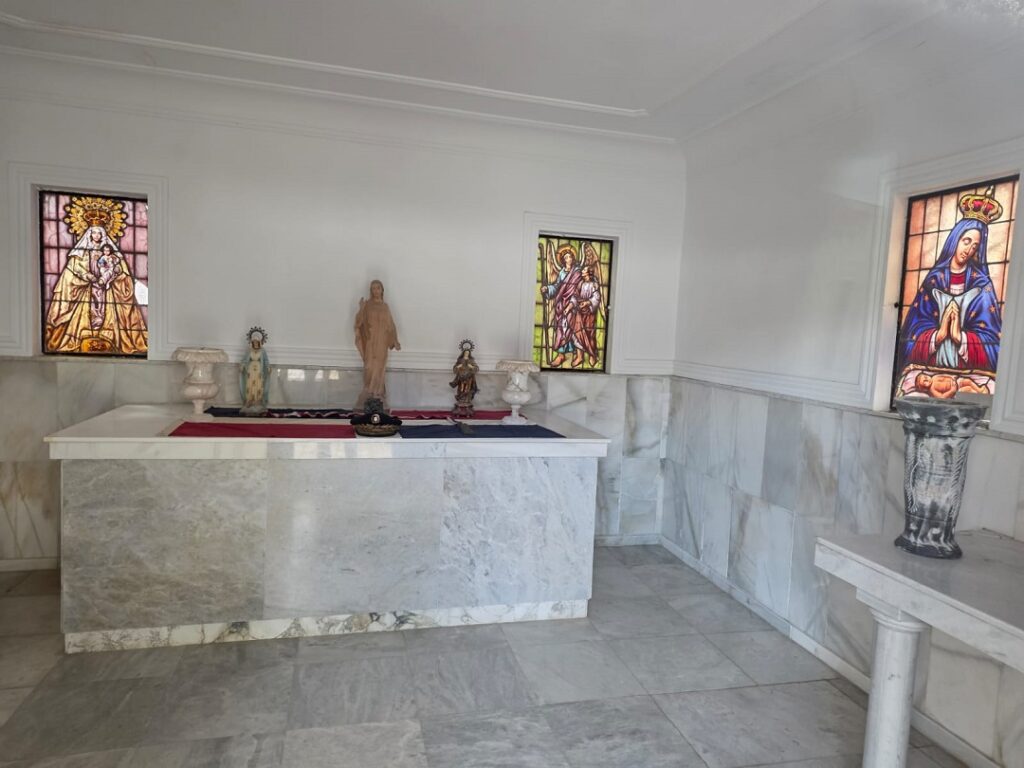
Behind the metal door, the interior of the mausoleum surprising for its religious austerity. A small chapel covered in white marble It houses a simple altar. On it they rest religious images: figures of the Virginof Christ, of saints, carefully placed, as if it were a intimate prayer space more than a tomb associated with one of the most repressive and bloody regimes in the history of the Caribbean.
Small colored stained glass windows allow the passage of a soft light that colors the space in muted yellow and blue tones. There are no visible benches or kneelers. It’s a place designed for short visitsalmost furtive. No fresh flowers seen nor signs of pilgrimage. The marble is clean, but cold, with no traces of recent presence.
On the right side, a stained glass window of the Virgin of Altagraciareligious devotion designated as protector of the Dominican people.
The internal chapel looks austerely decorated with religious symbolsplaced in the dictator’s tomb on a dominican flag that covers his tomb, which could confuse anyone ignorant about the status of the only tenant of the mausoleum.
A rest after exile
He calm and cold atmosphere of the cemetery and around the mausoleum, contrasts with the long pilgrimage of his corpse, which after the tyrannicide of the May 30, 1961 was taken from Saint Christopherwhere he was originally buried, to be transferred by yacht to France for his son Ramfis Trujillo and finally taken to Spain where it still remains in the discreet El Pardo cemetery.
Although El Pardo is a quiet and discreet place, it is linked to the symbolism of power in Spain, since there is the residence of kings Felipe and Letizia.
But the truth is that nothing in the surroundings of the dark Trujillo mausoleum calls for nostalgia, not even the dominican flag placed on his grave. The grave of someone who was his friend, Francisco Francohas given some notoriety to that civil cemetery in which there is no attempt to exalt its inert tenants.
The dictator who ruled as absolute owner It ended up reduced to a small, silent and almost invisible space.
At the exit of the cemetery, after having carefully observed the details of the mausoleum covered in black marble, four Spaniards enter the cemetery and stop at the mausoleum on their left, where the tomb of Francisco Francowhere there are red and yellow flowers and the occasional inscription praising the extinct spanish dictator whose corpse was taken to El Pardo as a kind of posthumous exile.