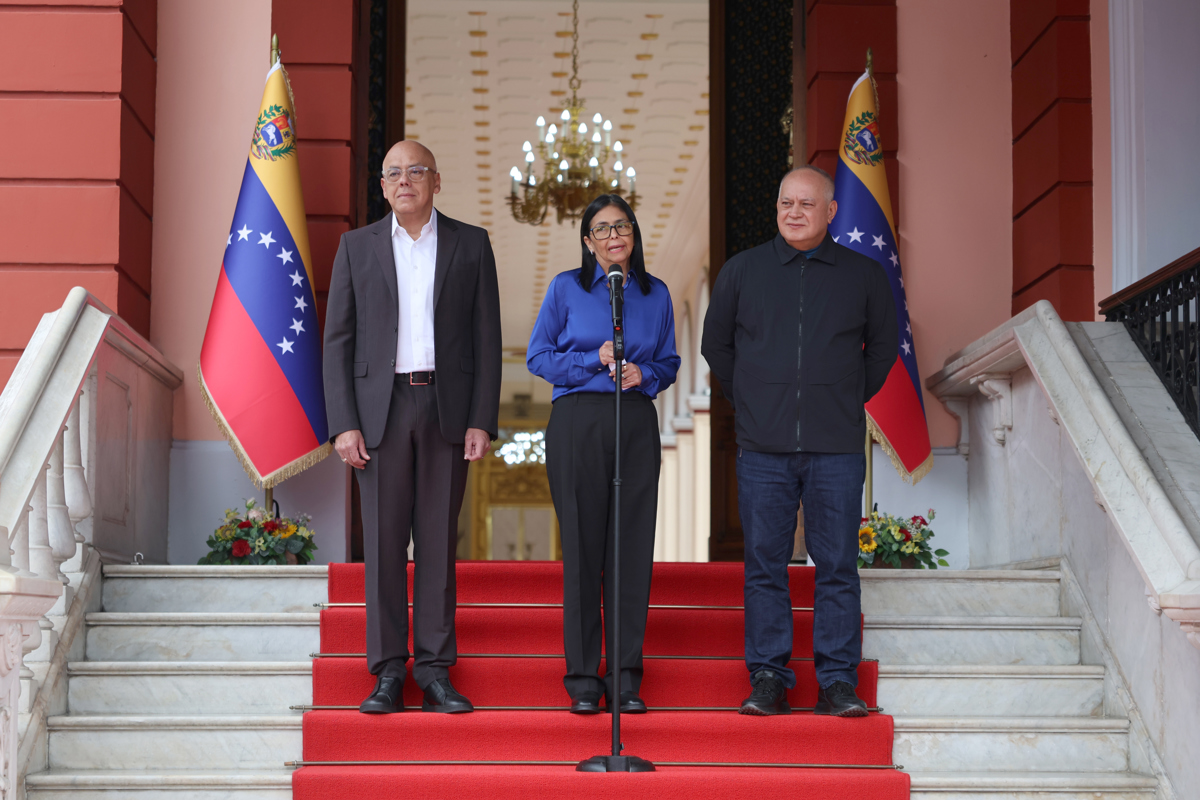
Where is Venezuela going? The president donald trump He captured the Venezuelan ruler Nicolás Maduro, but his administration remains standing, and winks at Washington, owner of the game, while the opposition María Corina Machado tries to return to the game.
After months of military deployment in the Caribbean, the US operation on January 3 concluded with the capture of Maduro in the heart of Caracas.
His vice president, Delcy Rodríguez, considered in his place, and, under pressure from Trump, has granted oil agreements, released imprisoned opponents and resumed receiving flights of deportees from the United States.
Triumvirate
After the humiliating capture of Maduro, Chavismo, which has governed since 1999 with Hugo Chávez, and since 2013 with Maduro, shows a united front.
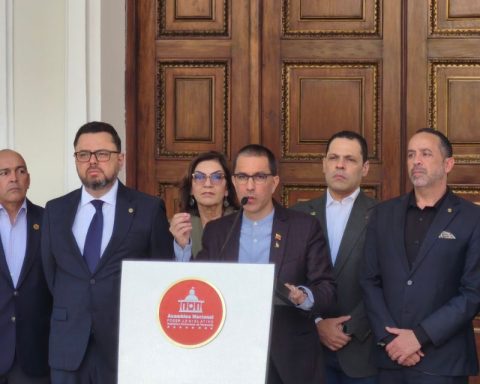
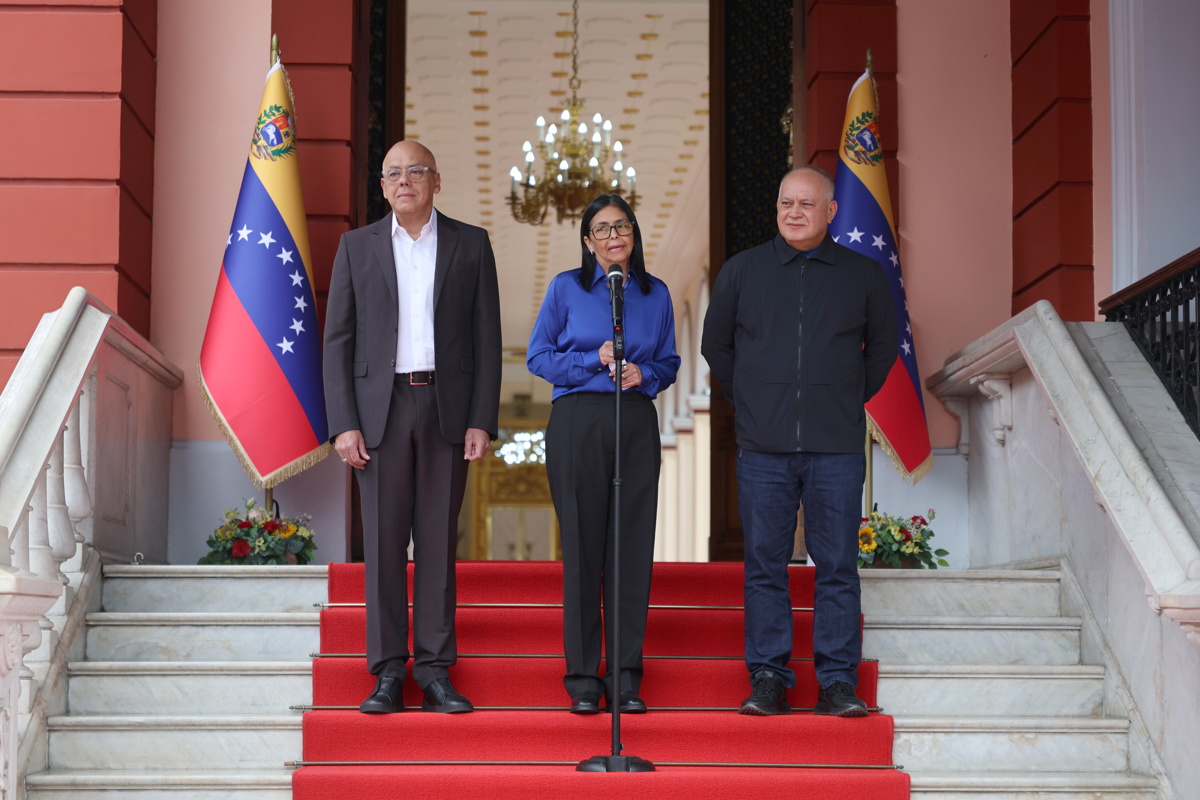
Delcy Rodríguez; his brother Jorge, president of the National Assembly, and the powerful Minister of the Interior, Diosdado Cabello, considered the radical arm of the revolution, appear together at official ceremonies.
Of the call “club of five” (complete with Maduro and his wife Cilia Flores, also detained by the United States), was transferred to a triumvirate.
“Those who remain in the government, (what) has to do is work together” on an agenda imposed by the United States to avoid a new attack, says Benigno Alarcón, professor at the Andrés Bello Catholic University. Splitting could cost them dearlyhe added.
Andrés Izarra, former minister of Chávez, maintains that in practice “the triumvirate is an optical illusion,” given that the hard wing, represented by Cabello, “he has lost the game”.
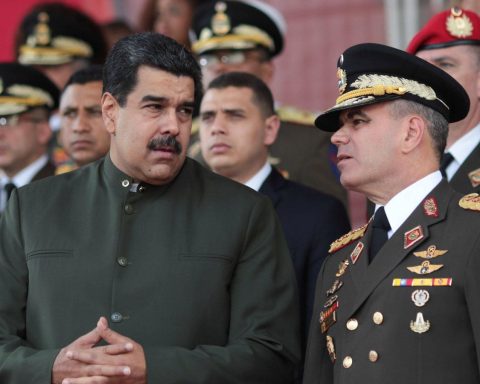
For Elías Ferrer, director of the Orinoco Research consultancy, the Rodríguezes “have to include (Cabello) because he still has a lot of power, but in truth the actors who are setting the pace now are Delcy, Jorge and (the Minister of Defense) Vladimir Padrino, that is, the military sector that is not Diosdado’s.”
The attack, “according to all the information I have, was possible thanks to the collaboration within Venezuela, on the part of the military,” he adds.
What does Trump want?
“Trump is not looking for democracy: he is looking for low-cost oil and stability. A true democratic transition would involve elections, uncertainty, time. Trump has no time: his window closes in 2028. A democracy could vote for options that do not suit it,” Izarra emphasizes.
“Delcy offers exactly what Trump needs: someone who knows the ropes, can guarantee the flow of oil, has no popular legitimacy, and is therefore totally dependent on Washington to survive. Your weakness is your value“he adds.
Alarcón believes Trump does not want to repeat the “mistakes of Iraq,” where the United States overthrew Saddam Hussein’s supporters and found itself with an ungovernable country.
“He seeks to avoid establishing a government” that he would have to “support with troops in Venezuela.” “The Chavistas will always be there, even if they are a minority. The problem is having institutions that respond to the State and not to a faction,” he says.
Maria Corina Machado
Winner of the Nobel Peace Prize, María Corina Machado represents a certain legitimacy: many observers consider that the opposition won the 2024 presidential elections, in which Maduro was declared the winner despite accusations of fraud.
However, trumpto whom Machado presented his Nobel medal, said that she was not qualified to govern.
Alarcón clarifies that beyond the speech “he received her at the White House with the four main figures of the administration: the chief of staff, the secretary of state and the vice president, and they had a two-hour lunch.”
Note that The treatment reflects the importance of the Venezuelan as a political figure.
The oil
Delcy Rodríguez promised to reform the hydrocarbon law, while PDVSA, the giant state oil company, negotiates the sale of crude oil to the United States.
The embargo imposed in 2019 by Trump in his first term remains in force.
“We have to see what happens with the sanctions. Is Trump going to let everyone invest or is he only going to let (the American companies) ExxonMobil, ConocoPhillips and Chevron?“asks Ferrer.
The expert notes that “a profitable production model” already exists, with reserves and much of the infrastructure built.
Even repairing it would be less expensive than starting from scratch.
“An oilman told me there are an additional million barrels a day that can be produced,” he says.
But Alarcón emphasizes that with the specter of the expropriations process promoted by Chávez, the reform of the hydrocarbon law is something “necessary with Delcy or any other person at the head of the government”.
“If we want to activate the Venezuelan oil industry with foreign investment, we must protect that foreign investment, otherwise no one will want to come,” explains Alarcón.