When relations between both countries were more stable, fishermen used to frequent the Venezuelan maritime territory in search of waters richer in fish, a practice that is now rare.
In the Caribbean, not only is tension growing between Venezuela and Trinidad and Tobago, but also the fear of Trinidadian fishermen of going out to sea due to the presence of the coast guards of both countries in the midst of the US military deployment in the area.
The relationship between Venezuela and its English-speaking neighbor has been turbulent for months, made even more so by the presence of the American ship USS Gravely in Port of Spain for four days.
Caracas considered this maneuver a “provocation”, which adds to Washington’s attempts to generate a “regime change” in Venezuela, according to Nicolás Maduro.
In Cedros, a town located on a peninsula at the southwest end of the island, several fishermen rest in their hammocks on the beach. By mid-morning, their boats loaded with fishing nets are also at rest.
Dressed in simple shorts, Kendrick Moodee, 58, explains to AFP that he and his companions are “more cautious” because “the Venezuelan coast guard is a little tense.” Only 10 kilometers separate the Trinidad peninsula from Venezuela, whose coasts can be seen on the horizon.
When relations between both countries were more stable, fishermen used to frequent the Venezuelan maritime territory in search of waters richer in fish, a practice that is now rare.
Several fishermen tell AFP that the coast guard responds with violence to boats that fish in Venezuelan waters. Beatings and extortion by the Caracas authorities have multiplied, he denounces.
*Also read: Cabello says that training to confront the US will include the use of silent weapons
“Anything can happen”
“Things are starting to get more difficult,” says Rakesh Ramdass, a 42-year-old fisherman. He admits to being “afraid to go out,” but he does it anyway. “It’s all we have to earn a dollar,” explains this father of four: “When you go out, anything can happen.”
The Trinidadian coast guard also complicates the work of fishermen in this area known as a trafficking route for drugs, weapons and people, especially for Venezuelan migrants. Criminals add to the threat.
After the first US attack on one of the alleged “drug boats” in the Caribbean in September, Trinidadian Prime Minister Kamla Persad-Bissessar stated that “the US military should kill” all traffickers.
Since then, more than 16 bombings of ships in the Caribbean and the Pacific have left at least 65 dead. Two Trinidadians appear in the registry, according to relatives of the alleged victims.
“In tension”
Persad-Bissessar repeats his support for Donald Trump with the same frequency with which he criticizes Maduro. Caracas responded by suspending gas agreements in force since 2015 and declaring the ruler persona non grata in Venezuela.
With the tension between both countries, “everyone becomes suspicious, even simple fishermen,” a diplomat from the archipelago told AFP. “They are under the crossfire of the armed forces from both sides” and “the economy is affected,” he added.
In Icacos, a town near Cedros, Alexsi Soomai, 63, says that fishermen like him go to sea less regularly.
“Before, the boats left at night, 20 or 30 boats to fish for mackerel,” while now only five leave, describes the Venezuelan who has lived in Trinidad and Tobago for more than 40 years.
Icaco is the arrival point for many undocumented Venezuelans fleeing the crisis in their country.
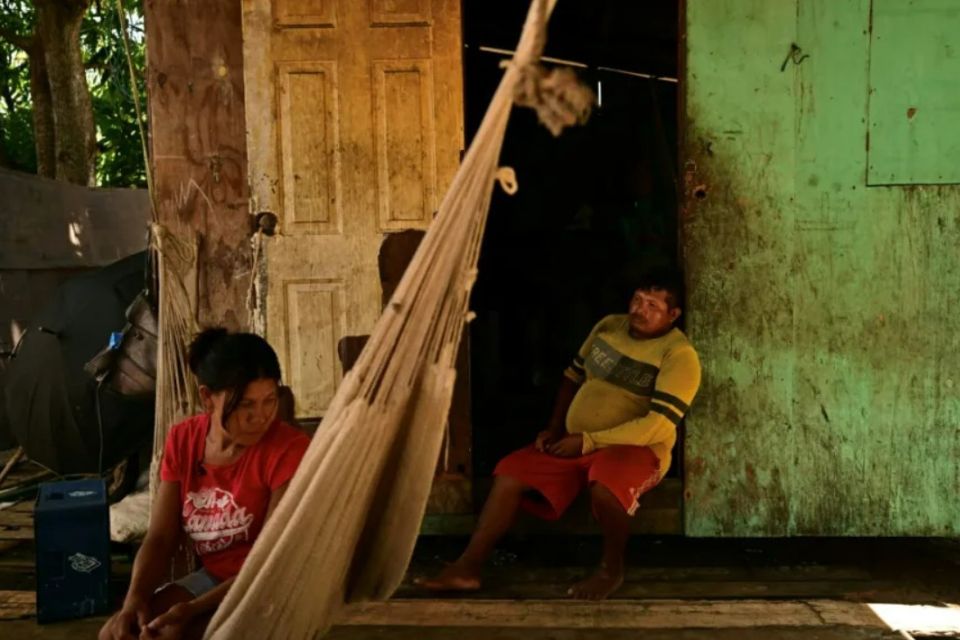
A few steps from the beach, a hamlet with houses made of wood houses several families, including that of Yacelis García, a Venezuelan member of the Warao indigenous community and mother of five children.
“Sometimes we ate, sometimes we didn’t,” he says of Venezuela, where he emigrated from six years ago.
His brother-in-law Juan Salazar, also indigenous, joined them two years ago. Several of their relatives live with them in a modest one-room hut, in stifling heat.
Juan claims to live “solely from fishing” and does not venture far from the coast, for “fear” that the Venezuelan authorities will catch him and return him to his country.
With information from the AFP agency
*Journalism in Venezuela is carried out in a hostile environment for the press with dozens of legal instruments in place to punish the word, especially the laws “against hate”, “against fascism” and “against the blockade.” This content was written taking into consideration the threats and limits that, consequently, have been imposed on the dissemination of information from within the country.
Post Views: 88