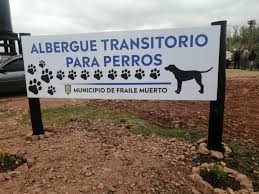
In dead friar they seek to reopen it in the face of the increase in the canine population
Authorities of the animal welfare department and the local municipality evaluate alternatives for the shelter to work again. The neighbors express concern about the growing presence of dogs in the streets.
Dead friar crosses a situation that worries a good part of its inhabitants: the noticeable proliferation of loose dogs in the streets has generated claims, concerns and calls of attention by neighbors from different neighborhoods. In response to this problem, the municipality has begun efforts to reactivate the transitory shelter, a space that in the past fulfilled an important role as refuge for animals in abandonment.
Within that framework, in the last days the official Carlos Melo, a reference of the animal welfare department of the Intendencia de Cerro Largo, was present at the hostel site. Melo attended a technical team with support from the municipal police, with the aim of evaluating the status of the facilities, analyzing the conditions of the place and starting to define the steps to follow for a possible reopening.
As explained by municipal sources, the intention is to find the appropriate mechanisms that allow the refuge to be operated again, in coordination with the departmental authorities and with the support of neighbors and organizations linked to animal protection.
“The situation is evident to anyone who walks through the city. There is a significant amount of loose dogs, and many of them are in poor condition. Others, although they are not aggressive, generate fear in the people, especially in children and older adults. It is an issue that we cannot continue to postpone,” said a neighbor of the downtown area, who accompanied the visit of the authorities to the slope of the shelter.
For his part, the official Carlos Melo indicated that “the will of the animal welfare department is to collaborate with the municipality to find a viable exit. We know that the canine population has grown and that this generates problems, both due to sanitary and road safety.
The transitory shelter worked years ago as a shelter space for abandoned or street dogs. His work consisted not only of providing refuge and basic attention to animals, but also in promoting their recovery, castration, vaccination and eventual responsible adoption. However, logistics and budgetary difficulties determined their closure, leaving an important void in local animal welfare policy.
A financial and community challenge
One of the key aspects that is analyzed today is the economic viability of the project. The authorities recognize that without adequate financial support it will be very difficult to sustain a stable operation of the shelter.
“We know that it is not enough with good intentions. This type of spaces needs personnel, food, veterinary care, maintenance … and that requires resources. But we also believe that there may be support from NGOs, community collections and voluntary work, as has happened in other parts of the country. We will study all the possibilities,” they said from the municipality.
At the same time, a work plan has begun to be prepared that will include a survey of the current canine population, awareness campaigns on responsible tenure and eventual castration, vaccination and adoption days, in coordination with Zoonosis and the animal welfare department itself.
The community, part of the solution
From different areas of the city, expressions of support to the idea of reopening the shelter have emerged, as well as concrete proposals to collaborate. “In our block there are at least six dogs that always walk together, without a necklace, without owner, and some have already crossed with cyclists or motorcycles. But it is not just about removing them: it’s about caring for them and preventing them from being reproduced without control,” said a teacher in the Candelaria neighborhood.
Protective organizations of animals and solidarity neighbors have also begun to show interest in joining this possible reopening. “We continue to feed several stray dogs. If the shelter reopens, we will give a hand, as it is. It is not about enclosing animals, but about giving them a chance,” said a volunteer who asked to keep his name in reserve.
An answer that combines responsibility, sensitivity and action
From the municipality of Friar Dead, it insists that this is just the first step. “The issue of loose dogs is not solved only with confinement or transfers. A comprehensive approach is necessary, which combines control, education, veterinary care and adoption. The reopening of the shelter would be another tool in that path, and not the only one,” said one of the local hierarchs.
The coming weeks will be key to defining whether space reactivation is effectively completed. Meanwhile, the authorities promised to keep the population informed about the advances and to continue listening to the proposals that arise from civil society.