In the Leopoldo Reyes feed factory, in San Cristóbal, province of Artemisa, the reality cannot be disguised: of an installed capacity to produce 300 tons of animal feed per day, only 34 are achieved.
Director Michel Ravelo Herrera avoids euphemisms and recognizes that dependence on imported raw materials—corn and soy—limits any attempt to lower prices and stimulate national production of meat and eggs.
The panorama described by newspaper Workers It is that of an industry that moves at a slow pace, trapped in the scarcity of inputs and the lack of productive chains. Although there are areas leased to foreign companies such as ViMariel SA, located in the Mariel Special Development Zone, production continues to be almost entirely imported, one of the old open wounds of the national economy.
Cuban science bets on transgenics
The Havana Center for Genetic Engineering and Biotechnology (CIGB) has been a protagonist in the development of transgenic crops since 2020.
According to Dr. Mario Pablo Estrada García, director of Agricultural Research, Cuba imports about 350 thousand tons of soybeans and 800 thousand tons of corn each year, at a cost close to 500 million dollars.
Faced with such a financial drain, the scientific solution made its way without academic disputes: creating varieties resistant to climate and pests, capable of multiplying yields with the same area of land and labor force.
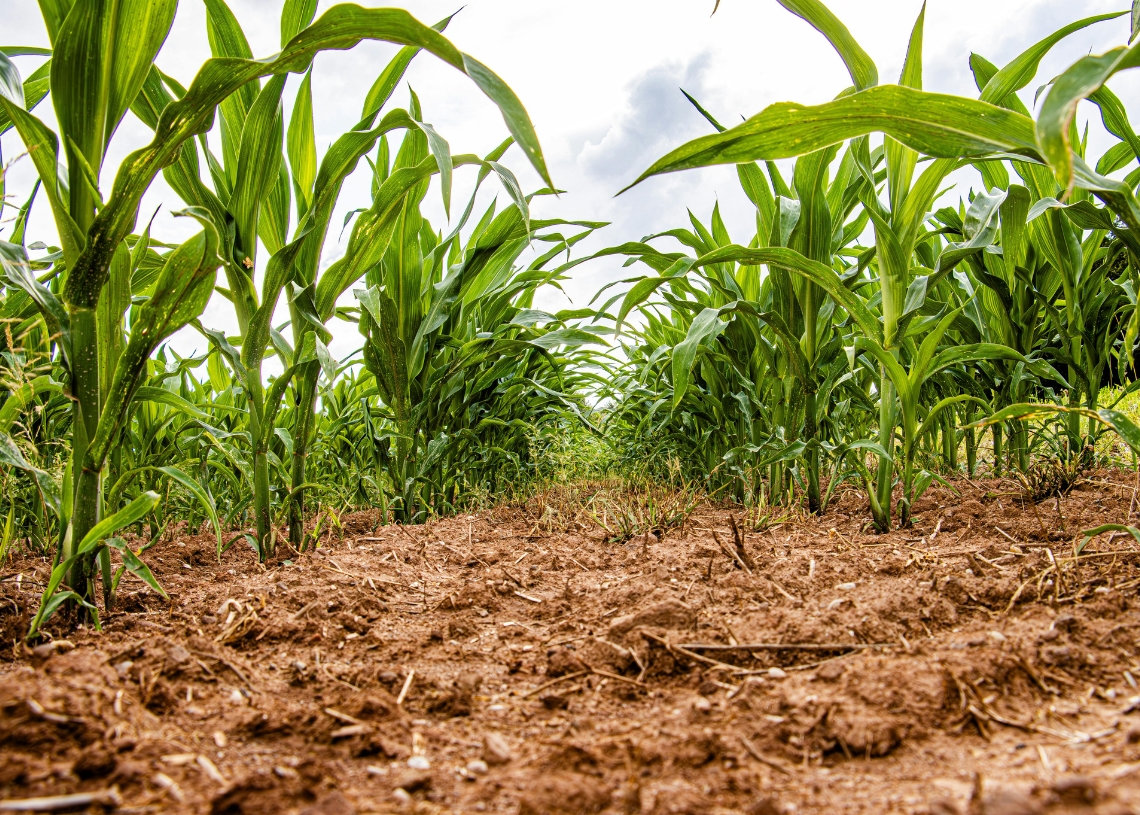
Since then, CIGB engineers and technicians have worked in experimental plots with registered seeds, monitoring each dose of fertilizer and each stage of the crop.
The transgenic corn hybrid H-Ame15 and five soybean varieties are already in the multiplication process. However, as noted Workersthe results have not reached the expected impact on the conversion of animal protein.
The land has the last word
The media’s report crudely exposes the limitations: lack of financing to have the necessary technology; fertilizer shortages and incomplete technology packages; lack of collection machinery and dryers. At the same time, high harvesting and drying costs and technological indisciplines that divert inputs to other crops. And to make matters worse, the sector also suffers from rural crime, with cobs stolen during the long drying process.
In Sancti Spíritus, for example, although 720 hectares were released for transgenic cultivation, only 382 were planted. Farmers recognize that the yield doubles native corn, but the lack of optimal conditions prevents exceeding the 8 tons per hectare that hybrids promise.
Many times the performance written in the plans has not been obtained. According to the Master of Science Leyenis García Santos, graduate in Microbiology, who works at the CIGB, it has been planted out of time, to which is added “the lack of electricity that prevents irrigation, and in particular, technological indisciplines with corn for which products and inputs are destined, but producers distribute them for other crops.”
For his part, one of the pioneers in the GMO experience, René Alemán Rodríguez, from the Juan Darias credit and services cooperative (CCS), located in Yaguajay, issued a dramatic warning: “Corn producers are in danger of extinction due to lack of inputs.”
Granmaan optimistic vision
In contrast to the state of affairs described by Workers, the diary Granma offered a much more encouraging account in an article published last August.
According to Dr. Estrada himself, there are 5,608 hectares of transgenic soybeans planted for animal consumption and 300 for seeds. In the case of corn, 150 hectares are reported for seed and eight for pure line, with a productive potential of nine tons per hectare.
The projections are ambitious. By 2026, the aim is to reach 25 thousand hectares of transgenic corn, with an estimated yield of 125 thousand tons for animal feed. Regarding soybeans, the aim is to consolidate production in 4,500 hectares per province, expanding the capacity to generate certified seeds.
“The most notable benefits are the increase in yields, by achieving higher production per hectare, the reduction of losses due to pests and diseases, improved efficiency in the use of water and fertilizers, and the increase in food availability,” summarized Dr. Estrada.
Two stories in tension
The apparent contradiction between the perspective of both newspapers is evident. While Workers describes a scenario full of obstacles, with producers who barely manage to close cycles and with a preference for importing feed rather than taking risks in agriculture, Granma paints a picture of expansion and success, with figures that project a promising future.
The difference is not minor. In one case there is talk of planting just a few hundred hectares with constant difficulties, and in the other of thousands of hectares already in production and tens of thousands projected.
The peasant testimonies collected by the CTC newspaper show enthusiasm for the yields of transgenic corn, which can quadruple that of Creole corn, but also frustration over the lack of resources. “The final result does not finance the value chain,” warns Enrique Rosendo Pérez Cruz, director of the Sancti Spiritus CIGB.
For its part, the PCC body insists that the transgenic seed production program is an essential pillar for food security in Cuba, promoting sustainable and efficient agriculture. He even mentions international biosecurity projects, such as the one financed by the Global Environment Facility and the United Nations Environment Programme, which have allowed the creation of laboratories to detect genetically modified crops and monitoring systems.
The question that remains is whether both stories are contradictory or complementary. Workers It focuses on the practical problems of producers: lack of inputs, technology and financing. Granma emphasizes scientific advances, approved policies and official projections.
Ultimately, both discourses reflect the tension between the science that promises and the reality that limits and readjusts. The future of transgenics in Cuba will depend on closing that gap between two polarities: converting laboratory achievements into palpable results in the fields and in the markets.