Craftsman Mateus Vitor Santos Vilela, aged 27, is the fourth generation to keep alive the tradition of popular art of producing masks in Olinda, Pernambuco. The first and best known is La Ursa. It all started with his great-grandfather Julião Vilela, an artisan born in the city at the end of the 19th century, who gives its name to the Julião das Máscaras Artistic Bazaar, where the pieces are created. After him came his son João Dias Vilela, his grandson João Dias Vilela Filho and his great-grandson Mateus.
In the third generation, João Dias Vilela Filho learned the trade by watching his father work to support the family. His interest in doing the same work appeared early, when he was 12 years old. The only one of the five brothers who followed the tradition of craftsmanship was called on one occasion to replace his father, who had become ill, as a fine arts teacher in municipal schools in Olinda. That moment resulted in a formal contract and continuation in the profession until retirement, without, however, leaving aside other activities.
“Nothing in the world is easy, you have to insist. There are a lot of people who give up halfway through, but they dare because they have to have total dedication. I’ve had a lot of hard work to do. My father said ‘it’s not right, but you do better’ and that’s how I started to learn”, recalls João in an interview with Brazil Agency.
“If you tell a boy that it’s ugly there, he’ll go home and never come back. You have to tell him that he does better”, teaches João, who, at 65 years old, says he has a lot of patience to transmit his knowledge to interested people.

Artists Anderson Ezequiel Leite, João Dias Vilela Filho and his son Mateus Dias Vilela at the exhibition Between Masks and Giants: The Juliões of Olinda Carnival – Photo: Tomaz Silva/Agência Brasil
Masks
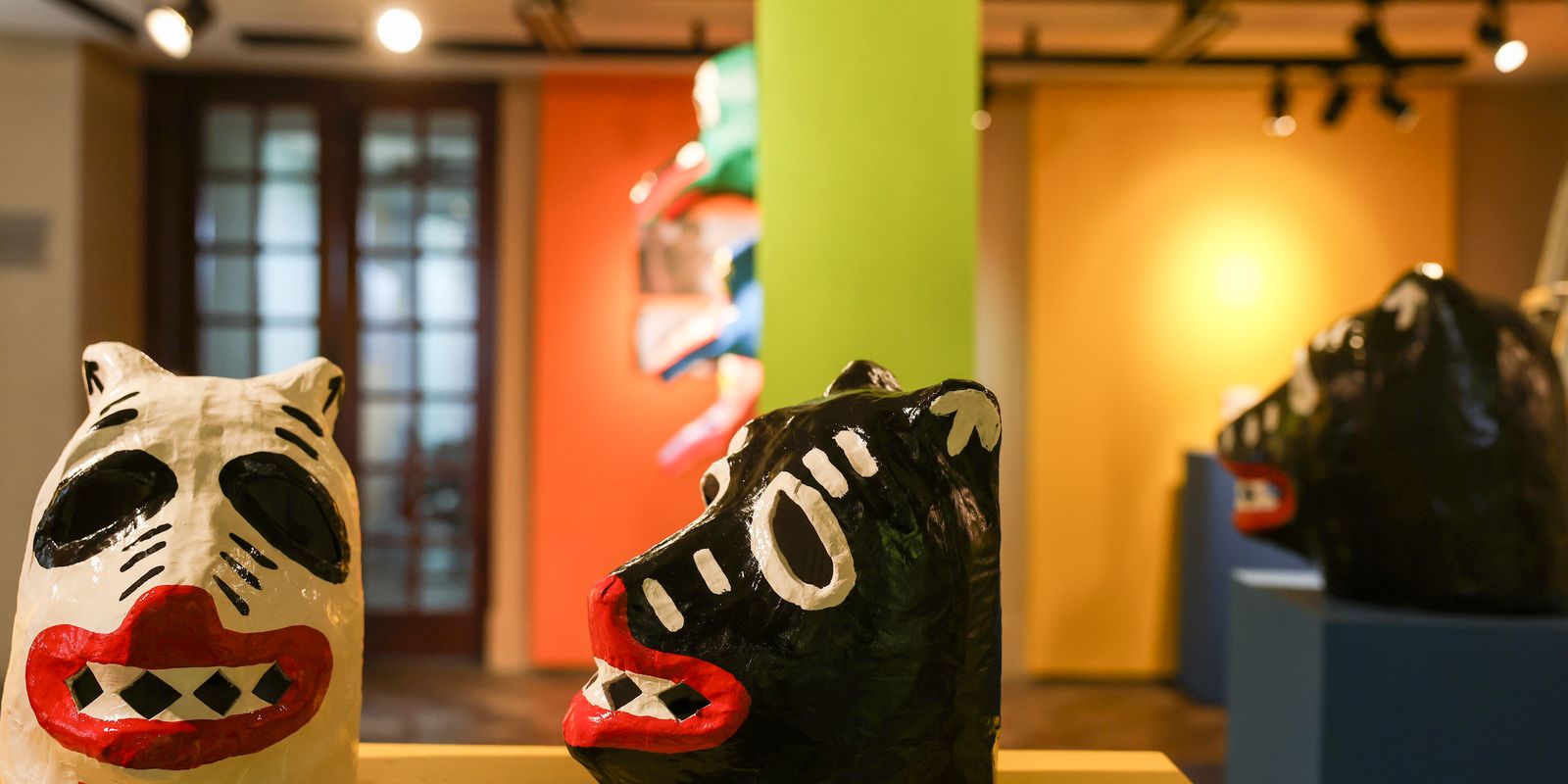
The masks made from papier-mâché, with a mixture of paper and cassava gum, attract the attention of residents and visitors to Olinda and are part of the city’s carnival culture, which attracts large numbers of tourists and fills the streets.. During the period, many of them buy the pieces to participate in the various parades of troças, maracatus and blocks, which also feature giant dolls as a characteristic attraction.
The most prominent is the Midnight Man. He passes through the streets precisely on Saturday at this time and on Sunday and is responsible for handing over the key to the Olinda carnival so that the Troça Carnavalesca Mista Cariri Olindense can open the festivities.
Show
Now, the art of masks can be admired in Rio de Janeiro until February 25, 2026, at the exhibition Between Masks and Giants: The Juliões of Olinda Carnival. The new exhibition from the Sala do Artista Popular (SAP) program was installed at the National Center for Folklore and Popular Culture (CNFCP/Iphan), which is located at the Edison Carneiro Folklore Museum, in Catete, south of Rio.
“It’s very important for us because we see our culture going beyond borders. We produce and make [máscaras] for more than 100 years, since my great-grandfather, my grandfather, my father and today with me”, says Mateus, proudly, in an interview with Brazil Agency.
‘It makes me very proud that people recognize us as artists. Culture cannot fall. I really appreciate the people who buy. I like what I do. When we like what we do, we will embrace the whole world”, says Mateus’ father.
The appreciation of work has already crossed borders. Mateus says that the family has already sent masks to various places around the world, but This is the first time he has held an exhibition outside of Pernambuco. “We also see it as an opportunity for people to get to know the culture of Pernambuco, which has been growing more and more, especially regarding La Ursa, which today is a symbol of Pernambuco’s carnival.”

Exhibition Between Masks and Giants: The Juliões of Olinda Carnival – Photo: Tomaz Silva/Agência Brasil
Interest in La Ursa went beyond Carnival. It is currently used in decoration, is the name of a restaurant, is a museum collection and even appears in the film The Secret Agentby Kleber Mendonça, starring Wagner Moura, which has been receiving awards around the world. “La Ursa today has almost become its own entity. It is present in restaurants, blocks, clothes and props. In Pernambuco, you can see La Ursa from an advertisement to a person’s shirt”, he adds.
The experience and love of Carnival drive the continuity of the tradition of producing masks. “We like carnival. I play, my father does too, this really encourages us to do it. It’s a legacy. There are people who buy masks since they were little and tell us ‘my father bought them with his grandfather’, people who have been buying them with us for years.”
Mateus remembers that in the beginning his great-grandfather made the characteristic masks of the time that were Pierrot and Colombina until his grandfather started making the giant dolls of Olinda, which currently have a smaller production. “The Olinda dolls were made by my grandfather, he made the Midnight Man, the first female, who was the Woman of the Day”, he says, agreeing that the dolls are very characteristic of Olinda.
“It’s something that gets into our blood that we don’t fail to attend to and are increasingly improving to come out better.”
According to the grandson of the Juliōes tradition, production continues throughout the year, because they receive many orders, mainly the La Ursa mask, but there are also those of animals and traditional characters. “There are people who come to buy during Carnival, but there are also people to buy throughout the year. We also participate in fairs like Fenearte [Feira Nacional de Negócios de Artesanato] from Olinda. We have all kinds of demands, for faces, heads and decoration.”
João Dias Vilela Filho and his son Mateus came to Rio for the opening of the exhibition on Thursday (11). Excited about the legacy received from Julião, they like to share their knowledge. They participated in workshops to teach how masks are produced. In all More than 100 pieces are on display, some on display and the rest in the Sales Space. Prices are between R$100 and R$250.
Among the various masks on display, the exhibition presents a panorama in photos and video, showing the creation process, with the work stages at João Dias Vilela Filho’s home/studio, in Varadouro, which is close to the Artistic Bazaar of Julião das Máscaras, in Olinda. The images that make up the exhibition and catalog were captured by award-winning photographer Mirielle Batista Misael.

Exhibition Between Masks and Giants: The Juliões of Olinda Carnival – Photo: Tomaz Silva/Agência Brasil
For the author of the research and text of the exhibition catalog, anthropologist Raquel Dias Teixeira, as indicated in the exhibition’s promotional content, visitors will have “access to a carnival symbolic universe deeply rooted in Pernambuco’s popular culture”. Still according to the anthropologist, this art goes beyond shaping faces and memories of the popular imagination.
“More than festive objects, these masks, when inhabiting different places and contexts, also express bonds of kinship, coexistence and territory, perpetuating a knowledge that unites work, play and invention”, points out Raquel in the content.
The catalog tells the story of Julião’s family in this art, which features large heads for carnival costumes, but also mamulengos, wooden toys and other craft objects. During its history, the family produced more than 50 giant dolls.
Service:
Edison Carneiro Folklore Museum – Rua do Catete, 179
Exhibition period: December 11, 2025 to February 25, 2026
Visiting days and times: Tuesday to Friday, from 10am to 6pm. Saturdays, Sundays and holidays, from 11am to 5pm
During the year-end break, on December 24th, 25th, 31st and January 1st, 2026, the exhibition will be closed
More information is available here.