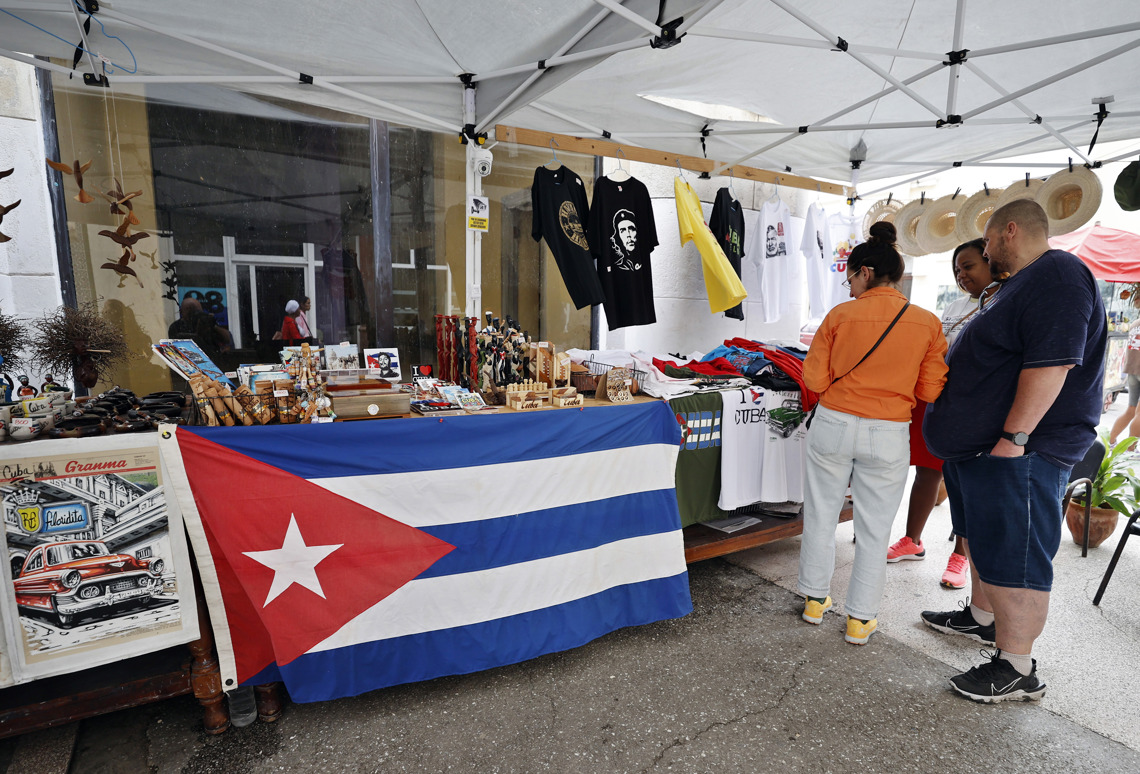
The Cuban Government recognized this Thursday that the tourism on the island is going through a “complex situation” and will not meet its revenue and international visitor forecasts for the year by about 25 percentage points in each case.
The Minister of Economy and Planning, Joaquín Alonso, took stock of the situation of the former engine of the national economy when speaking before the plenary session of the National Assembly of People’s Power (ANPP).
According to its department’s calculations, income will reach $917.4 million in 2025, 75.8% of what was expected, and the number of visitors will be around 1.9 million people, 73.1% of the state estimate for the entire year.
If confirmed, this number of travelers would be the worst annual record for the Cuban tourism sector since 2003, not counting the three years most affected by COVID-19. In comparison, the island attracted about 4.6 and 4.7 million visitors in 2017 and 2018, respectively.
Tourism continues without taking off and registers its worst October in four years
Impact on the economy
The State Office of Statistics and Information (ONEI) recently reported that between January and October the country received a total of 1,477,892 international visitors, 19.9% less than in the same period in 2024.
The weakness of the Cuban tourism sector, the island’s economic engine for years, has as its main factors the serious economic and energy crisis that the country is suffering – and which has an impact on services and experience -, the cutting of air routes and US sanctions.
Tourism is fundamental to the economic recovery plans of the Cuban Government, due to its contribution to the gross domestic product (GDP) and the inflow of foreign currency it represents, which is usually among the most important, along with professional services and remittances.
Currently, the tourism situation in Cuba contrasts with that of similar destinations in the Caribbean region, such as Punta Cana (Dominican Republic) and Cancún (Mexico), which have registered historic highs in visitors after the pandemic.