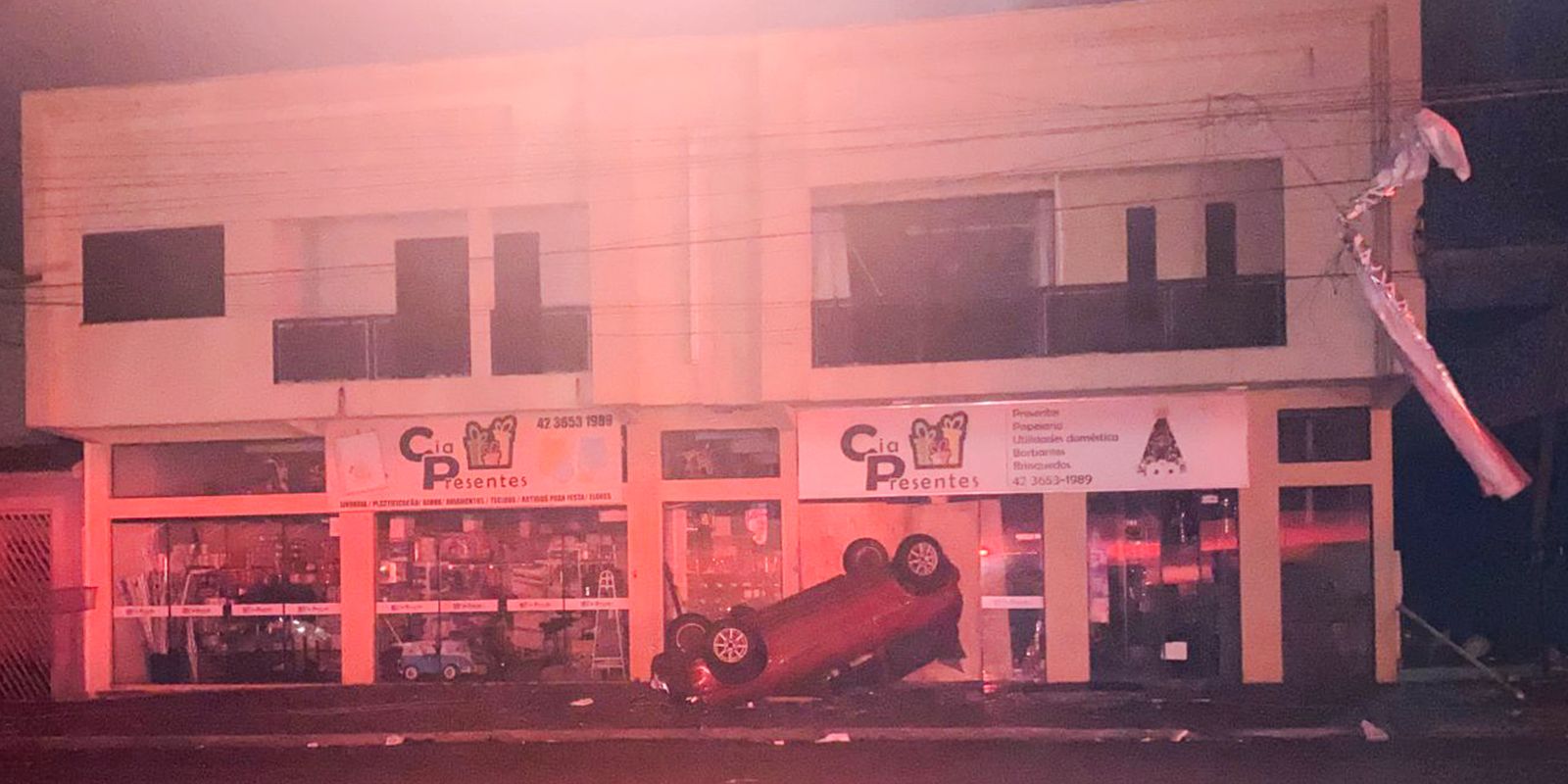
Tornadoes, like the one that hit city of Rio Bonito do Iguaçu, in Paranáare localized, short-lived and difficult to predict phenomena. According to the meteorologist at the National Institute of Meteorology (Inmet), Danilo Siden, they form inside storm clouds and cause damage when they reach the ground.
“With the formation of the extratropical cyclone in Rio Grande do Sul, we also had the formation of a cold front in the northernmost part of this cyclone, that is, in Paraná. Within this cold front, we have several phenomena, such as intense rains, lightning storms, hailstorms, and there is the possibility of one of these clouds forming a tornado”, informed the Inmet meteorologist.
“It is a very intense, but short-lived phenomenon, which we know can occur within a cold front, but we cannot predict it because it is very localized”, adds Danilo.
In the case of Rio Bonito do Iguaçu, the cloud that gave rise to the tornado was called a “supercell” by the Paraná Environmental Technology and Monitoring System. As the winds exceeded 250 kilometers per hour (km/h), the tornado was classified as F3, on the Fujita scale, which goes from 0 to 5. This represents severe damage.
Formation of tornadoes
According to the meteorologist, some characteristics can favor the formation of tornadoes, such as the presence of warmer air close to the ground, and the rapid change in wind direction or speed, but even in places that have a warning system they can only predict them around 15 minutes in advance.
In Brazil, tornadoes seem rare, but they are not. Environmental engineer and researcher at the State University of Rio de Janeiro and the Serrapilheira Institute, Celina Rodrigues, explains that the South Region of the country is one of the places with the highest incidence in South America, alongside Argentina and Paraguay.
“This phenomenon is relatively frequent, but its consequences become more evident when it affects populated areas. It is more common in the transition period between spring and summer”, said Celina.
Despite having occurred after the formation of an extratropical cyclone, the environmental engineer also revealed that the two phenomena are not the same, and do not always occur together.
“Tornadoes are phenomena of small extent, ranging from tens to hundreds of meters, reaching a few kilometers, and lasting from seconds to minutes. On the other hand, atmospheric cyclones are large-scale phenomena, which affect large areas. Their duration is generally a few days, covering hundreds to thousands of kilometers.”
The cyclone that still operates on the coast of the South and Southeast regions of the country is called extratropical because it is formed by hot and cold air masses. In addition to causing strong winds, it caused the displacement of a cold front, bringing intense rain to several parts of these two regions.