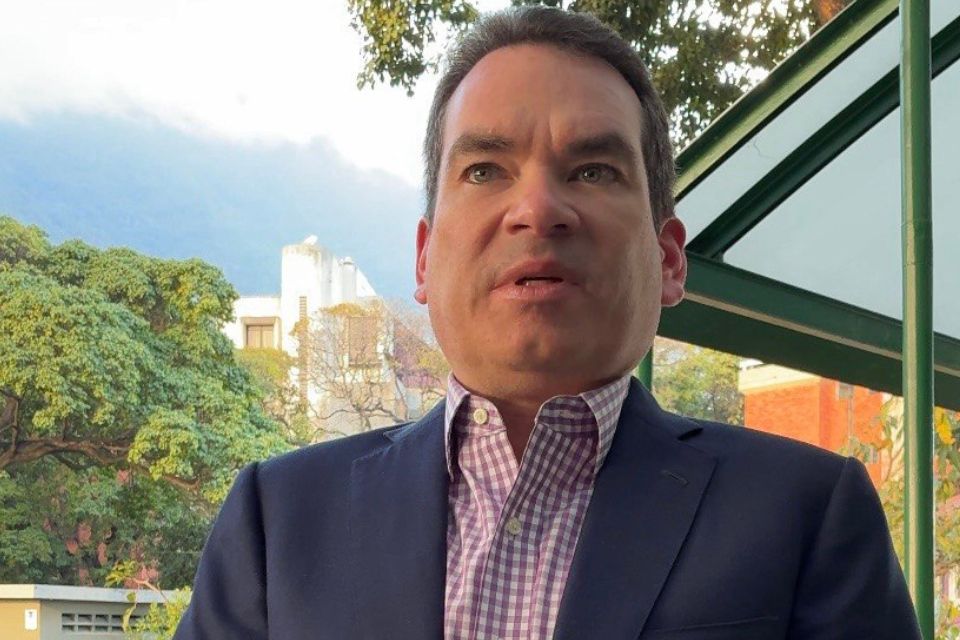
The deputy to the National Assembly Tomás Guanipa asks the authorities for information about his brother’s whereabouts. He urged the government and the opposition to do their part in this new political moment to resolve the problems among Venezuelans and achieve “finally democracy.”
Tomás Guanipa, deputy to the National Assembly and brother of the opposition Juan Pablo Guanipa, considered that the new arrest of the politician, a few hours after being released, “is a bad precedent just at the moment when we are discussing an amnesty law that could achieve the mass release of political prisoners and initiate a stage of reunion, of dialogue, of agreement so that Venezuela can finally democratize. “This is not good news.”
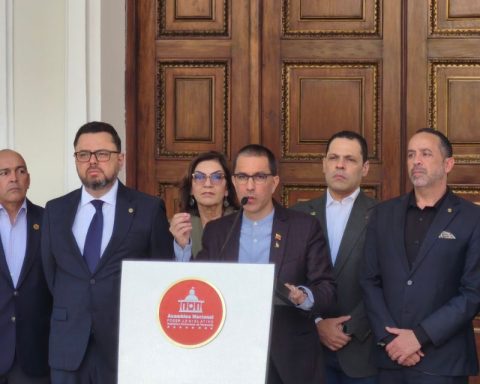
These statements were offered by Guanipa during his participation in a public consultation activity on the amnesty law project in Caracas this Monday, February 9.
The deputy insisted on denouncing that they do not know the whereabouts of Juan Pablo Guanipa and although he said that there are rumors that he is at the headquarters of the Bolivarian National Police (PNB) in Maripérez and that he was taken to deliver food, he was denied that he was being held there. “We hope to not only have news, but also that he be released again,” Tomás Guanipa demanded.
*Read also: Cabello defends Juan Pablo Guanipa’s new arrest: He wanted to “embarrass the country”
For Guanipa, the new political stage that the country is experiencing after the bombings by the United States on January 3 and with Decly Rodríguez in charge of the Executive, the discussion of the amnesty law and other changes “deserves that we all do our part, both the government that has the greatest responsibility and the opposition that also has to assume this as its own” in order to achieve, he said, freedom and democracy.
Tomás Guanipa insisted that his brother did not violate the precautionary measures imposed by the authorities with the tours he took through Caracas and with his statements: “In the case of Juan Pablo, nowhere did he say that he could not speak,” he emphasized.
The parliamentarian said that they have received calls and communications from different governments around the world that have expressed concern about the new arrest of Juan Pablo Guanipa.
Deputy Guanipa asked all parties involved in this process with the political prisoners to take care of the tone and the process itself, “that we see the consequences and threats that there may be on Venezuela and on ourselves as political actors. “They should force us Venezuelans to resolve our problems among ourselves,” he stated.
Regarding the amnesty law project, Tomás Guanipa admitted that he has many observations, that it should have international standards, that it guarantees releases without them being discretionary, that there is reparation so that there is forgiveness, not repetition “of the arbitrariness of putting people in prison without due process”; but he admitted “we are making a great contribution” towards the release of all prisoners for political reasons.
For Guanipa, the essential thing is that there are no more political prisoners in the country and that people can be freely in the country “without fear of being arrested.” In the same way, he condemned that there are still people detained and that their relatives do not know their place of detention.
Some political prisoners received house arrest, such as Perkins Rocha and Freddy Superlano, the same measure that the Public Ministry requested for Juan Pablo Guanipa after his new imprisonment, and his brother said that this measure “is incomprehensible,” as he reiterated that with the approval of the amnesty law, all prisoners must receive “total freedom and erase any charges that may have been brought against them.”
Juan Pablo Guanipa was released from prison on Sunday, February 8, and after going out to tour the streets of Caracas in a caravan and greeting relatives of political prisoners, he was imprisoned again. His relatives demand information from the authorities about his whereabouts.
*Journalism in Venezuela is carried out in a hostile environment for the press with dozens of legal instruments in place to punish the word, especially the laws “against hate”, “against fascism” and “against the blockade.” This content was written taking into consideration the threats and limits that, consequently, have been imposed on the dissemination of information from within the country.
Post Views: 241