The nation is an ethnic community that occupies the same territory and shares similar elements that keep its members united and allow them to build a cultural and historical identity.
Among the various factors that make up a given ethnic community are religion, language, culture, traditions and a shared history.
When the nation is organized politically, a legal and political apparatus emerges, called the State, that directs it, also composed of a set of higher bodies, also called government, that dictate the rules that regulate its execution.
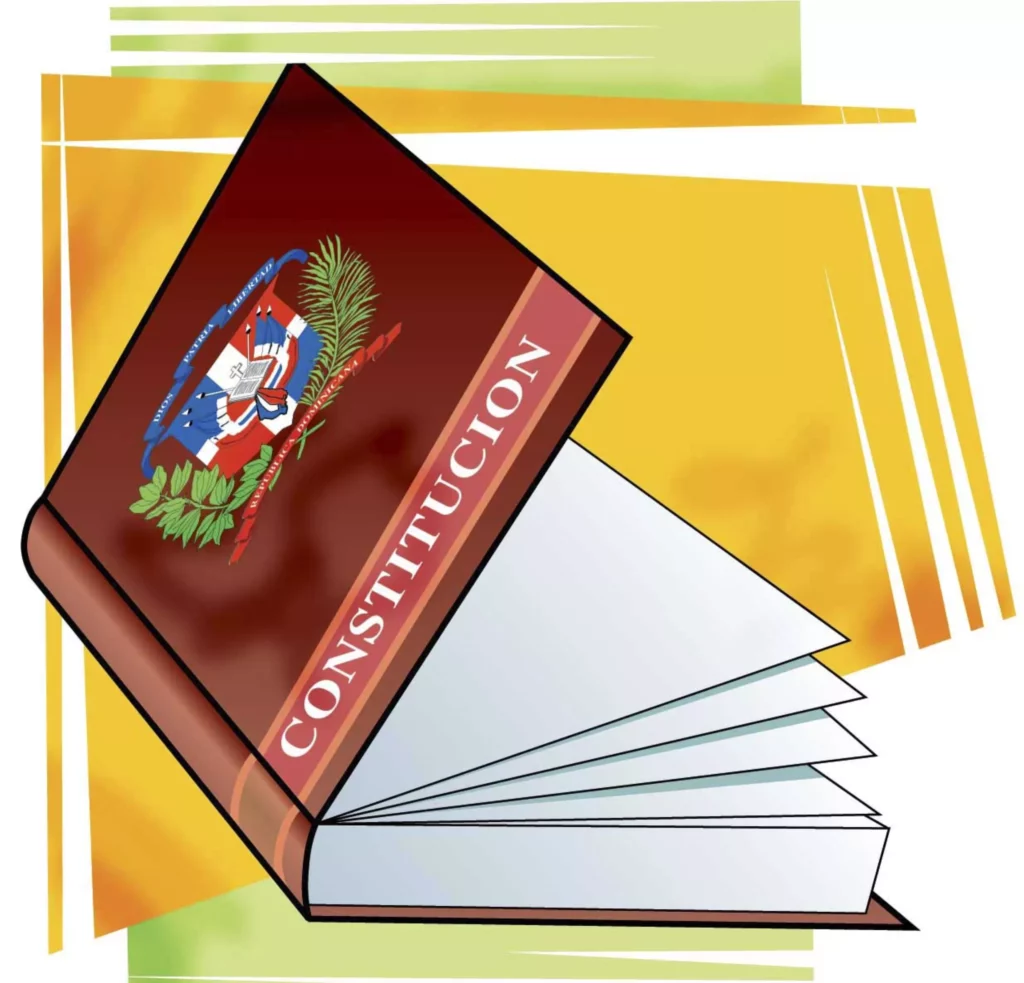
Both the State and the nation need a normative code that regulates their actions and determines the form of government that the country will have. This code is called Constitution.
The Constitution It is the fundamental political-legal order of a nation. Establishes the governing bodies of the State and establishes their powers and limits. Another conception refers to the Constitution as the act of a State or the first fundamental law that confers legal personality to both the State itself and the public powers.
There are various names with which specialists refer to the constitution, such as Magna Carta, Fundamental Pact and Substantive Charter. It is considered Fundamental Law because it establishes the general principles of the State and because the entire legal system of a country is derived from that Supreme Law: laws, regulations, ordinances, regulations, decrees, etc.
Once the constitution has been drafted and approved, it must be promulgated as Law by the National Congress or Legislative Branch. The Constitution, according to Ferdinand Lasalle, is not just any law, but rather the Law of Laws, the essence and foundation of all ordinary or general laws of a nation, known as adjective laws. In a state of law nothing is legal if it violates the Constitution.
Since ancient times, in Greece and Rome, there is news of the use of constitutions, as codes of rules written to control the exercise of power by the people elected by the majority of the people to direct the government. Hence, since the emergence of the State, it has been governed by a set of legal norms called Constitutions.
However, the concept of a constitution, as it is known today, dates back to medieval times. The first constitutional rule that is known is that of the English people, since it was in England, around the year 1215, when, after some conflicts between the nobility and King John (who was also known as “John without a Land”), certain rights of the nobility were recognized through the Magna Carta, which was not a constitution in the strict sense of the term, but it did represent the beginning of regulations, written or not, that limited both the rights of the monarch and the members of the nobility.
Constitutions can be customary, that is, unwritten or uncodified, under which rulers and governed are governed in accordance with norms and customs accepted by the generality of the people. There is also the modality of written constitutions, which is what has prevailed in modern states of law since the end of the 18th century.
Currently, in the United Kingdom or England there is no written constitution, even though the regulatory code that governs said nation is largely based on various written documents, such as the Magna Carta, which dates back to the 13th century, and the Bill of Rights, from 1689.
In the case of the Dominican Republic we know that, since its birth as a State, it has had a constitution written according to the Western liberal and democratic model.
In the constitutional system, two types of constitutions are distinguished: rigid and flexible. The constitution is rigid when it can only be modified or reformed by a Constituent Assembly convened or empowered specifically for such case.
On the other hand, when it can be modified or reformed by the ordinary legislative body, that is, by an assembly established to produce ordinary legislation, the constitution is said to be of type flexible.
The Dominican constitution is rigid in nature; although there are jurists who support the criterion according to which, due to the high number of reforms that it has received, it has also sometimes been flexible.
On February 27, 1844, the Dominican people proclaimed their political independence and created a State with the name of the Dominican Republic. During the first months of its political existence, the young Dominican State had as its provisional constitution, which was the Manifesto of January 16, 1844.
However, between the months of July and November, a Constituent Assembly was chosen with the mandate to draft the first Dominican Constitution. At that time the notion of constitution was not unknown among Dominicans, since at the beginning of the 19th century they were governed by the Toussaint Constitutionafter in 1801 it unified the Spanish part of the island of Santo Domingo with French Santo Domingo.
Later, starting in 1812, during the period that in Dominican history is known as “La España Boba”, the Constitution of Cádiz. In 1821, Dr. José Núñez de Cáceres separated Santo Domingo from Spain, and created the Independent State of Spanish Haiti, which was protected by a Constitutive Actwhich was a kind of Fundamental Law, but of ephemeral existence.
Shortly after, following the expedition of Jean Pierre Boyer, in 1822, which gave rise to the Haitian Domination (1822-1844), the Dominicans were governed under the legal precepts of the Haitian Constitution of 1816, which was later revised in the Constituent Assembly of 1843, in which several Dominican deputies participated.
Once the Constituent Assembly was convened, the decree ordered that the constituents meet in the Villa de San Cristóbal, away from the central headquarters of the government, so that they would have all the necessary freedom of action and opinion, while at the same time meeting away from the “pernicious influence of the party spirit.”
The Constituent Congress was made up of 32 deputies: four from Santo Domingo, three from Santiago and another three from El Seybo; two for Azua and two for La Vega; and one for each of the remaining commons. To preside over the Constituent Assembly, the poet, writer, thinker and later priest Manuel María Valencia, one of the most highly cultured Dominicans of that time, was elected.
The Constituent Assembly was installed on September 24, 1844 and a special commission, made up of Vicente Mancebo, Buenaventura Báez, Manuel María Valencia, Juan de Aponte and Andrés Rosón, was appointed to draft the historic text.
To draft the first Dominican constitution of 1844, the constituents had as their main sources the Constitution of Philadelphia, of 1787, the Constitution of Cádiz, of 1812, as well as the French Constitutions. However, the direct antecedent of our Fundamental Pact is constituted by Demonstration of January 16, 1844. In the constitution there is also a certain influence of the French revolutionary ideas contained in the famous Declaration of Rights of Man and Citizenfrom 1789.
The legislators spent a little more than a month and a half deliberating on the new Draft Constitution, which was finally sanctioned, promulgated and signed on November 6, 1844. It was an almost perfect legal Pact, wisely conceived in the light of the North American, French and Spanish liberal ideas contained in different constitutions.
In its first article it was stated that the Dominicans constituted a free, independent and sovereign nation; In addition, the democratic system of government was established, which, among other characteristics, had to be civil, elective, alternative and representative, principles still in force in the Dominican Constitution reformed in 2015.
Although the Dominican Constitution, since its entry into force in 1844, has been reformed 39 times, its main tenets have remained unchanged, such as the equality of civil and political rights of the citizen, the abolition of slavery, the protection of the Catholic religion, freedom of worship and expression, as well as the affirmation of Dominican nationality.