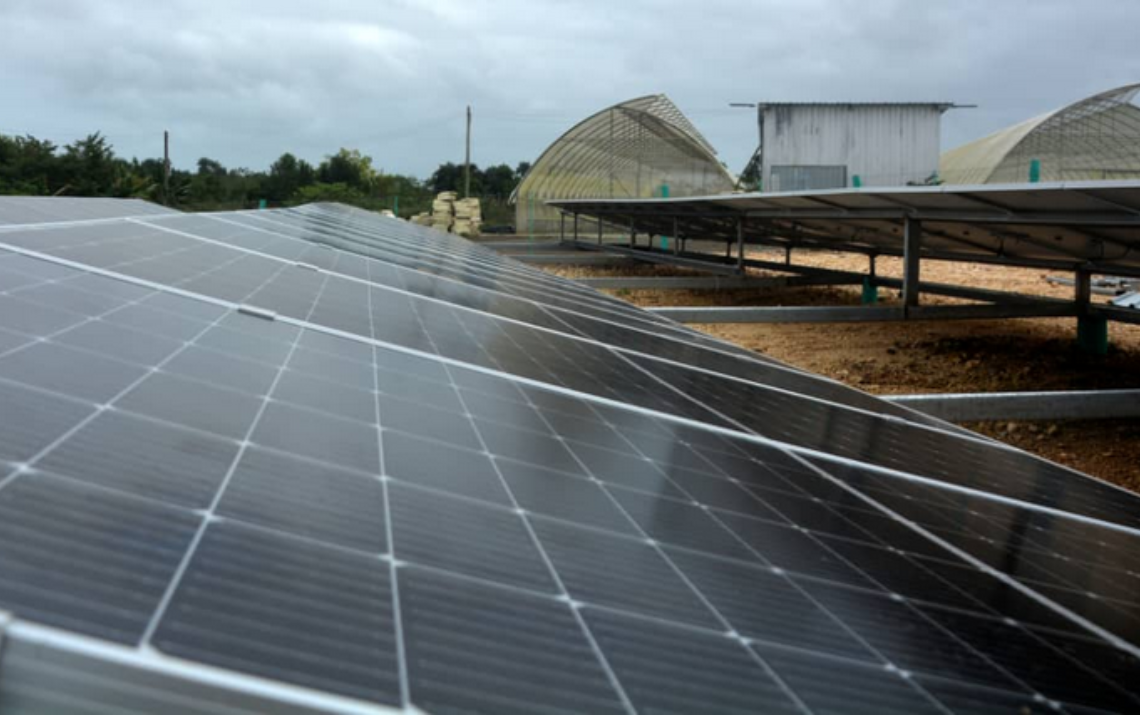
A group of tobacco producers from Villa Clara donated 48 photovoltaic stations to social and health institutions in the province, in the midst of the energy crisis exacerbated by the US oil blockade towards Cubawhich threatens to get even worse.
The donation will benefit hospitals, polyclinics, maternity and nursing homes, as well as funeral homes and specific cases in the territory, according to the first secretary of the Party in Villa Clara, Susely Morfa, cited by Rebel Radio.
For her part, Milaxy Yanet Sánchez Armas, governor of the province, highlighted that other economic actors, including state-owned companies, MSMEs, self-employed workers and local development projects, have already confirmed their incorporation into the initiative.
The donation is added to the comprehensive repair of the José Luis Miranda Pediatric Hospital, where the same tobacco growers invested 10 million pesos in waterproofing the roof, air conditioning equipment, carpentry, furniture and painting.
The current unprecedented energy crisis has been aggravated to the extreme after the establishment of an oil blockade by the United States, which has left the island without crude oil imports since December.
This Friday, during the broadcast of the Round Table, Deputy Prime Minister Óscar Pérez-Oliva Fraga stressed that the State will also distribute solar panels to essential workers, social centers and banks.
Photovoltaic parks, the alternative
The executive explained that the country’s first decision is to continue with the development of the installation program of photovoltaic solar parks, under the auspices of China.
On Thursday, President Miguel Díaz-Canel announced the installation of five thousand more photovoltaic modules in vital centers to provide services to the population. He said that 161 maternity homes in the country will benefit from these modules.
“The power can be turned off in those places and the maternal homes will have power. Modules of this type have been located for children with illnesses who need to have power in their home all day; last year we installed them for 161 children and this year we are going to install them for 121 more,” he added.
Likewise, he explained that the modules will also be installed in 156 nursing homes, 305 grandparents’ homes, and in 556 polyclinics, in which “at least the guard staff and an important part will have these systems.”
By the end of 2026, this energy source must deliver about 2 thousand MW to the island’s energy mix, which is currently suffering from blackouts of more than 20 consecutive hours throughout the country, except in Havana, where interruptions have reached up to 17 hours in recent weeks.
Acute fuel shortage
The Government is looking at the possibility that the island, just over a month after the capture of Venezuelan President Nicolás Maduro, will be on the verge of an “acute fuel shortage.”
In an unusual television appearance, Díaz-Canel acknowledged that the energy situation is “complex” and that, after the tap is turned off from Caracas, Cubans are going to “live in difficult times (…), very difficult.”
Cuba responds with survival measures to the challenge of an energy collapse designed by the US
According to different independent calculations, Venezuelan oil covered 30% of the island’s energy needs in 2025. Likewise, two thirds of the fuel the country needs must be imported.
In this regard, Díaz-Canel recognized two points that reveal the severity of the crisis. On the one hand, the island has not received fuel from abroad since last December. On the other hand, Havana has paralyzed all its energy production with diesel and fuel oil engines (40% of the energy mix) due to the US oil blockade.
For the moment, the authorities have prioritized the little electricity generation to attend to economic activities during the day, such as irrigation in the fields, and the operation of “productive entities.”
Beyond the oil stoppage, Cuban society suffers from the combined effects of the crisis left after the covid-19 pandemic, the terrible economic decisions that triggered inflation and widespread poverty.
Added to this is the exhaustion of a centralized productive management model and Washington’s sanctions, now elevated to the level of energy asphyxiation.













