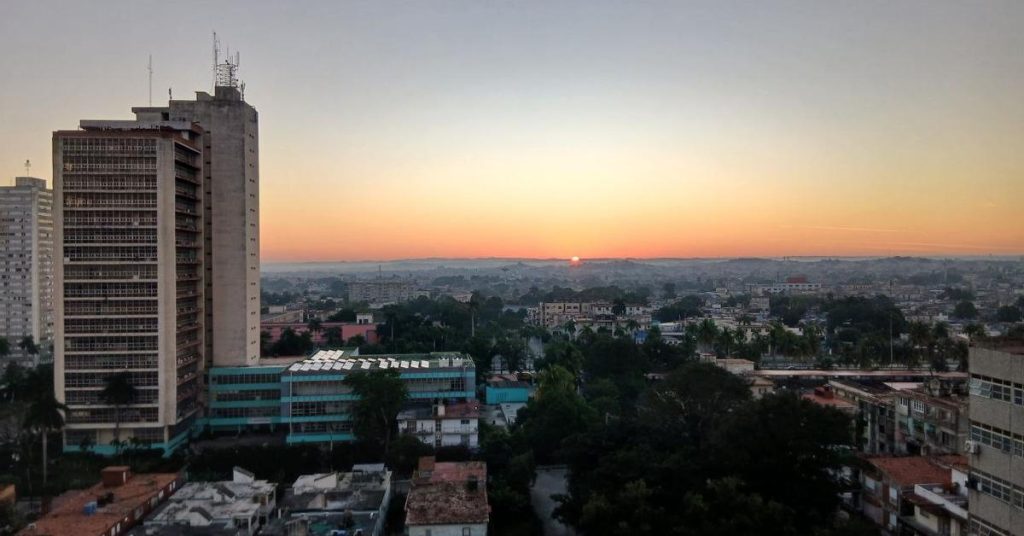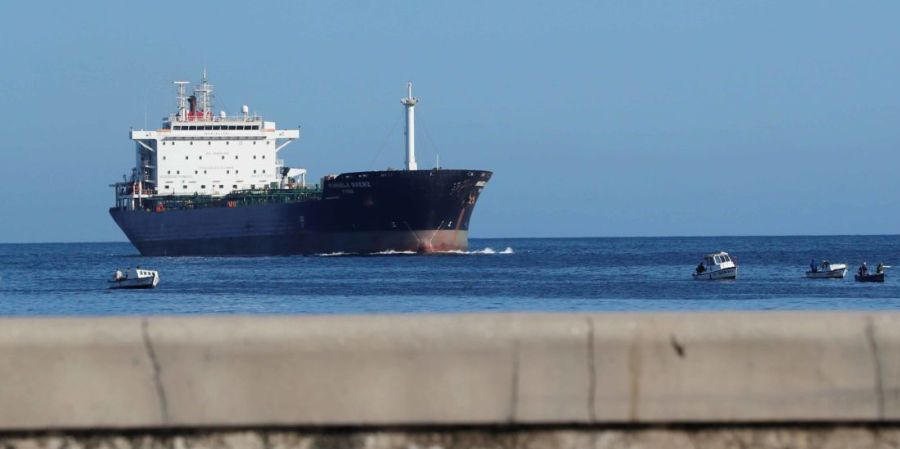
Before the seizure of Venezuelan oil tankers by the US began, Cubans were already experiencing blackout days of up to 20 hours or more.
MIAMI, United States. – The chancellor of the Cuban regime, Bruno Rodríguez Parrilla, He assured this Monday that the United States’ measures to hinder Venezuelan oil trade and “persecute” ships with fuel destined for Cuba have “a direct impact on the national energy system and, consequently, on the daily lives of our people.”
However, this approach, repeated by official media and reproduced by international agencies and portals, clashes with recent journalistic investigations based on PDVSA documents and tanker tracking data that maintain that, in recent years, only a fraction of the oil “allocated” to Cuba actually reaches the Island, and that a significant part would have been resold in Asia—mainly to China—to obtain foreign currency.
Thus, the verification of Rodríguez Parrilla’s complaint requires separating two points that the official discourse usually mixes: how much Cuban electricity generation depends on imported fuel and what part of the oil flows linked to Venezuela and Cuba effectively ends up fueling plants, transportation and refineries within the country.

In the first point, Reuters reported on November 19, based on shipment data and documents, that Cuban imports of crude oil and fuels fell by more than a third in the first 10 months of the year compared to the same period in 2024, and that this reduction made it difficult to alleviate daily blackouts. The same coverage highlighted that Cuba burns crude oil and fuels in its thermoelectric park and suffers a supply deficit to sustain generation.
In another note on December 3, Reuters described a partial collapse of the electrical grid and recalled that the country is experiencing prolonged blackouts in a context of aging plants and a decline in imports from allies. This table does support that a loss of fuel can translate into less electricity and more daily disruptions.
But the second point is what weakens the idea of a linear relationship between “persecution of tankers” and “energy for the people.” The Austrian newspaper Der Standard On December 14, it published an investigation that states, citing PDVSA documents and ship tracking data, that “in recent years” only a part of the Venezuelan oil reserved for Cuba would have reached the Island and that “most of it” would have been resold to China. The medium links this pattern to the logic of financial survival of the State and to networks of intermediation and opacity in the sanctioned crude oil trade.
In the same sense, the Trump Administration is expanding a legal and operational strategy against tankers linked to the global oil “black market,” focusing on Venezuelan crude and routes that include Cuba, Iran, Russia, China and other destinations, and placed recent seizures as part of an offensive to cut off income to Caracas.
In this way, it is clear that the shipments are not moved solely for domestic energy consumption in Cuba, but within a transnational network of illicit trade where crude oil can change hands and destination.
The US sanctions architecture itself also suggests that Washington sees the circuit as a broader economic mechanism, not as a simple electricity supply line. The Treasury Department, in his statement of last December 11pointed out Panamanian businessman Ramón Carretero as a facilitator of “shipments of oil products” on behalf of the Venezuelan Government and sanctioned shipping companies and vessels for operating in the Venezuelan oil sector.
With these elements on the table it is possible to ensure that energy in Cuba partially depends on imported fuel, and that the drop or interruption of supplies is reflected in blackouts and service crises; but, at the same time, there is journalistic evidence based on documents and ship traceability that indicates that a part of the Venezuelan crude oil “allocated” to Cuba does not necessarily end up converted into electricity on the island, but rather diverted and resold to generate foreign currency.
The Skipper case
The Venezuelan oil tanker Skipper, seized on December 10 by United States forces off the coast of Venezuela, was headed to Cuba, where the state-owned company Cubametales expected to receive a substantial part of the crude oil shipment to resell it to Asian intermediaries, according to documents from the Venezuelan state oil company PDVSA, maritime tracking data and officials cited by media such as AP, Reuters and POLITICAL.
The operation, published in a video posted on X by the United States Attorney General, Pam Bondishowed members of the Coast Guard and other agencies descending from helicopters onto the ship’s deck. Bondi stated that federal agencies “executed a seizure order” against a tanker used to transport sanctioned oil from Venezuela and Iran and recalled that the ship has been sanctioned for years for being part of “an illicit oil transportation network that supports foreign terrorist organizations,” in reference to the Iranian Revolutionary Guard (IRGC) and Hezbollah.

According to the AP agency, the Skipper was transporting about two million barrels of Venezuelan heavy crude oil and “approximately half of the cargo” was destined for “a Cuban state oil importer.” That same proportion — about 50% of the cargo — appears in PDVSA documents consulted by Reuters and other media, which describe a Cuban state buyer as one of the owners of the oil on board.
The key point to understand the Skipper’s journey is the identity of that Cuban importer. POLITICALciting a person familiar with the operation, reported that the ship “was heading to Cuba, where the state-owned company Cubametales planned to sell the cargo to Asian energy intermediaries.”
Cubametales is the Cuban state company in charge of the import and export of oil. The US Department of the Treasury He sanctioned her in 2019when he pointed out it as “the Cuban state oil importing and exporting company” and accused it of continuing to receive Venezuelan crude oil despite the sanctions against PDVSA. Since then, Washington considers it a central cog in the scheme that allows Havana to obtain oil in exchange for political, security and intelligence support for the Nicolás Maduro regime.
In this case, the scheme was similar but with an additional twist: once unloaded in Cuba, Cubametales would have resold at least part of the Venezuelan crude oil to “Asian energy brokers,” that is, intermediaries who would place that oil in Asian markets, probably disguising the origin of the shipment to circumvent sanctions.
What the route shows: from Venezuela to Cuba and beyond
Maritime tracking data allows part of the journey to be reconstructed. The Skipper set sail in early December from the port of José, Venezuela’s main crude export terminal, loaded with heavy crude oil. According to the firm TankerTrackers.comthe ship used typical “dark fleet” techniques, such as falsifying its position signals and carrying out ship-to-ship transfers to conceal the origin of the oil.
The same database indicates that before the seizure, the Skipper transferred nearly 200,000 barrels of its cargo to another tanker, the Neptune 6, near Curacao, and that this second ship was headed to Cuba.
The Skipper is part of a group of sanctioned tankers that have been used to transport Iranian and Venezuelan crude oil through opaque operations, according to Reuters.
Skipper’s link with financing networks of organizations designated as terrorist by Washington goes back a long way. In 2022, the Treasury Department sanctioned the then Adisa —the ship’s previous name—and its owner Triton Navigation Corp. as part of “a vast and complex network of front companies” used to blend Iranian oil and export it in support of Hezbollah and the Revolutionary Guard’s Quds Force.
This same network of “obscured” ships has been key for Venezuela, under sanctions, to continue placing its crude oil in Asian markets with the help of intermediaries, relabeling the cargo or transshipping it on the high seas. China has become the main final destination of this oil, while Cuba systematically appears as one of the intermediate recipients through Cubametales.
So where was the ship going?
Based on the information available in primary sources and media that cite official documents, the underlying question can be answered quite precisely:
- Immediate destination of the route: The Skipper left Venezuela with heavy crude oil and had Cuba as its operational stopover, where at least half of the cargo corresponded to a Cuban state importer and another part was already being transferred to a second ship heading to the Island.
- Final commercial destination of part of the crude oil: According to the source cited by POLITICAL and confirmed in other analyses, Cubametales planned to resell that oil to Asian intermediaries, inserting it into the opaque trade network that feeds both the finances of the Maduro regime and those of its sanctioned allies.
In summary, the oil tanker seized by the United States was not going alone “from Venezuela to some uncertain place,” as the American president himself suggested, but rather it followed an already known route: Venezuela–Cuba–Asia, with Cubametales as the central link. What the seizure has done is expose, in an unusually visible way, that circuit where Venezuelan oil, the Cuban state apparatus and a “dark fleet” come together at the service of networks sanctioned for financing organizations considered terrorist by Washington.