Madrid/The televised war against crime offered yesterday at the round table its second part. The authorities were very satisfied to have detected a multitude of illegalities, theft of electricity and transfer of goods “fundamentally related to food trafficking, medications, white weapons, fuels, cash and other products of illicit origin.” In these activities, they admitted “vehicles from the state sector involved were identified (…) so that the corresponding administrative and criminal measures were applied when necessary.”
This Tuesday’s program on Cuban television was dedicated to offering the results of the second “National Exercise of Prevention and Confrontation of Crime, Corruption, illegalities and Social Indisciplines” that took place between March 24 and 29 to give continuity to the first, between December 2 and 7 of last year. The objective of this plan is “a fundamental pillar for the support of internal order and citizen tranquility,” said Colonel Hugo Morales Karell, second police chief.
The “exercise” seems to have more name than results, since no improvement was detected in the barely three months that separated the first from the secondwhich invites you to think that there is more propaganda of the struggle that fights itself. The authorities know where to look and that is what they apparently did to display data for yesterday. Morales Karell said that patrolling was reinforced in the “of greatest criminal incidence” places which “allowed to protect economic objectives where sensitive and important resources are stored for the population, such as wineries, stores and warehouses”.
The “exercise” seems to have more name than results, since no improvement was detected in the only three months that separated the first from the second
According to the colonel, criminals take advantage of the neglect of the entities of surveillance bodies, on which administrative and criminal measures have been imposed.
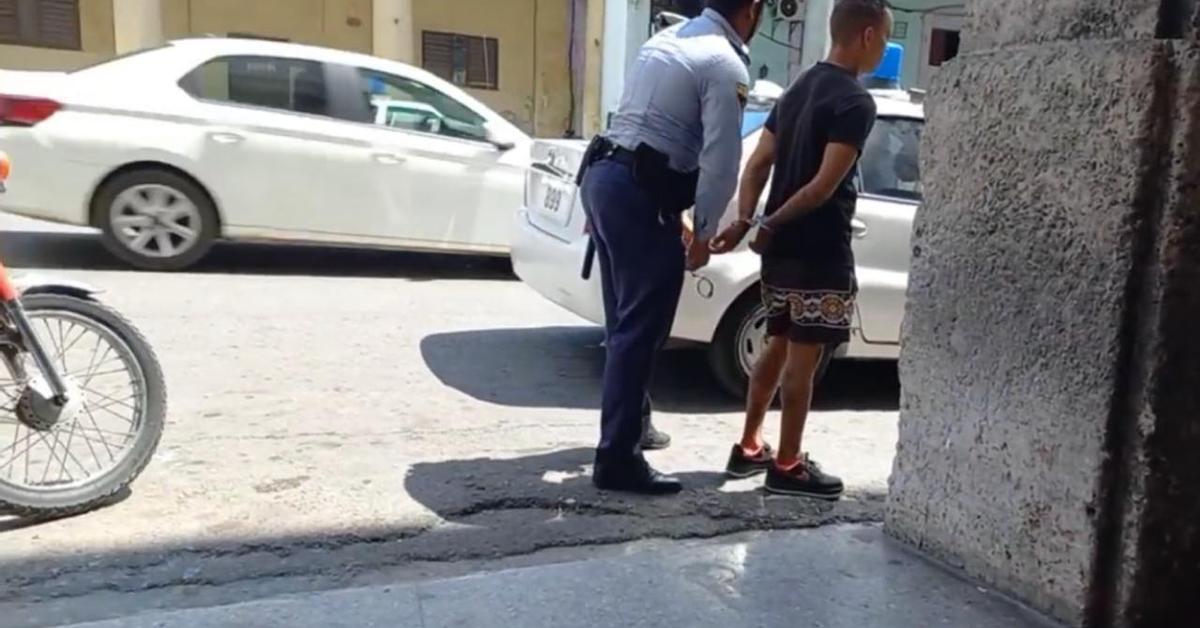
Numbers came out. On the one hand, 100 people were arrested for crimes linked to theft, sacrifice or possession of greater cattle meat. The drugs, one of the current concerns in the country, occupied part of the attention, with more than 46 interventions in communities, bars, discos and rental houses in which almost 47 kilos of drugs of all kinds were requisitioned, in addition to electronic cigarettes and “high sums of money”. To stop this problem, 400 training activities were carried out in school and labor centers, although the phenomenon is still booming.
There was also reinforcement in traffic sanctions. 14,000 fines were imposed, many of them driving passengers without adequate conditions, a situation that does not improve due to the decline in the public transport service. In the first quarter of this year the massive accidents increased, said the police chief, who also spoke prolongly about prevention.
“People with unjustified behaviors were taken to the PNR stations or other places to carry out preventive actions in the community. These meetings are held with the prevention and social care group. It is not about ‘stopping to stop’, but has exhausted a previous job with social prevention groups, as well as job offers or warning The crime of disobedience, ”he snapped.
In addition, the probation of some people who fail to comply with the obligations acquired has been suspended and young people “with mismatch”, including the increase in “popular surveillance”.
In addition, the probation of some people who fail to comply with the obligations acquired has been suspended and young people “with unjustified behaviors” were followed up ”
In this prevention work, the Prosecutor’s Office made special emphasis, represented on television yesterday by the General ViceFiscal, Alina Montesino Li, which, however, gave data from the sanctioning scope. There was provisional prison in 86% of cases linked to serious crimes, of which 97% are related to drug trafficking. There were 297 oral views in which prosecutors promoted “exemplary judgments,” he said, in order to “strengthen justice and legality.”
Regarding economic crimes, 80 tax verifications to state and private entities allowed to recover 121 million pesos and detect 649 infractions, including “double accounting, warehouses with unst declared inventories, abusive prices and tax evasion”. There were also fines for an amount of 22 million pesos, although the prosecutor stressed that “only 30 cases” – not a few in just 5 days – were by criminal proceedings, since “voluntary prevention and compliance” are prioritized.
Among the most revealing data that left the intervention of Montesino Li was the confirmation, already perceived by the entire population, that contracts without tender processes “or with obvious favoritisms” are concluded, in addition to leases that were not charged to their beneficiaries or whose resources were diverted. A multitude of cases of electrical energy abduction through illegal connections were also observed. There were 13 criminal processes related to these matters.
“Our people are key in this battle. Each complaint strengthens transparency and justice,” said the prosecutor, who thanked the more than 11,000 citizen complaints that were treated so far this year.
Acela Martínez Hidalgo, General Vice Counter of the Republic, also intervened to talk about public accounts. There were 310 preventive actions in national and local subordination entities, both in the business and budgeted sector, but in 39% of the visited entities (121) “a harmonious and effective implementation of the methodology was not achieved.” The official concludes that there is a lack of training and stressed the importance of workers feeling “linked” to the company.
Finally, Judge Ileana Gómez Guerra, president of the Crime Chamber against State Security, again emphasized the drug problem, for which 111 “exchanges” were organized in secondary and higher education centers in which he warned of his dangers. They also visited “those who comply with sanction in freedom, to verify with the transfer and members of other mass organizations their behavior.”
“The majority maintained adequate behavior, but the 173 that did not do so were required, in relation to the seriousness of their behavior and the most worrying cases were revoked the possibility of fulfilling sanction in freedom”
“The majority maintained adequate behavior, but the 173 who did not do so were required, in relation to the seriousness of their behavior and the most worrying cases were revoked the possibility of fulfilling sanction in freedom,” said Gómez Guerra.
Among the 65 people who were under surveillance, 55 had “better behavior”, but 10 were revoked their benefits to persist “in unjustrated behavior.” Without great details, he mentioned that 143 sanctioned “made blood donations, 76 participated in volunteer works and more than 20 made donations to homes of children without family protection”, actions that seem more forced than the result of goodwill.
In addition, there were 37 exemplary judgments in eight provinces, especially for drug trafficking, carrying and illegal possession of weapons and embezzlement, among others. As a result, 51 people were sanctioned, 96% with deprivation of liberty or correctional work with internment.
The 20 sanctioned for crimes linked to drugs were imposed sentences between 6 and 15 years. “This crime is very harmful to society, hence the importance of maintaining the zero tolerance policy,” he insisted, before highlighting that the judgments have been recorded and have been given “visibility through the press media.” A phrase that perfectly summarized the real end of these “exercises”: the staging.