The opening of the 29th edition of the Tiradentes Film Festival this Friday (23) took place in an atmosphere of celebration of Brazilian cinema in one of its most vibrant moments. Directors, producers, artists, representatives of public authorities and journalists gathered at Cine-Tenda to begin a program that combines film screenings, critical reflection and institutional articulation, consolidating the exhibition as one of the main spaces for audiovisual thought and action in the country.
At the ceremony, the Exhibition’s general coordinator, Raquel Hallak, highlighted the event’s historic commitment to the diversity of voices and languages.
“There is an imagination that emerges from many Brazils and proposes various ways of existing. The exhibition, since it emerged, decided to focus on these new roles and possibilities”, he stated.
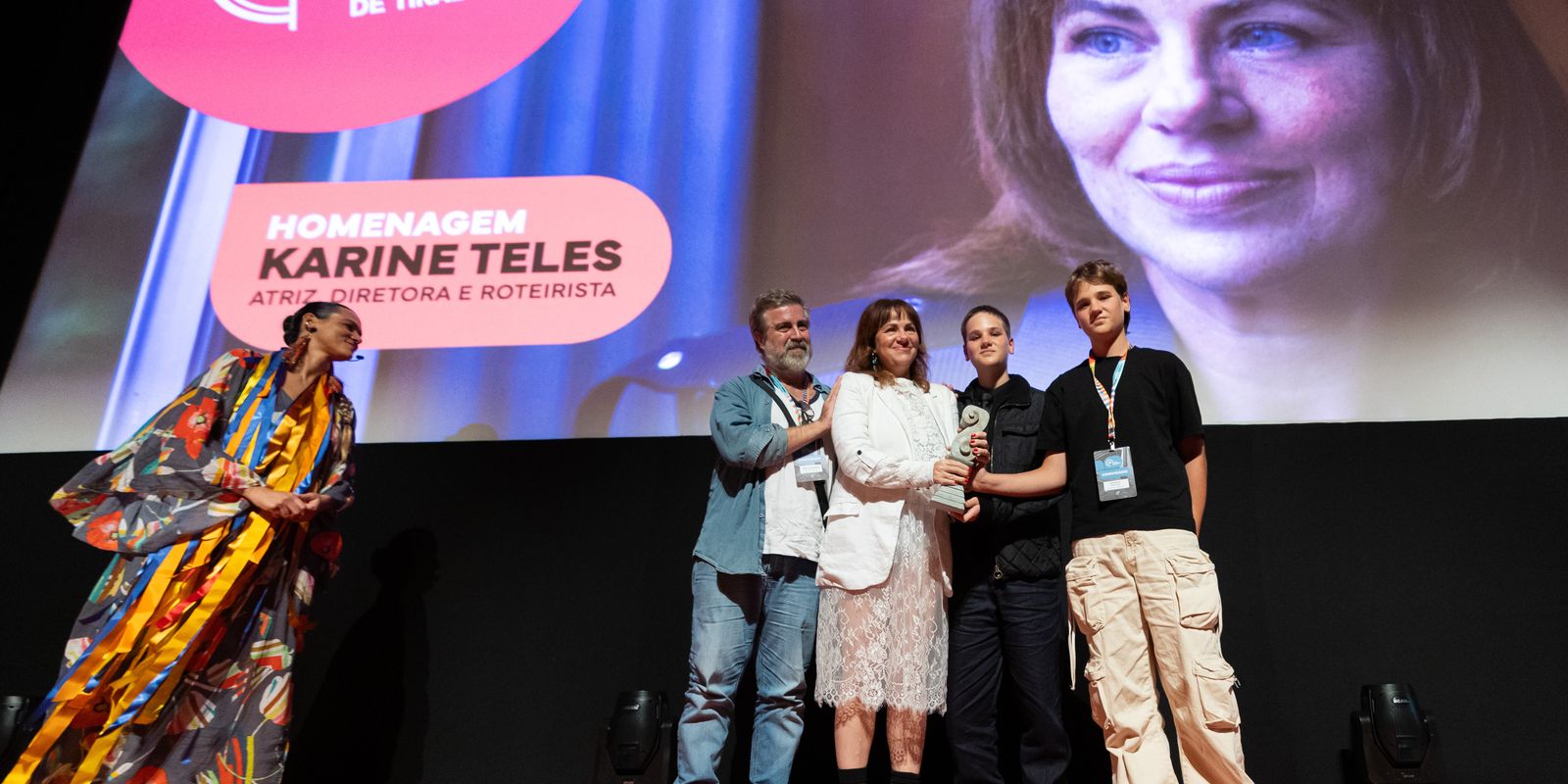
Hallak defended the regulation of streaming platforms, the democratization of public policies and the strengthening of national cinema as an economic vector. The highlight of the night was the tribute to actress and director Karine Teles, who received the Baroque Trophy for a career spanning more than two decades marked by authorial choices, artistic versatility and commitment to creation.
Excited and accompanied by her family, Karine spoke candidly about the challenges of remaining in the cultural field. “Anyone who works with culture, education, art in our country knows that we are starting over all the time. These are unstable, unpredictable careers, with a frequent rollercoaster of emotions”, he said.
“Persisting, staying, is very difficult. It’s not valuable at all, it’s not romantic at all. It’s very hard.”
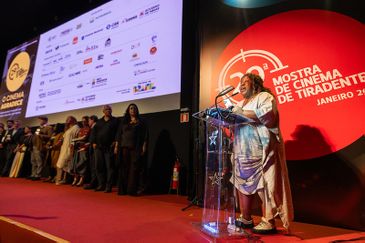
29th edition of the Tiradentes Film Festival. – Leo Lara/Universo Produções
The opening was also attended by the Minister of Human Rights, Macaé Evaristo, who highlighted the political and symbolic dimension of audiovisual. “We are living in a very important moment in the projection of Brazilian cinema in the world. This means something deeper: we are a people who know how to transform memory, pain, joy and struggle into narrative”, he stated.
The Audiovisual Secretary of the Ministry of Culture, Joelma Gonzaga, officially opened the Brazilian audiovisual calendar celebrating the recent international recognition. Wearing a t-shirt The Secret Agentby Kleber Mendonça Filho, nominated for four Oscarsit reinforced the centrality of public policies.
“When a film from Brazil comes out, the whole of Brazil comes out. And at this moment, Brazil is showing all over the world. This is not by chance, it is the result of public policy.”
Film Forum
This Saturday’s program (24) kicked off the Tiradentes Cinema Forum which, in its fourth edition, is a space dedicated to reflection on cultural policies, industry and democracy. The opening brought together members of the government and producers, with the reading of the letter of principles presented by producer Débora Ivanov. In the text, the sector is called upon to mobilize in defense of recent achievements and to reflect on the future in a context of emergency challenges.
The letter took stock of the sector’s reconstruction process that began in 2023, recognizing advances such as the restoration of the Ministry of Culture and the Audiovisual Secretariat, the resumption of the Audiovisual Sector Fund, the reactivation of development programs, the renewal of the Audiovisual Law and screen quotas, the implementation of the Aldir Blanc National Policy, the holding of the 4th National Culture Conference and the resumption of international cooperation. He also cited the implementation of the Paulo Gustavo Law in 97% of Brazilian municipalities as an indication of popular interest in audiovisual.
At the same time, the document highlighted structural weaknesses and the need for a systemic policy that articulates the Union, states and municipalities, rationalizes processes and enhances economic, cultural and social impacts. Among the challenges listed are the regulation of streaming services, the consolidation of a perennial State policy and guaranteeing access for the Brazilian public to national content on all screens.
“The audiovisual challenges are challenges for the Brazilian nation in affirming a free, democratic and sovereign destiny. Let 2026 come, our march continues”, concludes the Forum’s message.
Check out the full schedule at exhibition website.
*The reporter traveled at the invitation of the event organizers