The Secretary of the Treasury reported that the framework agreement reached provides that Tiktok “becomes owned by the United States”, but noted that they will not give details of the commercial terms
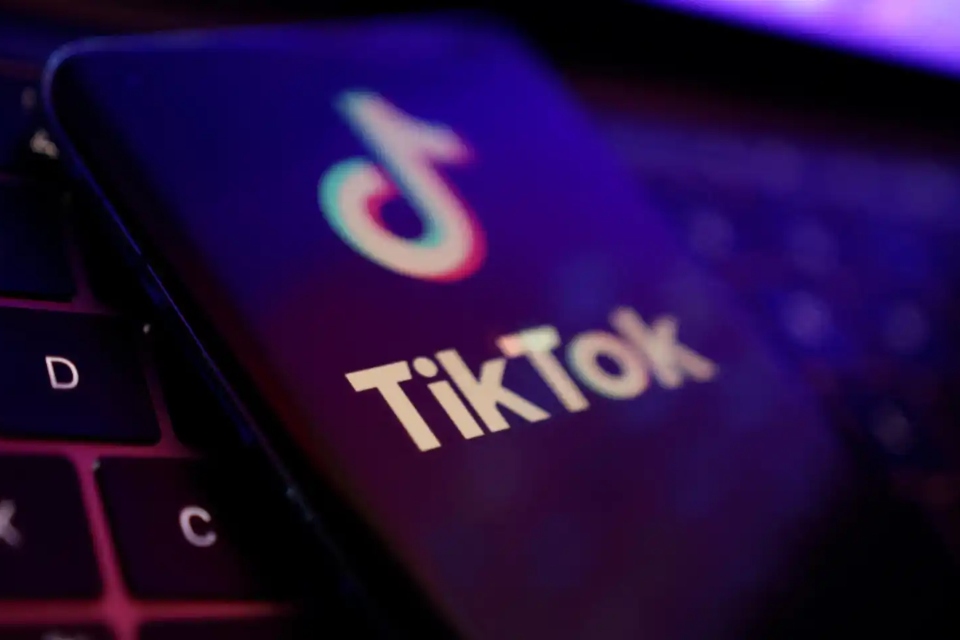
The United States and China reached a framework agreement for Tiktok to pass to American hands, announced Treasury secretary Scott Besent, who participated in the negotiations between the two countries in Madrid.
The framework agreement reached provides that Tiktok “becomes the property controlled by the United States,” Besent said in the Spanish capital, headquarters of the negotiations.
«We are not going to talk about the commercial terms of the agreement. It is between two private parts, but the commercial terms have been agreed, ”he added when asked about the algorithm of this social network.
Next, seven keys to understanding how Tiktok became one of the central issues in commercial negotiations between both powers, held on Sunday and Monday in the Spanish capital.
Chinese origin. Tiktok was born in 2016 as Douyin, an application of short videos launched in China by the company bytedance. His local success led to the creation of an international version, Tiktok, which expanded rapidly after the acquisition of the musical American.ly in 2017. This purchase opened the North American market and allowed him to consolidate himself as one of the most popular applications among young people.
A meteoric growth. In just two years, Tiktok was already the most downloaded application in several application stores: in the first quarter of 2018, he led the App Store worldwide. The COVID-19 pandemic further reinforced its appeal, becoming one of the main forms of entertainment during confinements. Today it exceeds 1.5 billion active users monthly worldwide, with about 150 million in the United States.
Concern in Washington. Since its early years of expansion, the White House and the US Congress have expressed fears that user data in the United States could be accessible to Chinese authorities.
These suspicions were first translated into restrictions on the use of Tiktok in government and military devices and, later, in bills to force the decoupling of Bytedonce.
Legal and political pulse. In April 2024, the United States Congress approved a law that forced Bytedance to get rid of Tiktok if he wanted to continue operating in the United States.
In January 2025, the Supreme Court confirmed the constitutionality of that rule and the then outgoing president, Joe Biden, left Donald Trump, the application of the measure.
Trump and Tiktok: a complex relationship. From his return to the White House in January 2025, Trump has extended the veto to Tiktok three times, which should be made effective if there was no agreement with Bytedance.
The Republican went from criticizing the application for national security reasons to recognize its usefulness as a political tool, ensuring that it helped him connect with the young electorate in the 2024 elections, to the point that the White House opened an official account on Tiktok in August 2025, one month after the deadline.
The algorithm, under suspicion. The Tiktok engine is its recommendation algorithm, which customizes the content according to the visualization time of each user and is considered one of the keys to its global success.
This system has also generated doubts about its opacity, its ability to influence and the possibility of indirect censorship of critical content with the Chinese government, something that has led Brussels and Washington to claim transparency and demand that the data of European and American users be stored outside China.
Beijing has the last word. Any sale operation of Tiktok operations in the United States must have Beijing’s approval, since the Chinese government has a ‘gold action’ in Bytedance that entitles Veto, managing influence on the strategy and operations of the company, something that, according to the company, does not affect its businesses abroad.
In addition, Beijing export control regulations prohibits Chinese companies from selling the algorithms of their ‘software’, so Tiktok’s sale must be approved by Chinese authorities.
It should be remembered that, like services such as Google, Facebook or X, Tiktok is blocked in China, where Bytedance operates with Douyin, the original Tiktok application and is completely independent of its international version.
With information from Swissinfo.ch
*Journalism in Venezuela is exercised in a hostile environment for the press with dozens of legal instruments arranged for the punishment of the word, especially the laws “against hatred”, “against fascism” and “against blockade.” This content was written taking into consideration the threats and limits that, consequently, have been imposed on the dissemination of information from within the country.
Post views: 390