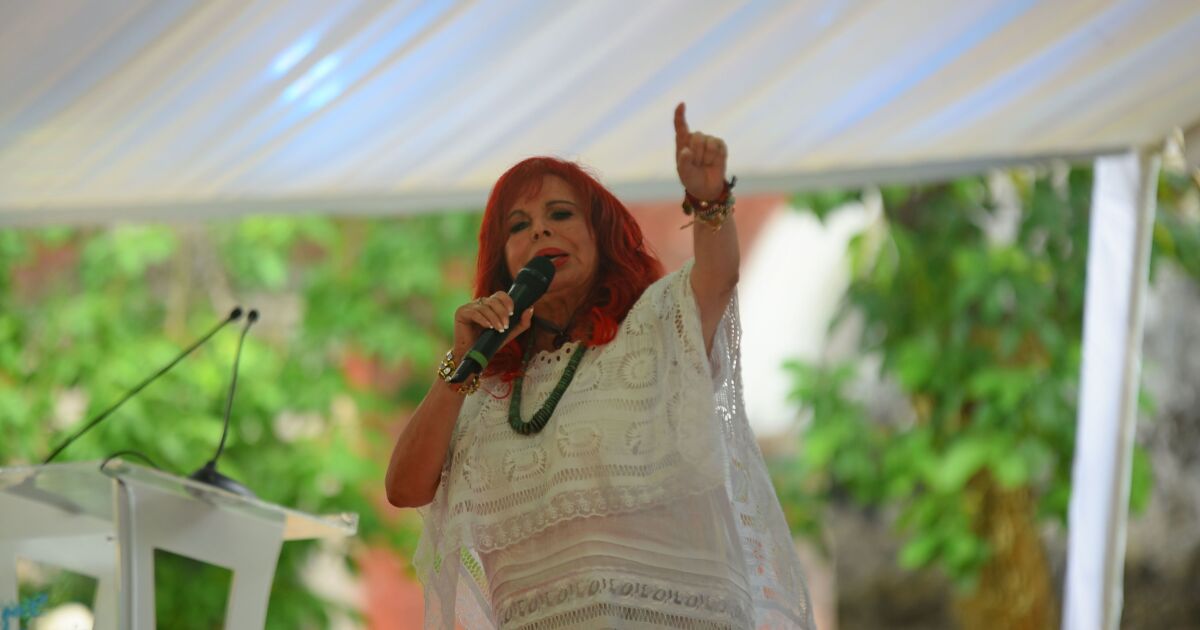
“In compliance with what was ordered by the Electoral Court of the State of Campeche, an apology is offered to the constitutional governor of the state of Campeche, because the expressions issued in a YouTube and Facebook program were offensive, stereotyped and generated political violence in gender -based gender, in their aspect of digital and media violence,” journalists in a video published on social networks said one by one.
This is not the first time that Layda Sansores goes against journalists through courts to prevent certain content from disseminating.
Two control judges of the State Superior Court of Justice ordered the journalist Jorge González Valdez and the newspaper ‘Tribuna’ not to publish content about the governor. As they must have a government censor that reviews and approves the publications.
What is digital violence against political women?
It is digital violence that is exercised through communication and information technologies – such as social networks – to expose real or simulated images, audios or videos of intimate content of a person without their consent. Also when content is disseminated that causes damage to the intimacy, privacy or dignity of women, especially in a political sphere, according to the National Electoral Institute (INE).
Examples of this are:
Perform or distribute propaganda that slander, degrade or disqualify a candidate based on gender stereotypes.
Dead, slander, insult or make any expression that denigrates or disqualifies women in the exercise of their political functions based on gender stereotypes.
Disseminate images, messages or private information of a candidate or in functions by any physical or virtual means with the purpose of discrediting, defame, denigrate it and question their capacity for politics, based on gender stereotypes.