By Rubén E. Lovera
In recent months, my homeland, Venezuela, has become one of the focuses of international attention.
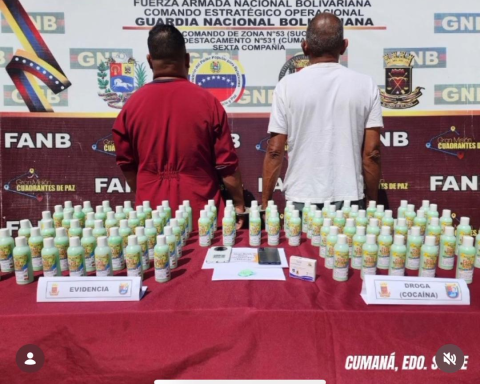
Under the pretext of “fighting Latin American drug cartels,” the United States has carried out a series of anti-drug operations in the waters of the Caribbean and the eastern Pacific. However, in the sight of the entire Venezuelan people, this series of maneuvers called “Operation Southern Spear” has long ago revealed its perverse nature: a very serious US military threat against the peace of the region.
As I write “the peace of the region,” I realize that, on this occasion, this common phrase that has been written hundreds of times in my work as a news editor is not just a phrase: there is now the real, material, concrete and physical possibility that the blue of our skies will be overshadowed by an imperialist war.
The deployment of US warships through Caribbean waters near Venezuela, and then through Pacific waters near Colombia, ended up becoming a campaign of force that has so far claimed the lives of 104 people on board the vessels and destroyed 29 boats.
Washington insists that the operation is a measure against drug trafficking, but has not yet presented a single piece of evidence to prove that these boats and their occupants were related to drug trafficking. Only the heartbreaking testimonies of the victims’ relatives are seen in the media.

However, this “anti-drug operation”, in itself full of doubts, reveals, through the coordinates on the maps of the Southern Command, that they are getting closer and closer to our coasts, which leaves a very strange message: the North American country suspiciously does not attack the numerous clandestine laboratories and drug cartels that operate in its own territory, nor large magnates with capital linked to this illicit business.
Instead, it has deployed the world’s largest and most advanced aircraft carrier, the USS Gerald R. Ford, with more than 4,000 sailors on board, to Caribbean waters. They say it is part of a naval exercise, but in this current climate of tension, we all know what the so-called “exercises” mean.
The American president constantly talks about the fight against drug trafficking. However, the enemy that he draws day after day seems like a “manufactured” target: a country that does not traffic drugs, but that has the largest oil reserves in the world, that country is Venezuela.
The Americans know perfectly well that Venezuela is not a main drug producing or transit country in Latin America, but they still point their “spear” against my homeland in the name of the “anti-drug fight.” We Venezuelans know this very well, we are very clear that the true objective of the United States is our oil.
Although in our streets people continue to laugh and focus on their daily work, with the increasingly frequent and intense actions by the United States, the concern buried in the depths of our hearts also grows.

Just a few weeks ago, US forces seized an oil tanker in waters near Venezuela, something unprecedented since the beginning of their so-called “Operation Southern Spear.” The millions of barrels of crude oil on board are Venezuelan assets, but the North American country forced the ship to head towards Houston. If this isn’t an act of piracy, then what is?
This is not an isolated case. Donald Trump has unilaterally designated the Venezuelan Government as a “foreign terrorist organization.” In my journalistic career this must be the first time that the Government of a country has been labeled a “terrorist organization.” The consequences that this act will have for Venezuela and for the lives of ordinary people are still unpredictable.
As a journalist, I have written dozens of articles on this topic. Sometimes, as I read the Pentagon’s communications, they resemble an absurd novel: imaginary enemies created by a decadent and retrograde imperialism, confronted by a “heroic” foreign force.
These days I have reread the headlines used by the hegemonic media in their reports: “ships intercepted”, “drug traffickers shot down”, “preventive actions”, etc. But none of them mention that the lives lost that should have been protected by international law in international waters were carried out extrajudicially.

Faced with these actions of the United States, which exerts military pressure, loots economically and defames in the media, some close acquaintances of mine, although they continue to live with tranquility and routine, have chosen to ratify their willingness to take up arms for national defense, if necessary.
For example, my aunt, who served as a militiaman years ago, has prepared her uniform and is ready to re-enroll in her commune. I asked him why, and he firmly answered five words: “We must take care of the country.”
Three centuries of colonial history taught this country the value of sovereignty and independence. For this reason, the lies fabricated under the guise of “hemispheric security” sound especially strident.
Sometimes I look up at the sky over my country at the end of the afternoon. It has colors that don’t look like others. In those moments I think that sovereignty is also that: being able to contemplate one’s own sky without fear of being watched by foreign drones, and allowing our birds, with a very wide biodiversity, to be the true owners of this sky.
I have talked with many foreign friends. Everyone agrees that Venezuela is a beautiful country, with a noble climate and warm people. They tell me this sincerely, as if they don’t understand why anyone would want to attack him.

And it’s true, the climate here is delicious: the mountain air, the brightness of the Caribbean, the sudden downpours during the rainy months, when sometimes the sun is the same radiant as in the dry months.
Unfortunately, none of these beauties fit into the strategies of the Southern Command. What they ignore are not only the natural beauties of my country, but also the dignity and need for the region to continue being a zone of peace, as signed by the Latin American peoples within the framework of the Community of Latin American and Caribbean States (CELAC).
Recently, a colleague asked me if I was afraid that Venezuela would become a target of attack by the United States. Maybe what I feel is not fear, but the certainty that we Venezuelans are going to defend sovereignty. I do not want to see my homeland reduced to a map of military objectives or for the sea to become a war border. I want to continue breathing this sweet air, I want the young people who come to be able to study, love and laugh under the current flag, without hearing the noise of foreign explosions.
There are very few sectors that encourage Washington to take actions against our country. They do not know that, once an armed conflict begins, you never know when it will end or in what way. Trump talks about freedom while pointing his cannons at those of us who decide to think differently, he talks about democracy while multiplying sanctions and threats.

Now, although I only raise my voice modestly with the pen from a corner of the Caribbean, the word can also be a form of defense.
Even though the news is cold and the reports repeat figures, behind every note and every number there is a country that resists a sustained attack by the United States, which began with great force in 2014 with economic measures and that today seems to be at its highest point of tension and threat, and that country is Venezuela. But in the midst of the political and media diatribe, something is very clear: Venezuela does not seek conflict, it only demands respect for its internal life.
Almost 200 years ago, on August 5, 1829, the fundamental hero of the independence processes of Latin America, Simón Bolívar, expressed the following phrase in a letter addressed to Colonel Patricio Campbell: “The United States seems destined by Providence to plague America with misery, in the name of freedom.”
In the 21st century, it is obvious how right Bolívar was and how anachronistic the sectors of American power are, especially those that operate in the orbit of the Trump Administration.
I believe that this violence that is sown in our seas does not stay there. It spreads like an echo over the entire continent, awakening the consciousness of sovereignty and independence of all the countries of the hemisphere, and the consciousness of opposing hegemony and resisting interventions. And I, who have seen storms pass by, continue to firmly believe that this sky will continue to be ours.