Madrid/The message with which the Cuban Ministry of Tourism tried to reassure Canadians last Friday has not been able to stop a special from one of the main Quebec media entitled Cuba in danger. This is a series of six short reports made on the ground by journalist Nora T. Lamontaigne to recount a weekend on the Island.
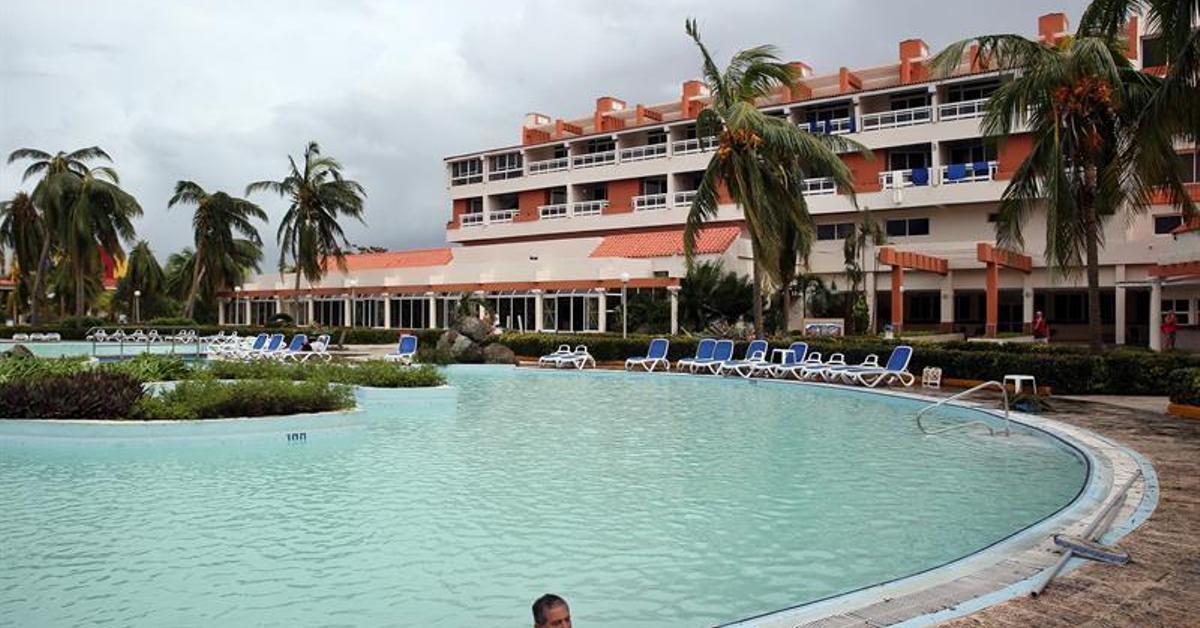
The reporter travels with a clear idea: 42% of the tourists that Cuba receives are Quebecers, therefore, their fellow citizens love the country. However, he soon begins to realize that the future looks bad. The Paradiso hotel in Varadero – chosen by many Canadians – is where you will spend two days on an all-inclusive basis. There are about 300 of the 794 rooms occupied, according to the receptionist, who admits that the previous week was even worse.
The pool of this large five-star hotel is empty, except for the bartender, who is doing nothing. “You have to admit, there is a strange atmosphere in this half-empty hotel. Evening entertainment is canceled and a la carte restaurants close some days of the week,” he says. The beach loungers are free and there is hardly any waiting in the restaurant kitchen.
The journalist, who claims that she has seen some mosquitoes that have survived the fumigation efforts carried out throughout Varadero, leaves brutal phrases. “Hotel food shortages are omnipresent, as they have been for years in Cuba. At the Paradiso, don’t look for fries or beef: expect canned pears for dessert.”
Although, as several tourists have told me, ‘we don’t go to Cuba for gastronomy.’”
Worse still: the week before his visit, the water was turned off for two days. The reporter worriedly asked Miguel, organizer of the boat excursions, how he thought the situation would evolve if the end of Venezuelan oil deliveries came to fruition. “Have you had any problems since you came here? No, haven’t you? That’s all,” “Don’t worry, nothing will happen here,” added the receptionist, watched from a short distance by her boss. The journalist admits that, whatever happens, the hotels will be the last to suffer, unlike the general population.
A waiter tells him, underlining the quotation marks with a gesture: “Yes, yes, ‘we have electricity,’” but privately he admits that he only had it for three hours the day before.
“I have never seen Varadero so empty,” says Claudia Reyes, a Cuban travel agent who lives in Toronto, whom he meets on a tourist bus. Canadians continuehe points out, betting on the country for the sun, the beach and the very cheap prices, despite everything. Another tourist tells her that it is her seventh time on the island. “The beach is still beautiful and the Cubans are still so welcoming,” she says.
Although many arrive with fear due to the presence of mosquitoes that can infect them with a dangerous disease, humor reigns among Canadian tourists. “Well, a flycatcher!” says one, nonchalantly. One of his friends believes he has seen planes spraying and feels safe, but two others who were going to travel with them changed their minds at the last minute and opted for a cruise.
In a press conference in Montreal, Lessner Gómez Molina, director of the Cuban Tourism Office, assured that the country is safe for tourists. “Cuba is operating normally. Everything remains the same,” said the official, who stated that thanks to the oil that arrives from other countries, including Mexico, it will serve to cover the summer. That was the message that the Ministry released a few days later on Facebook, where it also thanked Canadians for their support of the sector in Cuba.
Nora T. Lamontaigne also visited the Iberostar Selection La Habana, better known as Tower K in Cuba, where he saw “more employees than visitors in the lobby and panoramic bar,” the same impression that 14ymedio when he visited shortly after its inauguration.
The journalist has completed the special with several texts that illustrate the daily life of Cubans. One of them – titled Cocktail and fly hunting– is dedicated to the arboviruses that have shaken the Island especially in the last months of 2025 and whose consequences are still part of the lives of many citizens who fell ill with one of the viruses. Talk to Nara Miranda Lorigados, who along with her two teenage children spent weeks entangled in dengue, hepatitis, chikungunya and other unidentified viruses.
“The only thing you could do was drink a lot of water in the hope that the fever would subside,” he says. “I thought people were exaggerating when they described their symptoms, but I opened my eyes one morning and discovered that I couldn’t move,” recalls the artist, who is also in the process of healing from cancer. Even today, she points out, she feels pain in her ankles, something that does not exempt her from having to fight every day with power and water cuts. “On the morning of our interview, the electricity was cut off at 10 am. It’s no longer a surprise, it just causes irritation,” the reporter admits.
In his house, where he cooks and dines with a flashlight, there are countless jerry cans and bottles of water under the beds and the sink, so that there is no shortage in case of need. “During a crisis, if you save water, you can last three days. We really live in uncertainty. You never know when the water or electricity will be cut off,” Nara Miranda tells him.
He also speaks on this matter in one more textfor which he interviews another Havana resident, Maday García, who had to invest 100,000 pesos in a tank to store water. According to the reporter, the water supply had not entered her house for two weeks before meeting her and she feared for her dwindling reserves. “I have already had a nervous breakdown due to water cuts. Without water, it is impossible to live,” he said.
He also spoke with a taxi driver who lamented the lack of fuel – “Without gasoline, I can’t do anything but park!” he told him – and with a doctor who told him about the forced reuse of needles or the shortage of scalpels and thermometers. Furthermore, he notes how “garbage bags accumulate on the streets of Havana, especially because garbage collectors do not have enough gasoline to pass regularly.”
The journalist also dedicates a brief reportage to talk about the decline of Coppelia and its products, increasingly more expensive for a worse flavor. But also has made a positive note to talk about Cirabana, a social circus that gives remote classes to Cuban children thanks – in part – to the technology offered by a Quebecer.
“Our goal is for the children to forget for a moment about all the problems in their family and in their country,” says Carlos Manuel Capetillo Reinoso, one of the directors. Although the deficiencies are evident in the building and materials, the journalist confirms that the project has served to offer young people a different alternative to boxing and music.
The beautiful project, in any case, will not motivate Canadians too much to return to the Island. This 2025Without knowing the data for December, 1,629,787 international visitors arrived in Cuba, 19% less than in the same period in 2024. The plan had planned 2.6 million visitors, but the Minister of Economy, Joaquín Alonso, said before Parliament that the year would close with around 1.9 million, 73% of the goal.
Canadians represented the majority group, with three times as many travelers as the next –Cubans abroad–, but they barely reached 664,621 until November, compared to 780,111 in the same month of 2024, 85%. These figures are voiced by Joanne Caron, a passenger on the Air Transat flight along with the Canadian journalist. “This is the 38th time I have been to Cuba, but it may also be the last.”