Organizations such as the Penal Forum, Cofavic or Provea, as well as committees that bring together family members, have indicated that the approved amnesty is “exclusive” and “insufficient” as it does not contemplate hate crimes or military rebellion, just as it leaves out events that occurred between 2010 and 2025 that involve alleged conspiracies or military uprisings.
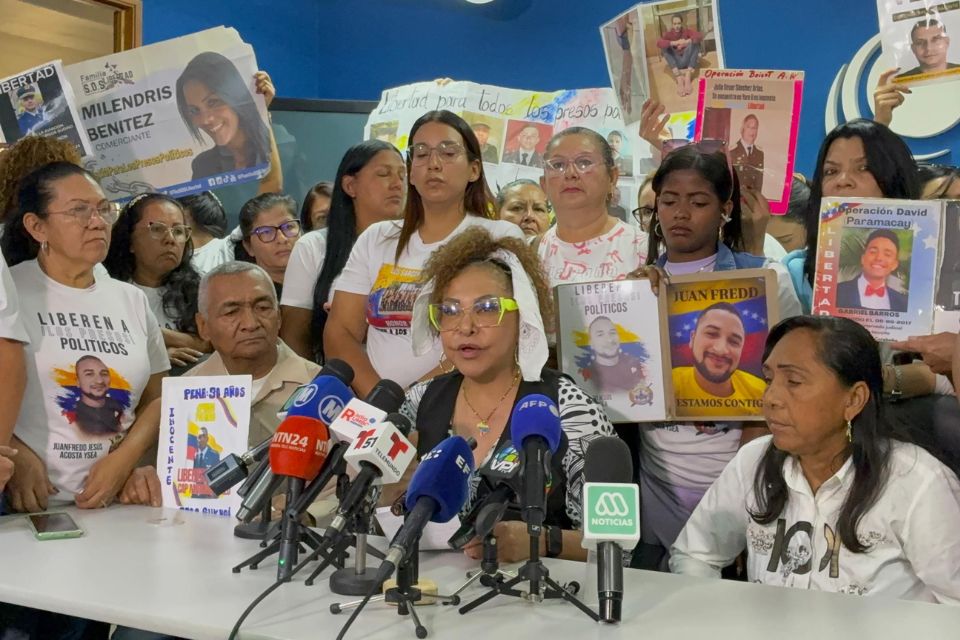
The approval of the Amnesty Law last Thursday the 19th by the National Assembly disappointed relatives of political prisoners and some who have already been released in recent months under restrictive measures of freedom. This is due to the discretion of its application and the extensive limitations that delay the freedoms of hundreds behind bars or in exile.
Organizations such as the Penal Forum, Cofavic or Provea, as well as committees that bring together family members, have indicated that the approved amnesty is “exclusive” and “insufficient” as it does not contemplate hate crimes or military rebellion, just as it leaves out events that occurred between 2010 and 2025 that involve alleged conspiracies or military uprisings.
Emerging calculate At least 50 farmers detained for agrarian demands, as well as more than 200 people who have been judicially prosecuted since 2015 for demanding labor rights, expressing their criticism, retaliation for having reported corruption or as “scapegoats” in these cases.
They also exclude, Surgentes and the Penal Forum have said, more than 400 people detained, prosecuted or convicted for crimes of a military nature. «Whether the facts for which they are accused are true or not, it is clear that these are crimes of a political nature that an amnesty should include, if the objective is to “promote social peace and democratic coexistence”, as stated in article 1 of the Law».
#Now | Alfredo Romero, president of the Penal Forum, points out that the dismantling of the repressive system is one of the tasks that remain pending after the amnesty law, as well as the release of all political prisoners.
It stands out that around 400 people, among… pic.twitter.com/7R0MS5ae9b
— TalCual (@DiarioTalCual) February 20, 2026
For Edward Ocariz, the situation itself is contradictory. As a person who was under arbitrary arrest, he acknowledged, “this suits me, but As a citizen and defender of human rights, this law is insufficient. “It does not guarantee freedom for everyone.”
Ocariz was detained inside his home by hooded PNB officials on August 2, 2024. On December 24 of that year under restrictive measures such as periodic appearances in court. The Coche parish activist was accused by the Public Ministry of terrorism, inciting hatred and disturbing public order.
He commented that although he plans to request amnesty, he will maintain the fight for the unrestricted freedom of all political prisoners together with family organizations and committees.
Betzaida Natera is much more emphatic. “This is a mockery”says the mother of Third Sergeant Major Geomer Martínez, whom she has not seen for a year at Fort Guaicaipuro. “With this law that they approved, they were excluded for rebellion… My call is to all these representatives in Venezuela, those who are helping us get our relatives out of those dungeons, from those dungeons like Fort Guaicaipuro where they are kept incommunicado.”
*Read also: Penal Forum: The amnesty is a very small instrument, but it is an achievement
He took the opportunity to denounce that the prisoners, the majority without the possibility of regular visits from their families, are kept in inhumane conditions in this detention center. «It’s as if they were buried. It cannot be that, because they think differently, they were tortured in the way they did and still do, because solitary confinement and not seeing their relatives is torture.
«It was a fraud, it was a Chilean package because it only included a minority. The deputies, these people from the National Assembly, called NGOs, family members, for them to comply with the guidelines for this law… What can we expect when they themselves have their judges and lawyers,” said Francis Quiñones, mother of Jonathan Franco Quiñones, one of those convicted of Operation Gedeón and who will not benefit from the amnesty for the type of crime for which he was accused.
He described the calls for peace and reconciliation made by Chavismo as “lies.” «What peace? What justice? “We continue with the same laws that want to prevent us from speaking, but here we continue fighting for our relatives, against this extortion, this fraud that they did with our relatives.”
A similar position is maintained by Milianni Castillo, sister of Oswaldo Castillo, convicted of the so-called drone case (2018). «The law speaks of reconciliation, but my brother remains behind bars today, being innocent.«.
Due to the nature of some of the crimes charged, such as intentional homicide in frustration against Nicolás Maduro, and the moment in which these events occurred, which are not directly mentioned in the law, none of those convicted would opt for an amnesty that would benefit them.
“Your freedom cannot be a crossed-out article in an office,” Castillo insisted.
The Colombian-Venezuelan citizen John Hader Betancourt would not be included in a list of possible amnesties either. He was sentenced to 30 years for treason, conspiracy, rebellion and criminal association. He was arrested in 2019, said his wife Claudia Morillo, just for appearing in a photo shaking hands with leader Leopoldo López during the military uprising in April of that year.
«I have sought advice and clarification because I understand that this specific event of April 30, 2019 is considered a military rebellion, and rebellions will not enjoy amnesty even if it is civil. I am sad, I come from the interior of the country, it is difficult for me to stay away from my children, two in severe special conditions. Thinking that this time I was taking dad home and Just thinking that I have to explain to them that this time their father is not coming back is the most difficult part of the process.«Morillo expressed.
The Penal Forum plans to deliver a document to the monitoring commission established by the National Assembly, once the law is promulgated in the Official Gazette, to review the cases of 232 people. Among them are people with serious illnesses, 21 over 70 years of age, three with some disability, 208 who have exceeded the limits of preventive detention.
The relatives, Quiñones said, will also organize to bring their cases before the monitoring commission appointed by the National Assembly and continue to pressure, in vigils, protests and other peaceful methods, for the full freedom of the political prisoners.
*Journalism in Venezuela is carried out in a hostile environment for the press with dozens of legal instruments in place to punish the word, especially the laws “against hate”, “against fascism” and “against the blockade.” This content was written taking into consideration the threats and limits that, consequently, have been imposed on the dissemination of information from within the country.
Post Views: 134