In the exordium of a novel, certainly unpublished, I read: “Any similarity with reality is the fault of reality.” Through my own cultural and political experiences, overloaded with ideological material, also present in social ecosystems, especially in teaching, literature and the press, I learned to stick to the facts, certainly not infrequently told poorly.
Ideology, depending on the circumstances, can be a thought that proposes cutting-edge goals or a collection of dogmas that maintain their validity even though circumstances have changed and refute them. Other times, as Karl Marx noted: “It provides a false knowledge of reality.”
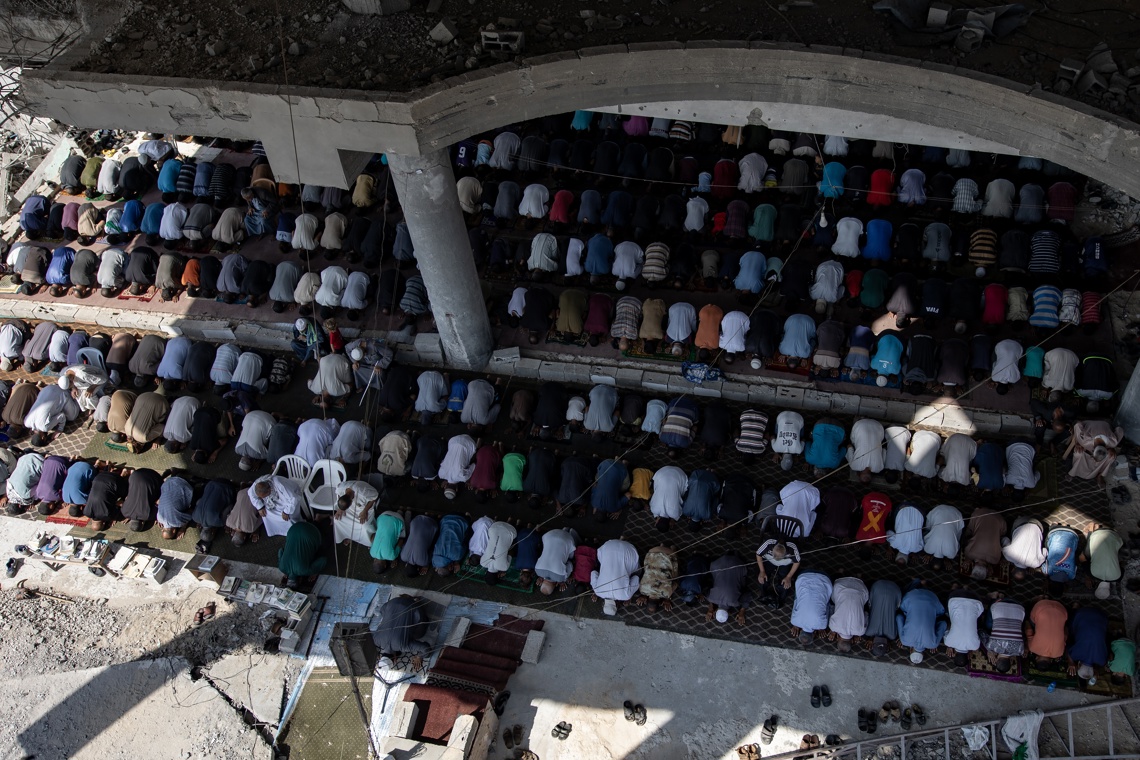
Now, for example, no bombs are falling on Gaza, there are no Israeli hostages in the hands of Hamas, thousands of Palestinian prisoners have left Israeli dungeons and Abdul-Malik al-Houthi, a tribal chief, leader of the Ansar Allah movement in Yemen (the Houthis), has ordered a stop to attacks on merchant ships sailing through the Red Sea and the Gulf of Aden.
The peace between Israel and Hamas, a technically well-armed process, which can be consolidated and, if done, resolve fundamental problems such as cessation of aggression, withdrawal of Israel to lines where it does not attack, entry of aid, reconstruction and others, was signed by guarantors with its execution: the United States, Turkey, Egypt and Qatar. Additionally, 20 other heads of state were present.
Two messages
These are facts from which each viewer can draw their own conclusions. I saw on television a banner over the ruins of Gaza on which, written in Arabic and English, it read: “Thank you” and on another, a little further on, it was written: “Damn you, Israel.” Shortly after, at the same event, Trump was praised and confronted in Israel’s parliament.
The first text did not absolve Donald Trump of his sins by giving thanks, nor did the second refer to all the inhabitants of Israel. Those who wrote them are possibly critical of the United States’ marriage with Israel and its complicity in the aggression in Gaza, and the other recognizes the right of Israelis to exist and live in peace.
“What to do, the poet Silvio Rodríguez asked, when faced with someone who steals food and then gives his life…”, moving from the petty to the sublime.
It is about assuming the diversity of circumstances and influences, including the interests of all kinds that surround people, including activists and leaders, which determine behaviors and the quality of actions.
Having stopped the massacre in Gaza is worth any medal they want to give to those who have contributed to it, while the abuse committed against migrants and the racism that policies spread against them legitimize any criticism made of them.
In time to harvest
If in Alaska Trump and Putin, presidents of the United States and Russia respectively, had agreed on a ceasefire and a viable roadmap for peace in Ukraine, both would deserve honors, which they certainly have time to reap. In a few days they will speak again.
It is about, among other things, acting with a sense of the historical moment and understanding that reality has a dialectic that characterizes each chapter of social history, made up of unrepeatable annals, none of which is a reproduction of the previous one.
Gaza will be rebuilt and, as Miguel Hernández wanted for the suffering Spain of the Civil War: “It will return from crying to where it was taken…”
I am certain that it may take a while, but sometime Russians and Ukrainians, two Slavic nations united by an umbilical cord, will greet each other again.
That will happen later; For now the important thing is peace, for which those who push them to kill each other stop doing so. The rest will be done by the time that, with its quiet walk, is immune to pettiness. See you there.
*This text was originally published in the newspaper For this! It is reproduced with the express authorization of its author.