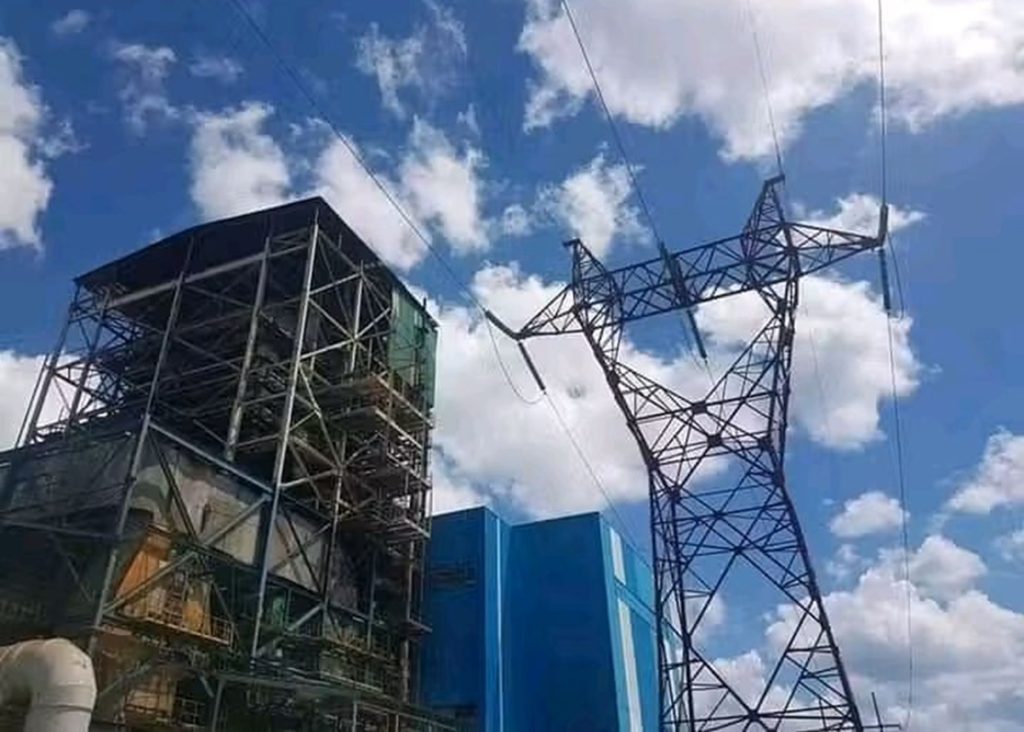
Havana/The CTE Antonio Guiteras thermoelectric plant, the most important in the country, left the national electrical system (SEN) this Thursday to address breakdowns that cause “overconsumption of water.” The disconnection, announced as necessary and “planned”, occurs at the worst possible moment, with uninterrupted blackouts, fuel reserves at the limit and a generation deficit that is dangerously close to collapse levels.
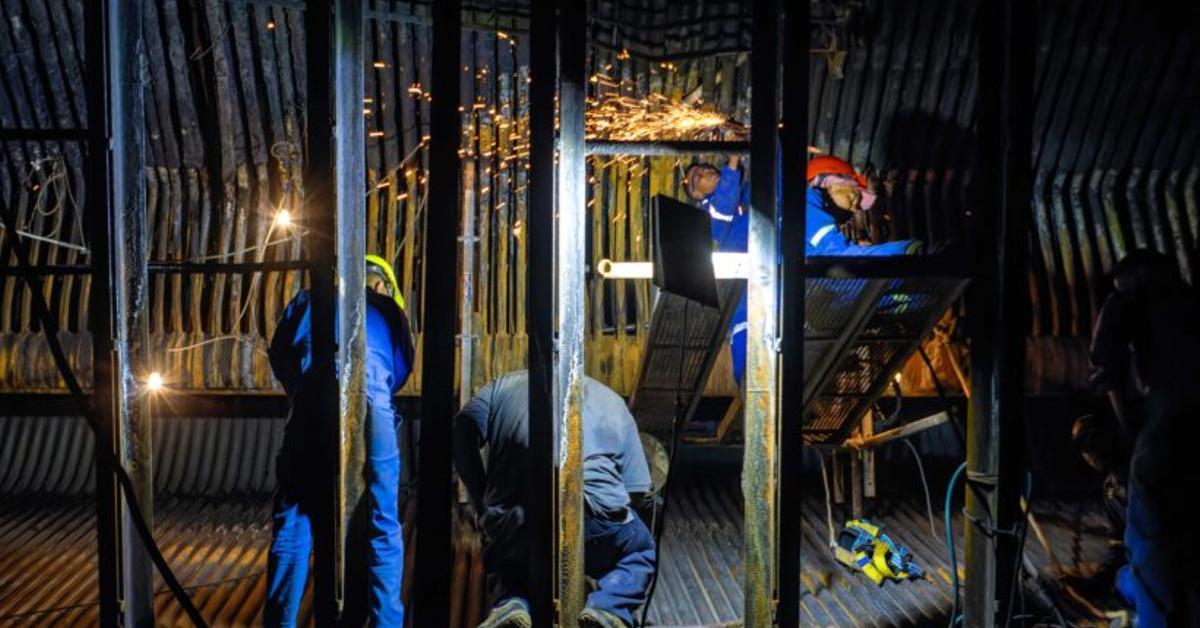
According to Román Pérez Castañeda, technical director of the Matanzas plant, the stoppage – estimated between 72 and 96 hours – seeks to eliminate a breakdown in the boiler superheater, reduce water losses and wash the regenerative air heater. The stated objective is to “reach March with better indicators” and, after maintenance, increase the contribution to the SEN from the current 180 megawatts (MW) to a range of 220-240 MW. The promise, repeated other times, once again collides with the reality of an aging and unsupported system.
The departure of Guiteras adds to an already critical panorama. The Electrical Union reported that this Wednesday the service was affected for 24 hours. The maximum deficit reached 1,832 MW in the afternoon peak hour and, far from being alleviated, the blackouts resumed at dawn. For this Thursday, the entity predicted an impact of up to 1,795 MW, with an availability of only 1,385 MW compared to a maximum demand estimated at 3,150 MW.
In the neighborhoods, many residents remember that the Government usually makes the worst decisions at the least opportune times, as happened with the Ordering Task in the middle of the pandemic. A Havana resident, consulted by this newspaper about the mood in his neighborhood after the departure of Guiteras, sums it up with sarcasm: “Here the Revolution gives us no respite. They take advantage of the fact that there is a cold front and that consumption drops to ‘fix’ Guiteras… you know.”
The Island has enough oil reserves for just “15 or 20 days” of consumption, according to the ‘Financial Times’
The scenario presents another difficulty, because the Cuban Government insists on presenting the expansion of renewable energies as a lifeline, but the climatic reality of the coming days conspires against that discourse. The arrival of the cold front, with greater cloudiness and rain, can significantly limit photovoltaic generation, further reducing a contribution that depends entirely on the hours of sunshine.
To the breakdowns in key units – Mariel, Santa Cruz, Nuevitas, Felton and Renté – are added prolonged maintenance and thermal limitations that leave more than 400 MW out of service. The temporary departure of Guiteras, although announced as a corrective measure, further reduces the system’s already meager operating margin.
This same Thursday Financial Times publish a note in which he assures, with data from the consulting firm Kpler, that the Island has enough oil reserves for only “15 or 20 days” of consumption. So far this year, Cuba has only received 84,900 barrels of crude oil, corresponding to a single Mexican delivery made on January 9for him Ocean Mariner. This amount does not solve anything, since the country needs 70,000 barrels of imported crude oil every day, in addition to the 40,000 barrels of national production, which only serve thermal power plants.
The interruption of Venezuelan supplies after the capture of Nicolás Maduro on January 3 and the increasing pressure from the United States on Mexico have left the regime without its main source of fuel. The last shipment of Venezuelan fuel oil arrived in November and specific contributions from Russia and Algeria have not been able to compensate for the deficit.
The Mexican Government seeks to avoid friction with the United States, its main trading partner
Mexico, which established itself as the main supplier last year, has reduced or suspended shipments due to the risk of trade retaliation by Washington. President Claudia Sheinbaum has defended that this is a “sovereign decision”, but has avoided clarifying whether the interruption will be permanent. Analysts cited by Financial Times suggest that the fear of sanctions, and even the seizure of shipments, has weighed on Mexican caution, especially in a context of trade renegotiation with the United States and Canada.
Also this Thursday, Trump and the Mexican president held a telephone conversation that both described as “productive.” Trump’s cordial tone and public praise contrast with a scenario of sensitive negotiations, in which the Mexican government seeks to avoid friction with its main trading partner. This reduced margin of maneuver helps explain Mexico’s prudence regarding crude oil shipments to Cuba, caught once again between decisions that are made outside the Island.
The impact on daily life is immediate. The blackouts, increasingly longer and more frequent, paralyze economic activity, hit homes and deepen social unrest in a country already burdened by inflation, the fall in tourism and the collapse of agricultural production. Specialists agree that, without the arrival of new shipments of crude oil in the coming weeks, the country is heading towards a more far-reaching energy collapse.