For years, the dominican tourism has distinguished itself from its competitors under a slogan that is as succinct as it is accurate: “Dominican Republic It has everything.” The ventures that emerge linked to this activity attest and testify that there are a lot to visit.
He ecotourism –a modality that seeks to attract tourists aware of the enhancement of the conservation of natural resources and interested in culture– is acquiring increasing notoriety, since it encourages the development of communities and promotes their integration.
Yira Vermentondirector of Provincial Initiatives of the Ministry of Tourismensures that the country has offers that, articulated, allow the development of high-value proposals that give the country a differential advantage compared to other destinations.
“We have to divert attention towards designing high quality proposals in the natural environments that give the message that we not only want to offer the resource, but that we are taking care of it”, he stated.
The proposal of five pilot circuits
Since last year, the Ministry of Tourism has designed a National Ecotourism Strategy which aims to transform this modality “into a strategic pillar of Dominican tourism development, simultaneously contributing to the regenerative conservation of ecosystems, territorial inclusion and the economic resilience of the country in the long term.”
This plan proposes five pilot circuits which, if started, would be pioneer projects of the Government in a segment that has been developed, to a large extent, by private initiatives.
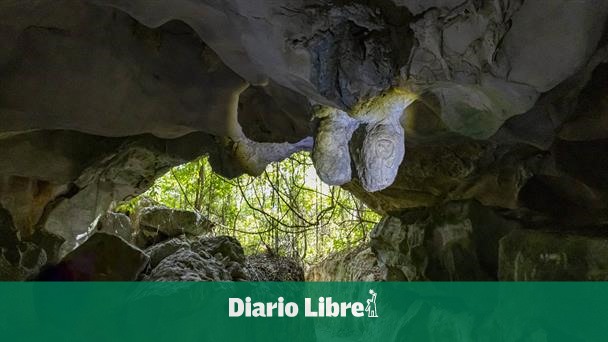
One of these circuits is called Pomier-Boca de Nigua axis. Developed in Saint Christopherthis circuit seeks to connect the prehispanic heritage which house the Pomier caves with the history of slavery that the Boca de Nigua Sugar Mill itself tells.
But in Saint Christopher There is more: it is the cradle of the Dominican Constitution and also houses a written passage from the time of the Trujillo dictatorship.
“Saint Christopher It is an extraordinary territory to be able to elevate the true ecotourismwhich is that ecotourist who is looking for connect with naturewith the culture, with the history and with the people,” said Vermenton.
Another potential circuit is called The Isabela-Route of the encounterwhich delimits part of the route he traveled Christopher Columbus when he moved to Isabela, in Puerto Plata. “There is a whole route already identified of places, with names even from that time, to the border with Santiago,” he indicated.
These are added:
- The Bay of Samaná itself and its surroundings, since it integrates the ecotourism coastal-marine, with the whale watchingcare of mangroves and national parks with the conservation of high biodiversity–
- Lake Enriquillo – with its unique landscapes that require climate adaptation strategies –
- The Valle Nuevo-Manabao-Pico Duarte circuit, which offers ecotourism of mountain in the Central Cordillera, the main mountain system of the Insular Caribbean.
The National Ecotourism Strategy – an instrument integrated into the National Sustainable Tourism Strategy – is still in an early phase of development, with all the technical part ready.
During a first phase – contemplated until 2030 –, the strategy would focus on making the master plans and estimated budgets of the identified ecotourism circuits to, in coordination with other entities – such as the Ministries of Environment and Culture – decide which of all the proposed routes presents the best profitability to choose one of them and start it first. For Vermenton, this would allow the country to test what would be a formal tourism proposal with institutional support, “with the clear intention of developing new high-quality market niches. level.”