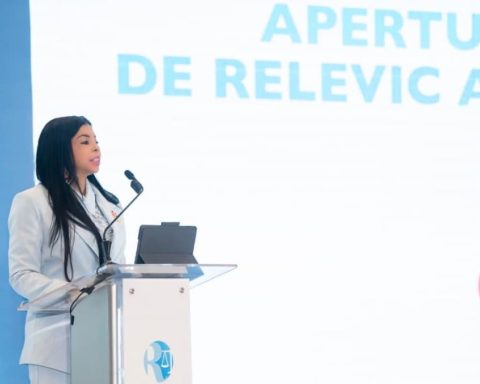
Santo Domingo.– The vice-rector of Research and Linkage, of the Technological Institute of Santo Domingo, Rosario Aróstegui, highlighted the urgent need to train talent in areas STEM to respond to the current demands of the productive sector.
When delivering the welcome speech to the panel “The Future is STEM: Talent to transform the country”, the professional stated that 98 percent of INTEC graduates manage to find a job within a year, which reflects the high demand for professionals in these disciplines.
“Companies are waiting for you. Today, STEM professions are essential to promote the development of the country and build real solutions to the challenges we face,” said Aróstegui within the framework of the Intercollegiate STEM Fair 2025, a space in which leaders from the public, private and academic sectors reflected on the role of the aforementioned careers in national development.
He highlighted the importance of the STEM route that INTEC brings to educational centers, motivating young people to explore these careers through practical and dynamic experiences.
You may be interested in reading: Abel Prize for Mathematics and its importance for the development of the DR
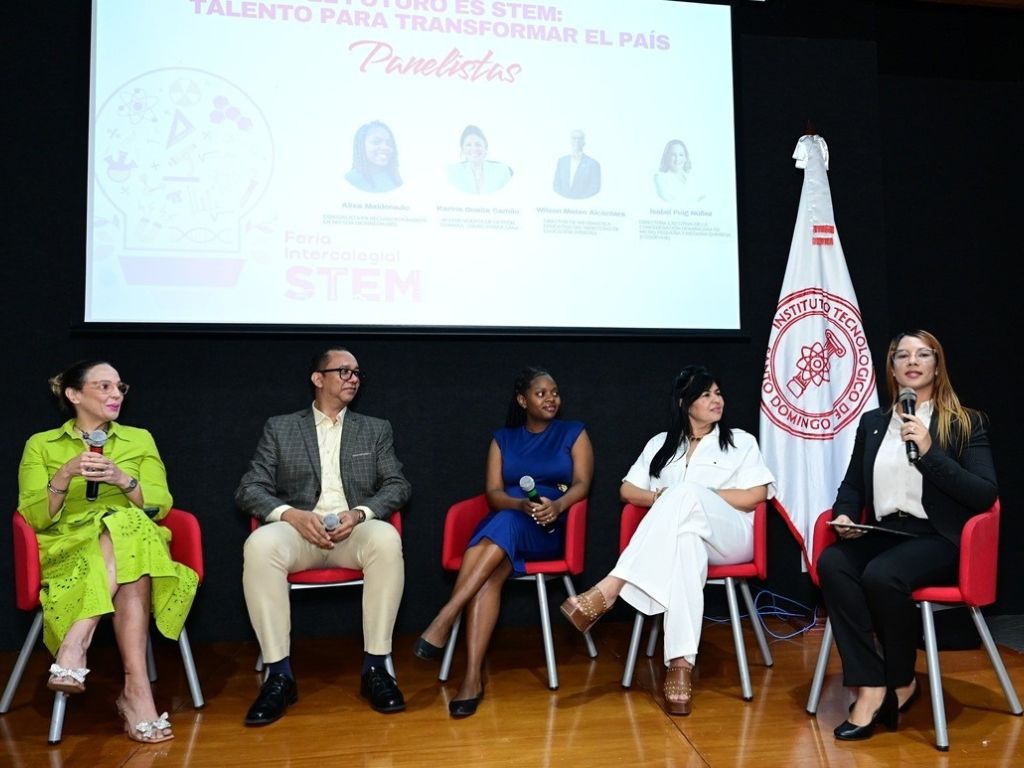
The panel brought together Isabel Puig Núñez, executive director of CODOPYME; Wilson Mateo Alcantaradirector of Educational Informatics and STEAM of the Ministry of Education (MINERD) ; Alixa Maldonadohuman talent specialist at Becton Dickinson; and Karina Guaba Camilovice president of Human Management of the Punta Cana Group, who contributed experiences and perspectives from their respective sectors.
Mateo explained the Ministry of Education’s initiatives to strengthen educational robotics and the STEM approach and emphasized the importance of contextualizing learning. “The contextualization of learning is essential for the student to prepare. It is not in the classroom that they will experience it, it is in the real field,” he said.
From an international business perspective, Maldonado shared some of the essential skills for young people, including resilience and mastery of the English language, given the changes that push professionals to leave their comfort zone. “In the world the only thing that is constant is change,” he said.
In Puig’s case, he shared a direct vision of how STEM areas drive sustainable entrepreneurship. “STEM areas allow us to go from inspiration when undertaking, to execution… it generates critical thinking, experimentation, and innovation as natural processes,” he commented.
Guaba called for rethinking Dominican education so that it truly responds to the needs of the labor market and criticized the disconnection between training and employment, considering that many students are not equipped with the necessary technical skills to be able to compete, innovate and generate creativity. “We need to challenge ourselves, sit down and say what excellence is for the Dominican Republic,” he said.
The panel concluded with the moderator’s words Anileydis Colonwho left a final message for the students “Each of us is a key piece in the construction of that future that will transform our country.”, he expressed.
Development of the STEM 2025 Intercollegiate Fair
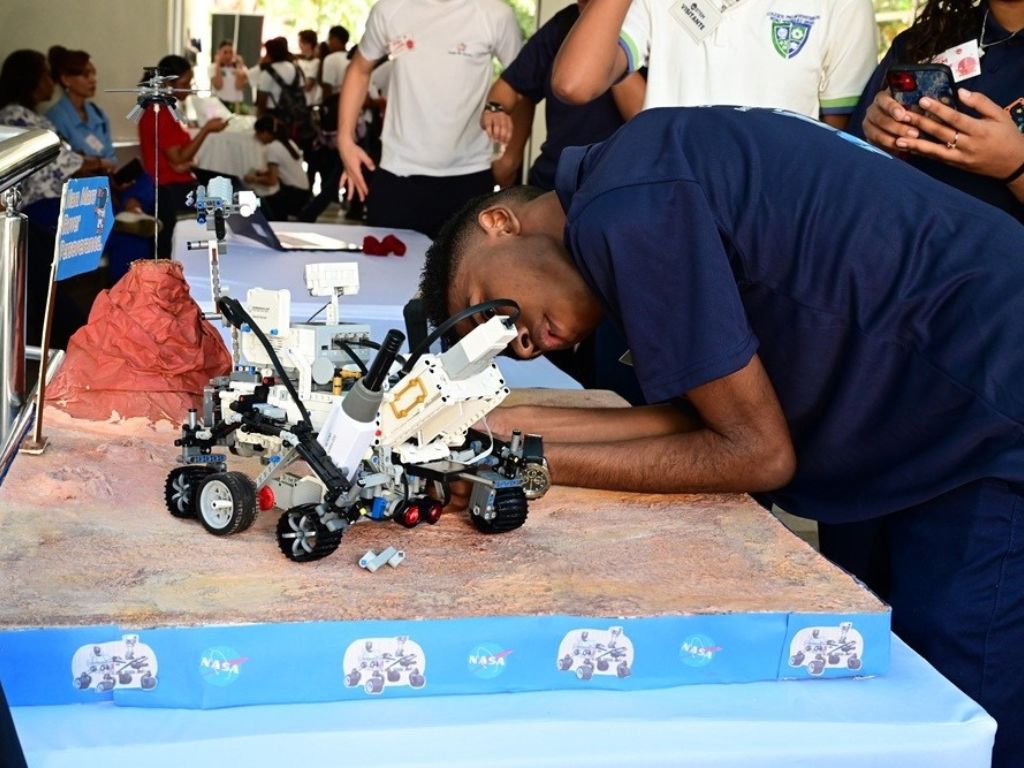
One of the most important aspects was the presentation of the most outstanding projects, evaluated for their innovation, applicability and ability to respond to real problems. The four teams selected were Flood Systems Alarm Prevention (FSAP), from the San Martín de Porres School, a system that seeks to alert authorities and emergency organizations in the event of emergency situations in vulnerable places in the country; Biobananoide proposed the use of organic waste for educational and recycling purposes at the María Auxiliadora Polytechnic.
Lenses for blind people was created by students from the Pedro Henríquez Ureña Pre-University School, while Mis Estrellas School created ResQBot, a robot designed to help rescue teams in dangerous event scenarios, which represents a solution to disaster and landslide emergencies.
After the panel, INTEC and allied companies presented certificates and special mentions, recognizing the effort and quality of the projects presented.
The fair also featured the intervention of Dalul Ordehi, dean of the Social Sciences and Humanities Area of INTEC, who offered a motivating message about the value of studying STEM careers and the importance of intersectoral collaboration.
“It is valuable to have the opportunity to build these spaces so that students can become agents of change and turn the country into the one we all want,” said Ordehi.
The day concluded with the STEM Expo, an open exhibition where attendees toured the stands of projects developed by educational centers such as the Liceo Hermanos Domínguez López, Polytechnic Sustainable Fernando Arturo de Meriño, Polytechnic Prof. Eugenio de Jesús Marcano, Polytechnic Professor Francisco Ramírez Capellán; Juan Félix Ortiz Educational Center and Mercedes Kranwinkel Educational Center.