Havana/The Cuban authorities have once again extended the tariff exemption for non-commercial imports of food, medicines and hygiene products. The State is unable to guarantee basic supply and is forced to prolong, without a defined closing date, a regime of exceptions. The measure rests, once again, on the efforts of families and the support of the diaspora.
Resolution number 9/2026 of the Ministry of Finance and Prices, published in the Extraordinary Official Gazette This Saturday, it extends the benefits that allow these products to be imported without paying customs tax and without value limits in certain cases. The text establishes that the measure will be in force “as long as the conditions that determined its approval persist,” an ambiguous formula that in practice is equivalent to an indefinite extension.
The decision does not come alone. Along with Resolution 9 appear 10 of the Ministry itself, Resolution 4 of Public Health and 34 of the General Customs of the Republic, a regulatory package that confirms that the tariff relief is not a one-time concession, but rather a structural piece to sustain a collapsed supply system.
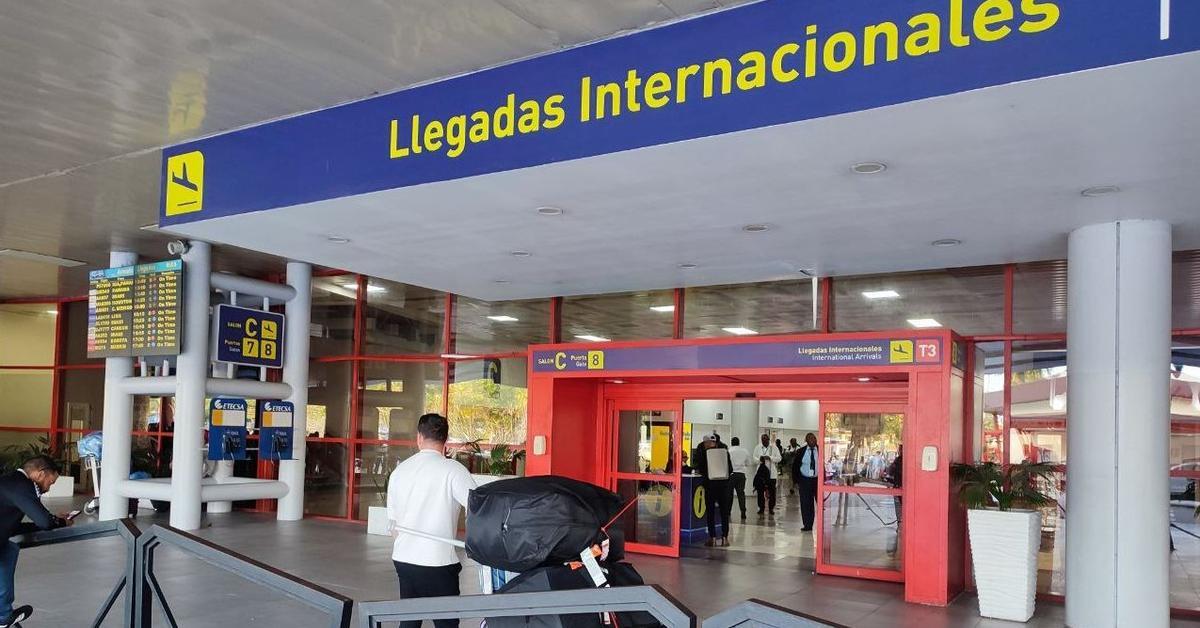
In the case of passengers, the regulations maintain non-commercial importation, without value limits and tax-free for food, hygiene, medicines and medical supplies when traveling as accompanied luggage. For unaccompanied baggage, the limit is set at $500 or up to 50 kilograms, depending on the weight/value ratio defined by Customs. For shipments, the general limit is also raised to $500, although the exemption is maintained only for the first $30 or three kilograms, and a 30% tariff is applied to the excess.
Beyond these figures, the relevant detail is in the conditions. The Gazette specifies that the benefited products must be presented in packages separate from the rest of the luggage and that shipments can only contain items classified as food, hygiene, medicines or medical supplies.
The Government once again attributes these extensions to the “tightening of the blockade” and the impact of the pandemic, but avoids mentioning its own responsibility.
Resolution 4/2026 of the Ministry of Health adds that the historical limit of ten kilograms for the importation of medicines in original containers is once again suspended. The list of authorized medical supplies occupies several pages of the Gazette and includes everything from syringes, probes and gloves, to oximeters, prostheses, wheelchairs and oxygen concentrating equipment. The inventory is so extensive that it functions, de facto, as an official recognition of the chronic shortage of supplies in the Cuban health system.
For its part, Resolution 10/2026 extends without a specific time limit the import of power plants of more than 900 watts, applying a 30% tariff only to excess load. The text itself justifies the measure due to the “contingencies that persist in the national electro-energy system”, a tacit admission that the blackouts are not a temporary anomaly, but a structural condition.
Customs, through Resolution 34/2026, keeps the weight valuation table for food, hygiene and medicines suspended, replacing it with a special annex. Although the value/weight method remains in force for other products, this exception confirms that the ordinary import scheme is unviable for basic goods in the current context.
The Government once again attributes these extensions to the “intensification of the blockade” and the impact of the pandemic, but avoids mentioning its own responsibility in the productive contraction, the decapitalization of the state sector and the partial dollarization of the economy. In practice, the tariff exemption transfers the cost of supply to homes and consolidates an economy of remittances, suitcases and shipments as a substitute for the internal commercial network.
The promise that the Ministry of Finance and Prices will “systematically” evaluate the impact of the measure and will notify 30 days in advance of any elimination sounds more like a formalism than a guarantee. In recent years, these exemptions have been extended again and again, until they have become the norm.