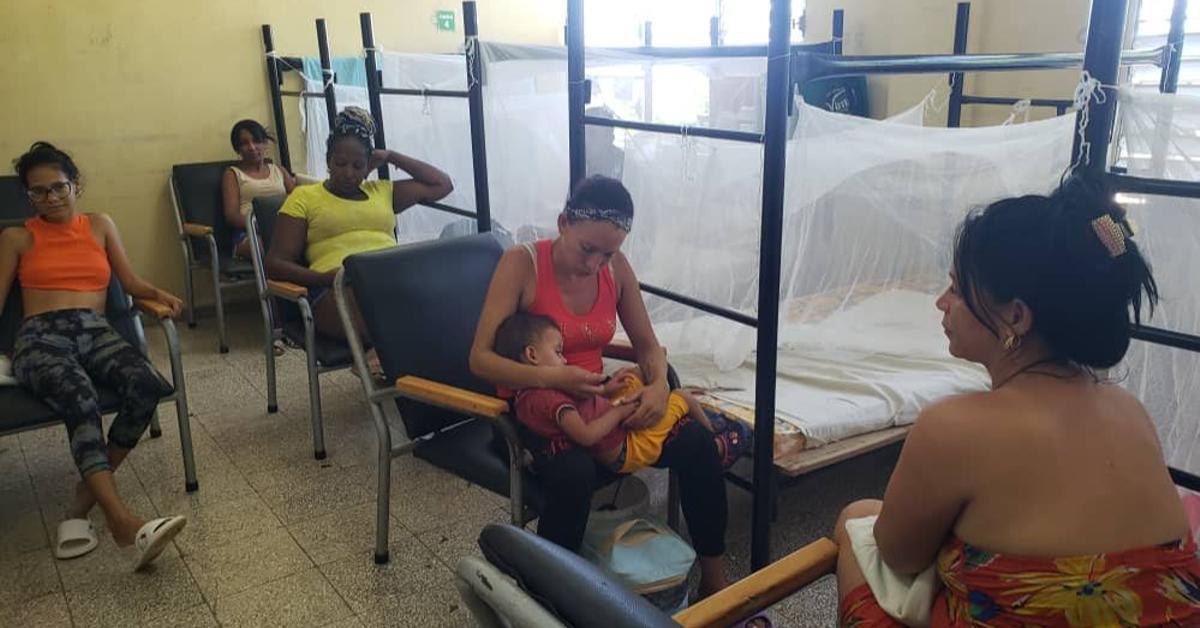
Havana/Given the worsening of the health crisis due to arboviruses – dengue and chikungunya – in the province of Guantánamo, local authorities have conditioned the José Maceo Grajales pre-university institute to function as an extension of the Pedro Agustín Pérez Pediatric Hospital. With this decision, they intend to decongest the main hospital and more quickly care for minors with mild symptoms.
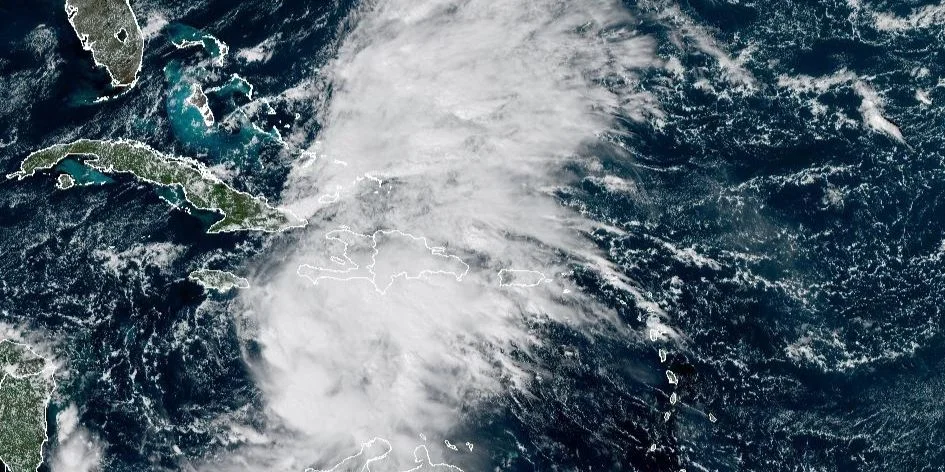
The measure is adopted as the province prepares for the possible impact of Tropical Cyclone Melissa, which according to the forecasts threatens to strengthen its effects on eastern Cuba and is expected to become a hurricane in the next few hours.
According to the official publication On Radio Guantánamo’s Facebook, the space has been set up for children over two years of age, without warning signs, or with chronic diseases that require monitoring. There, services will be offered such as hydration with oral salts, fever control, pain management, laboratory analysis – including platelet counting – and 24-hour medical observation. The explicit goal is to relieve pressure on the pediatric hospital, overwhelmed by the arboviral wave.
The Pedro Agustín Pérez Pediatric Hospital, inaugurated in November 1918, is suffering from deterioration that has been frequently reported by both patients and medical staff. The pre-university facilities do not offer optimal conditions either. A user comments on the Radio Guantánamo publication: “There are cubicles that, when it rains, it rains more inside than outside. And look, they waste materials in other places.”
The reopening of this extension in the teaching center highlights the fragility of a health system overwhelmed by the epidemiological crisis
Several local complaints have warned that many of the auxiliary structures lack minimum conditions: leaks, rooms without adequate ventilation, lack of basic supplies and obsolete equipment. The reopening of this extension in the teaching center highlights the fragility of a health system overwhelmed by the epidemiological crisis on the Island. If arbovirus cases increase, the central hospital may collapse.
At the national level, Cuba is experiencing a simultaneous flare-up dengue, chikungunya and other diseases transmitted mainly by mosquitoes Aedes aegypti. Official statistics recognize areas with high incidence, while vector control is limited by lack of fuel, insecticides and personnel. Added to this is the accumulation of garbage in urban areas. “By removing the churre that is throughout the city, cases will immediately decrease significantly,” says another user on social networks.
Guantánamo is among the provinces most affected by arboviruses, with a sustained growth in cases. The hospital situation is critical, many centers do not have the capacity for rapid analysis, observation rooms are insufficient, and support equipment – such as oral serum, infusion pumps, monitoring systems – is scarce or in poor condition.
Guantánamo could receive heavy rains, hurricane-force winds and structural damage in the coming days
For humble families, the drama of facing a child’s illness is complicated by poor nutrition, blackouts, increased transportation costs, and lack of medication. A good part of the help to face the current emergency comes from the family support exiles.
In the midst of this panorama looms the threat of tropical cyclone Melissa, whose projection points to eastern Cuba. Guantánamo could receive heavy rain, hurricane force winds and structural damage in the coming days. Under these conditions, mosquito proliferation can multiply, access roads become impassable, and sanitation can collapse even further.
The simultaneity of an arboviral crisis with an extreme climate event is a perfect storm. Provisional spaces – such as the newly activated pre-university facility – could become unusable, and seriously ill patients would have even more difficulty receiving timely care.