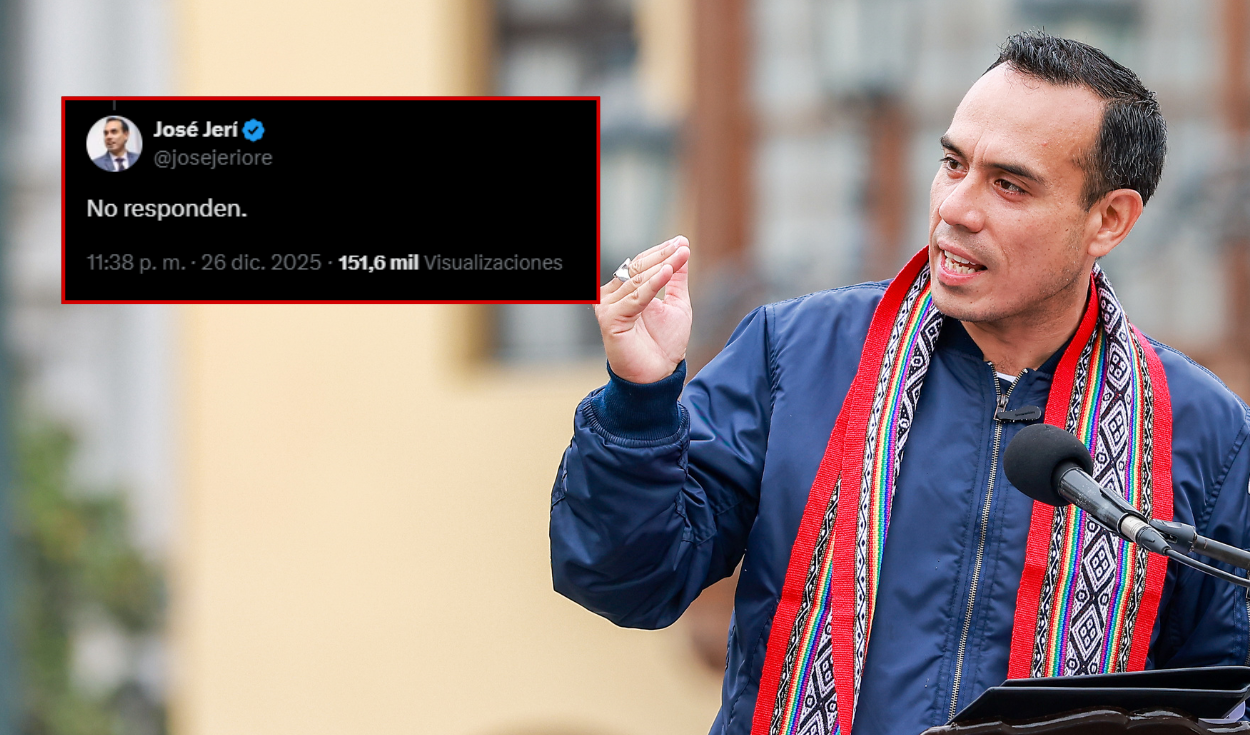
The president José Jerí responded with a brief “They don’t respond” to a message spread on x who requested urgent help for the care of a patient in EsSalud. The phrase, published without further explanation or institutional reference, was read as a confirmation of the failures in the health system and exposed a presidential response lacking context in the face of a sensitive complaint.
The reaction generated immediate criticism due to the message ambiguity and the absence of concrete action from the Executive. Instead of announcing direct intervention or channeling the case through official channels, José Jerí He opted for a brief expression that left multiple interpretations open and moved the discussion to the field of social networks.
They don’t respond.
— José Jerí (@josejeriore) December 27, 2025
YOU CAN SEE: José Jerí aligned with Congress: the laws he approved without further observations
The message was amplified by users who took advantage of the statement to make visible structural problems in EsSaludsuch as lack of medical appointments, shortages of medications and inoperative medical equipment. The way in which the president responded reinforced the perception of state lack of coordination in the face of a health emergency.
Hours later, José Jerí He tried to qualify his statement and specified that his comment was not directed directly at EsSaludbut to the person who had reported the case. However, the clarification came when the initial message had already gone viral on xrevealing the Executive’s communication limitations in the face of a situation that required a clear and timely response.
YOU CAN SEE: José Jerí recognizes that he will not “win” the fight against insecurity due to a “time issue”
José Jerí’s response and subsequent clarification
After the viralization of “They don’t respond”, José Jerí He assured that his comment did not make direct reference to EsSaludbut to the lack of response from the person who had initially reported the patient’s case. According to him, he did not receive any communication until late at night and only later did he find out that the service was in process.
The president indicated that his intention was to highlight a communication problem in an urgent situation, although he acknowledged that the episode should not have occurred. In his message, he maintained that the main concern was that the patient was treated and that the case was on track, without detailing which instances finally intervened.
Despite the precision, the communication damage had already been done. The sequence of messages left the impression of lack of coordination in the Executive’s response and revived criticism about the management of EsSalud. For different users in xthe clarification was not enough to dispel the idea of a system that responds late, even when the alert reaches the presidential office.