The liberal candidate Salvador Nasralla affirmed that Honduras will not maintain relations with the administration of Nicolás Maduro and denounced attempts at political manipulation from Venezuela. His statements are based on allegations published by The Wall Street Journal and the US State Department. They are not the only sources that have denounced interference by Chavismo in that country that is going to elections on November 30
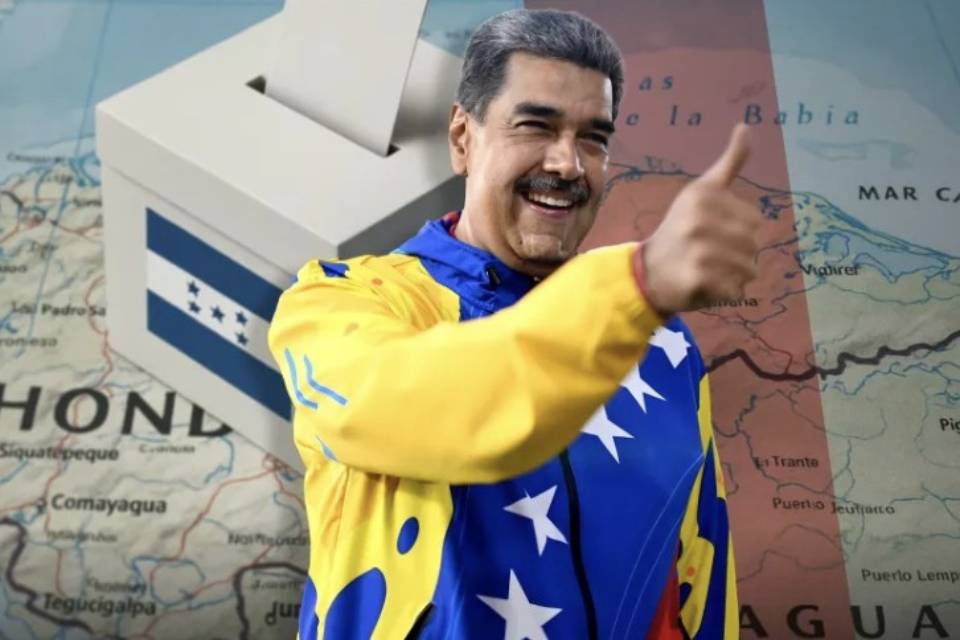
The presidential candidate of the Liberal Party of Honduras, Salvador Nasralla, assured this Monday that, if he comes to power, his country will break relations with the administration of Nicolás Maduro. The position, he stated, responds to documented warnings about alleged political interference operations from Venezuela and intended to intervene in electoral processes in the region.
Nasralla reacted to a report by The Wall Street Journal which describes an alleged manipulation model promoted by structures linked to Chavismo, based on groups, militias and trained operators. The text indicates that these networks would operate in different countries, including Honduras, which will hold elections on November 30. The candidate also cited a statement from the US State Department that accuses senior officials associated with the Venezuelan administration of operating transnational criminal structures linked to destabilization events.
What did you publish The Wall Street Journal?
An opinion column by Mary Anastasia O’Grady in The Wall Street Journal maintains that Venezuela, with Nicolás Maduro and under the influence of Cuba, seeks to politically “devour” Honduras by supporting the ruling Libre Party and teaching it the Chavista “manual” to control institutions and rig elections.
O’Grady describes that the Honduran ruling party would be copying tactics used in Venezuela: sowing doubts about the ability of the National Electoral Council to transmit results, calling for a “permanent mobilization” of bases and groups capable of intimidating, and using a politicized army that controls the custody of the ballots and public order. He adds that the Prosecutor’s Office, aligned with the government of Xiomara Castro, opened investigations against an opposition member of the CNE, and remembers that all this fuels fears of fraud and violence, comparing it to what happened in Venezuela in 2024.
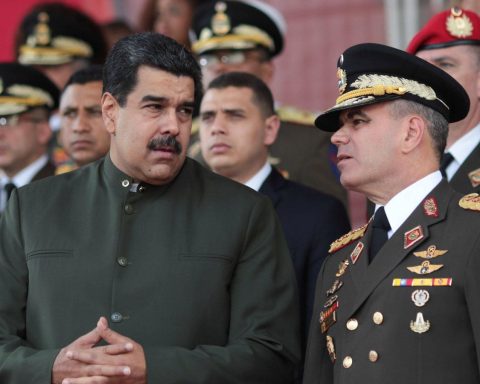
The text adds that a nephew of President Xiomara Castro, former Minister of Defense José Manuel Zelaya Rosales, traveled to Caracas to meet with Vladimir Padrino López, which generated criticism from the US embassy. The author cites a document from the Honduran chapter of Transparency International that warns that, given the poor results in the polls, Libre would be using its influence over State institutions in a way that could compromise the integrity of the 2025 elections, and concludes that defending the vote in Honduras “will not be easy.”
“Snooping” in Honduras
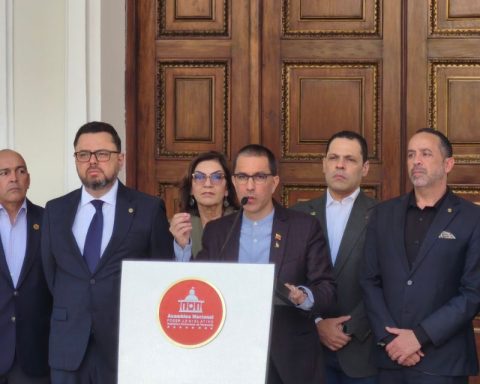
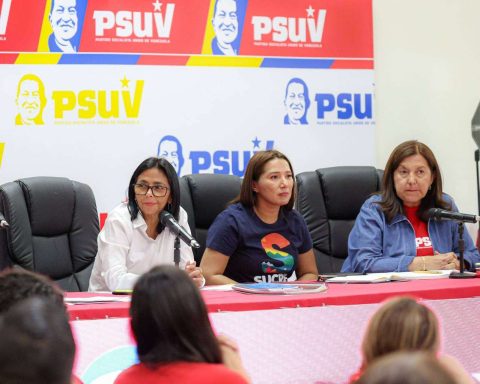
According to Public Filefour officials from the Maduro administration have participated in operations to promote the official candidate Rixi Moncada. Those mentioned are the former minister Luis Salas Rodríguez, the deputies Francisco Ameliach and Jorge Rodríguez, as well as the vice minister of Foreign Affairs Rander Peña; that would be part of the international consultancies that also include the Spanish politician Pablo Iglesias, the Russian communicator Inna Afigenova, the former Ecuadorian president Rafael Correa and the Venezuelan consultant Jorge Ladera.
«The four operators of the Maduro regime would have arrived in Honduras last July, aboard a private jet. Public File confirmed that this aircraft came from Caracas. “It was not a flight from the United States transporting migrants, as the Honduran authorities assured at that time,” publishes the research portal.
Venezuelan Jorge Ladera, for his part, is the owner of the company ISKRA Global, which has contracts from the Honduran government for consulting and media monitoring. According to invoices from the Secretariat of Strategic Planning, ISKRA Global received about 215 thousand dollars from the Honduran government in 2024, for advertising services.
*Read also: The presidential elections in Honduras and the shadow of drug trafficking from Venezuela
Telesur gives a little help to the ruling party
Venezuela also influences the Honduran elections through the international channel Telesur. The thinking center Open File monitored of the social networks
According to the study, Telesur amplifies the propaganda of the Honduran government and the ruling party with its candidate, Rixi Moncada. Open File found that Telesur published on the social network
Added to these messages are the coverage that Telesur gave to the Libre mobilizations, through Facebook live broadcasts.
On the other hand, Telesur’s references to the opposition were few. There were five mentions of the candidate Salvador Nasralla (of the Liberal Party) and four of Nasry Asfura (of the National Party). In both cases, the messages were neutral, neither for nor against.
Maduro, friend of the family in power in Honduras
Xiomara Castro’s It was the first government in the world in supporting that Maduro had been re-elected in the elections of July 28, 2024, marked by allegations of massive fraud and with the Carter Center certifying the electoral records that would show a different outcome.
On the other hand, already in the elections that gave victory to Xiomara Castro, Venezuela had a lot to do with it. One of the companies that developed the VenAPP application She has also been in charge of the website of the Free Party of Honduras and Castro’s candidacy; in addition to the website that Jorge Arreaza used in his failed electoral campaign in Barinas in 2021.
The Central American country is ruled by a family: Xiomara Castro governs from the Presidential House, Manuel Zelaya pulls the strings of power, his son Héctor controls key areas of the Executive, his daughter Xiomara is a deputy; and the former president’s brother, Carlos Zelaya, was secretary of Congress. In addition, the official candidate Rixi Moncada is the aunt of the attorney general, Johel Zelaya.
On November 17, Salvador Nasralla stated that he does not recognize Nicolás Maduro as president of Venezuela and assured that the Venezuelan administration “destroyed its economy, its democracy and its institutions.” For him, this is a path that Honduras “should not replicate under any circumstances.” He stressed that his political project “does not have and will not have links with criminal structures” related to that country.
If he becomes President, He said that Honduras will break relations with the Maduro administration and will only reestablish ties when in Venezuela there is “a freely elected government recognized by the international democratic community.” He also assured that he will defend the citizens, the institutions and the electoral process against foreign agendas “that seek to divide or manipulate the population.”
*Journalism in Venezuela is carried out in a hostile environment for the press with dozens of legal instruments in place to punish the word, especially the laws “against hate”, “against fascism” and “against the blockade.” This content was written taking into consideration the threats and limits that, consequently, have been imposed on the dissemination of information from within the country.
Post Views: 438