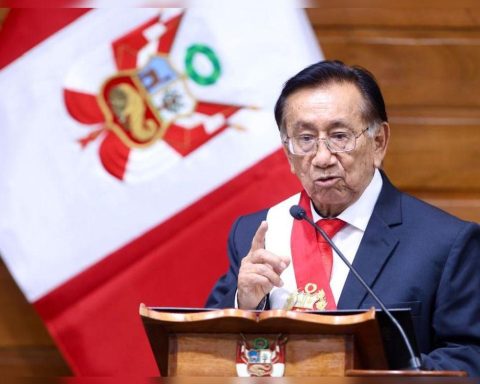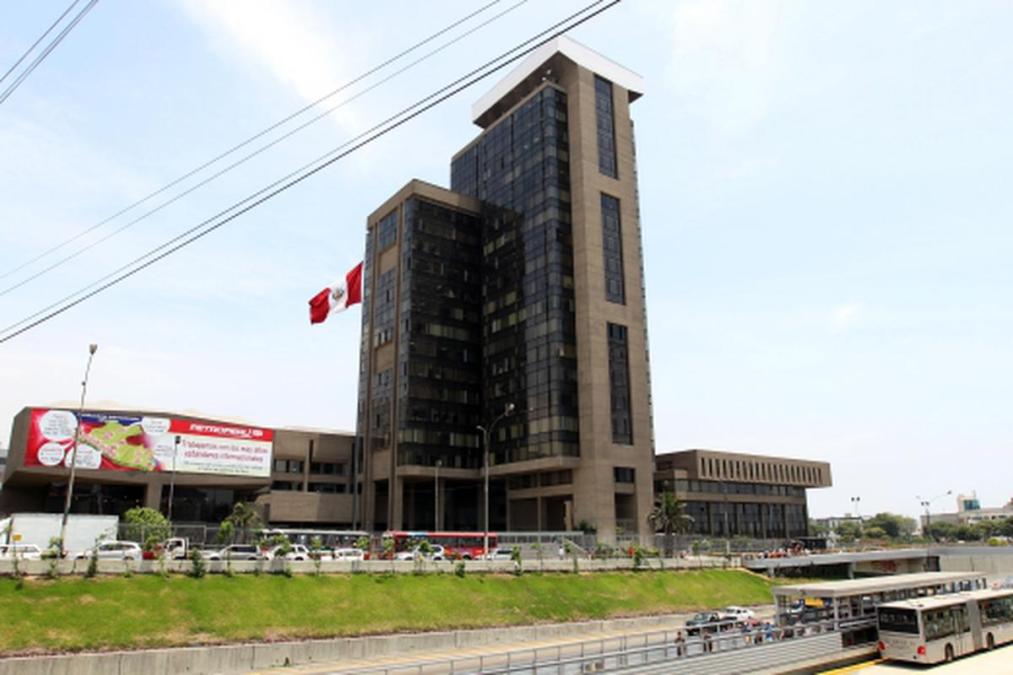
With the same argument that the president used Dina Boluarte In his last message to the nation, the head of PetroperúAlejandro Narvaéz, said that the future of the state is “promising and brilliant.”
In statements to successful, the official said that the public company will have this year a “equilibrium point” to re -register profits.
Narváez, who on previous opportunities has blamed the current situation of the state to the Central Reserve Bank (BCR), financial entities and former presidents of Petroperú, described as “irresponsible” the supported statements of analysts that refer to the current situation of the company.
In addition, as if it were a few thousand dollars, he assured that the loans made by the state to the oil company will be paid later, as well as all debts that have pending.
Data and not words
For analyst Anthony Laub, the statements of the head of Petroperú are away from reality. To begin with, he said that when talking about the largest participation of the oil company in the national market and it is mentioned that it reaches 30%, it is not taken into account that 10 years ago that percentage reached 50%.
“There is no technical or economic support in what he says. He blames everyone for the situation, but when he assumed the presidency of the Board of Directors, he knew that he assumed the asset and liabilities of the company. It is easy to do business, or rather, a disaster, when you know that it does not matter how inefficient you are in management, because the shareholders, where they are members of the Executive (Ministers of Economy and Energy and Mines), they will fix what you did.
On the other hand, and with figures in hand, the former manager of Finance of Petroperú, Fernando de la Torre, considered that Alejandro Narváez’s words about a promising future of the company “are just a desire”, because they are not in line with reality.
In that sense, he explained that the state’s debt ratio is 3.4 times its heritage, when in the case of the National Petroleum Company (ENAP) of Chile it is 0.02 times, and Colombian Ecopetrol 1.91 times.
To this is added, as detailed, that in December 2013, before the construction of the Talara refinery began, the working capital, which is money to cover operating expenses and short -term commitments, faced a deficit of US $ 52.9 million, but towards the end of 2024 reached US $ 1,945 million. “It is impossible to increase sales when I have a negative working capital,” he added.
More expenses
Meanwhile, analyst José Antonio Mansen, explained that after the agreement to export fuel to Ecuador, it is unfeasible to build a 60 to 70 kilometers pipeline to connect with the neighboring country, due to the operational capacity.
“We would have to build storage facilities, pumping and a parallel pipeline to the Northern Ramal pipeline to pump 200,000 barrels/day to station 5, and then modernize section II, to double the pumping volume of 95,000 barrels/day to 200,000 barrels/day, only to transport Ecuadorian oil to the Baóvar terminal,” he said.
Receive your Peru21 by email or by WhatsApp. Subscribe to our enriched digital newspaper. Take advantage of discounts.
Recommended video