HAVANA.- With restricted access and a strong police deployment Yesterday the trial was held against the former Minister of Economy and Planning, Alejandro Gilaccused of espionage, embezzlement and other crimes. Since the charges were announced, in the midst of Hurricane Melissa hitting the eastern provinces, the debate raised two core issues: Gil is a new scapegoat and it is not possible that he committed all the crimes he is accused of without the knowledge and support of other senior officials. Several voices requested a transparent trial, televised and with the presence of all the media, to which the Havana regime did not agree for “reasons of national security.”
On the street, the narrative of the blockade has progressively crumbled as the country’s erratic direction has become evident, recognizable in the implementation of failed economic policies that have left a very high human and material cost, giving all the spotlight to political-administrative corruption as the fundamental cause of Cuba’s shipwreck. The US embargo is a pretext for the international community. For the vast majority of Cubans, the problem is purely domestic: the entire island government is corrupt. He who does not run, flies; He who does not kill the cow, grabs its leg. This is what they expressed in a video made by Cubanet, an invaluable testimony of how much public opinion has become uninhibited in a context that continues to be repressive, but at the same time is marked by a terminal crisis that is reduced to two options: protest or death.
Since 1959, Cuba has had more or less skilled cabinets, with the occasional mediocre official. The team led by Miguel Díaz-Canel has been, by far, the worst qualified to take the reins of a poor, indebted and paralyzed country, with the supposed objective of changing what had to be changed. Alejandro Gil was a part of that cabinet until last year, today on trial along with other minor figures. In that cabinet, appointments and dismissals have taken place like someone who removes and puts buttons on a piece of clothing to see which one fits best to wear, because such has been the function of the so-called Díaz-Canel government: to wear, a colloquial phrase that translates, in practice, into pretending that one is governing while taking advantage of that temporary quota of power to realize ambitions that are impossible to afford with a minister’s or manager’s salary. That extra comes from corruption, influence peddling, embezzlement and other goings-on that today point to a single man.
All members of the political bureau and the Central Committee, and all the deputies to the National Assembly of People’s Power, could be accused of one or more of the charges against Gil. There are hundreds of officials squandering the public treasury, diverting resources for their personal projects without any kind of control, because corruption in the revolutionary state has always existed, but the country has never been in such deplorable conditions as those it shows today, a sign that the same crimes are committed, but without worrying about maintaining forms. This visible and painful debacle, added to the “explosions” in high places, has diverted the eyes of Cubans towards the true root of the problem, which has nothing to do with the blockade because the decision to apply the Ordering Task and the subsequent packages was not made in Washington, and everything that Miguel Díaz-Canel’s government has done has led to the accelerated impoverishment and lack of protection of the Cuban population.
Gil’s circus will come to an end and the verdict will be the one that determines the security of the state. Cubans know that this is a farce, that Gil’s head will roll so that higher ones do not roll, because someone has to pay for the pernicious drift of this country. But the problem will still be there because it is not just about numbers, nor about a minister who outgrew his position. It is about the system that catapulted him knowing that he was not going to measure up and that the consequences of such a negligent choice would be irreversible.
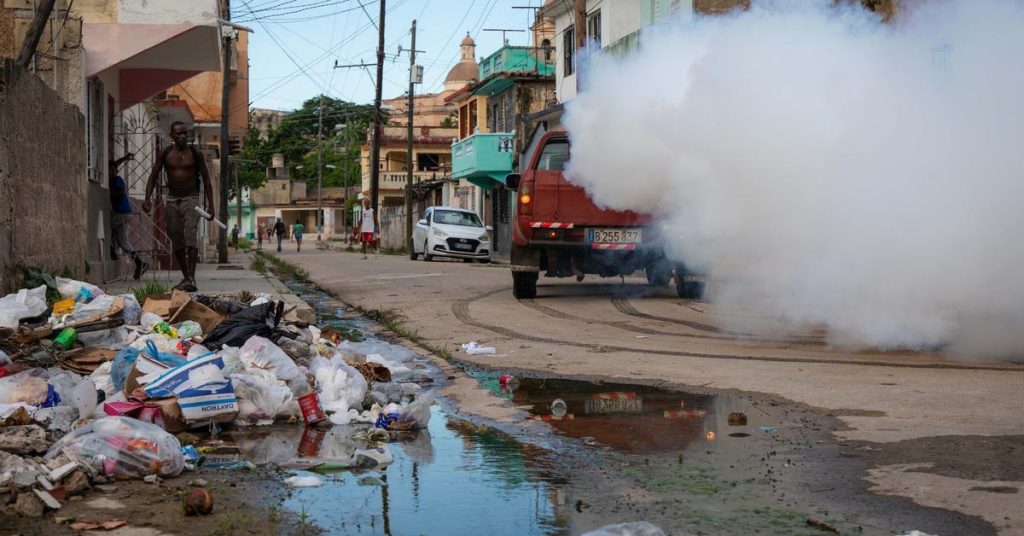
“Cuba is a decomposing body,” says one interviewee, and perhaps there is no cruder or more precise image to illustrate the reality of the island. The only hopeful thing among so much misery and discouragement, under the scourge of an arbovirus epidemic that spreads at the same time as hunger and the abandonment of entire communities in the eastern provinces, is to hear Cubans admit, without fear, that this government is useless, that this government steals, lies, justifies itself, evades responsibilities and always blames someone else. That every day more Cubans manage to identify and point out the real enemy, constitutes another step to articulate the national civic movement that can save us.