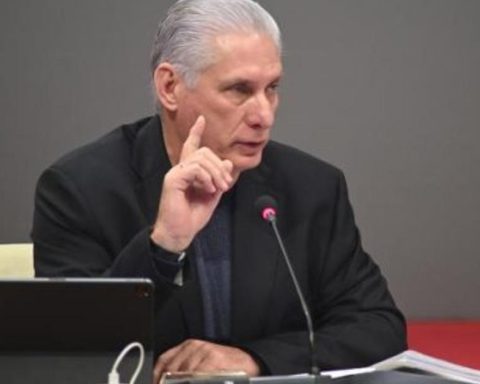
Madrid/Concern is greatest in Cuba about chikungunya and the high mortality rate in the case of children “because it is the first experience of exposure to the virus that generates an epidemic of great magnitude and extension,” said this Thursday María Eugenia Toledo Romaní, researcher at the Pedro Kourí Institute of Tropical Medicine (IPK). At the Cuban Television Round Table, the expert once again addressed a disease that “can really lead to death” and for which the country was not prepared.
“Although we had had reports of chikungunya back in 2015 in Santiago de Cuba, not in the magnitudes and in the behavior that it is having,” said the specialist, who warned that international outbreaks are the only reference at this time, although the Island has “a particular context that makes its population more prone.” According to Toledo, “attack rates range between 30 and 70%,” mainly because the population lacks any immunity. Furthermore, the Cuban population is very old and has numerous comorbidities, to which must be added the simultaneous circulation of other arboviruses, such as dengue.
Furthermore, the Cuban population is very old and has numerous comorbidities, to which must be added the simultaneous circulation of other arboviruses, such as dengue.
The expert also mentions a high internal and external mobility on the Island, although this point is less supported – the legal, technical and economic limitations themselves do not precisely lead to more movement of people than in other countries – but the “limitations in the effectiveness of control strategies, such as fumigation – whose effectiveness is not 100% – are relevant, to which are added socioeconomic, environmental and urban hygiene conditions.”
This aspect has been reported since the Government decided to communicate data and information on the epidemic: mosquito breeding sites, poor sanitation, lack of drinking water, improvised landfills, everything has combined with the failure of the anti-vector campaign, mired in its own labyrinth of lack of fuel, materials and human resources.
The outbreak of the epidemic is linked, as usual, to the resumption of the school year. Schools do not concentrate the population most at risk, but they are places that favor the spread. The authorities insisted this Thursday on the danger of chikungunya in infants and children under two years of age, where mortality, which according to most studies is low among the common population (close to 0.4%), rises to almost 3% when it affects children.
A large part of the program focused on them, which included among its guests Yamirka Montesinos Felipe, head of the national pediatric intensive care group, who tried to raise awareness among a population already distrustful of its health system about the importance of seeking medical help when the patient is less than three years old.
“The presence of the virus in the child, in the host, generates an immune response that in turn generates an inflammatory response. And when this inflammatory response is not well regulated by the host, potentially fatal complications can appear, given by manifestations that are expressed with dysfunction of different organs,” he warned.
The warning symptoms are, in addition to fever, skin lesions, joint pain, ulcers in the oral mucosa, conjunctivitis or intestinal manifestations, as well as a general tone of weakness. Children under 1 year old, mainly under 3 months old, and adolescents between 10 and 15 years old are the groups that are showing the worst evolution.
The doctor indicated that one of the worst presentations is that of children who “begin with intestinal manifestations and evolve very quickly to acute intestinal failure.”
The doctor indicated that one of the worst presentations is that of children who “begin with intestinal manifestations and evolve very quickly to acute intestinal failure. This occurs in the course of manifestations such as sepsis or shock septic, which is another way in which this disease presents in this age group, and even independently, as acute intestinal failure itself.” In addition, there are other atypical forms, ranging from cardiac to neurological dysfunctions.
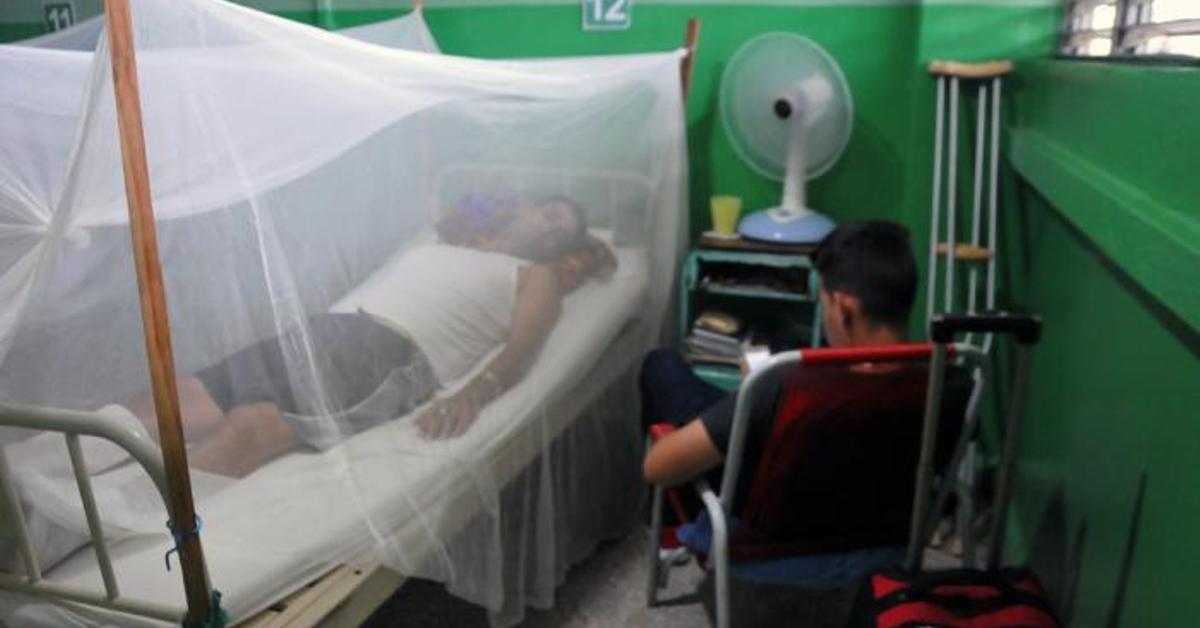
Montesinos has asked that parents be familiar with the protocol, not just doctors, since they are the first to identify the warning signs and act immediately “to avoid unwanted outcomes.” Although there are defined entry criteria for patients, in the pediatric age there is nothing to determine. “All children under 2 years of age are being admitted.” The other group for immediate hospitalization is patients with comorbidities.
Meanwhile, the doctor asked to protect the little ones from contagion. “It is not about isolating our children at home, but about using mosquito nets, and not going out at specific times of the day where we know that the mosquito is more frequent and can infect our children.”