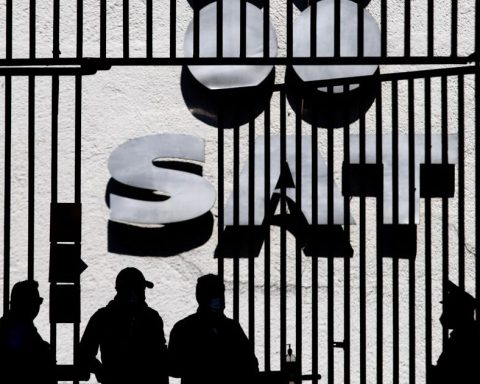
The SAT said this Tuesday that the protests have had a limited impact on taxpayer attention.
“Taxpayer attention was carried out normally in 155 of the 162 deconcentrated offices and Tax Service Modules, nationwide. Operation was only suspended in the offices located in Chihuahua, Chihuahua; Celaya, Guanajuato; Guadalajara Sur and Zapopan, in Jalisco; and in Mexico City, the Oriente and Sur headquarters,” he detailed in a statement.
The treasury assured that it keeps the channels of dialogue and cooperation open with its workers within a framework of respect and responsibility.
On Tuesday morning, authorities and workers held negotiations to try to reach an agreement that would allow them to return to work normally.
The Xochimilco headquarters was closed for part of Tuesday morning, however it is currently offering service.
“Not all demands can be met”
President Claudia Sheinbaum said this Tuesday that not all demands can be met of dissatisfied SAT workers.
“There are demands that cannot be met because there is no public servant who has private medical expenses, nor does the president (have),” said the federal president in her press conference.
Request document to the head of the SAT
SAT workers expressed their concern about the practice of favoritism in the assignment of positions in the agency, which are granted to people close to managers without taking into account performance, preparation or commitment to the institution.
In a statement they released their request list to be able to raise their protest.
1. Immediate application of the increase in the salary of personnel assigned from level P12 as well as retroactive payment.
2. Review and adjustment of work schedules, including the payment of overtime, to guarantee fair working hours, respecting the health and personal time of workers.
3. Individualized separation insurance benefit that was removed since 2018 since at the time of leaving the institution we do not have any settlement.
4. Major medical expense insurance was also removed in 2018 and no improvement has been seen in the ISSSTE health system.
5. Evaluation of collection goals with achievable and realistic criteria.
6. Implementation of policies to prevent and address workplace harassment, as well as ethical and respectful supervision.
7. Improving physical facilities, including the operation of elevators and bathrooms, and ensuring that cleaning companies provide adequate materials to maintain hygienic conditions.
8. Communication and labor participation channels that allow concerns and proposals to be expressed without fear of reprisals.