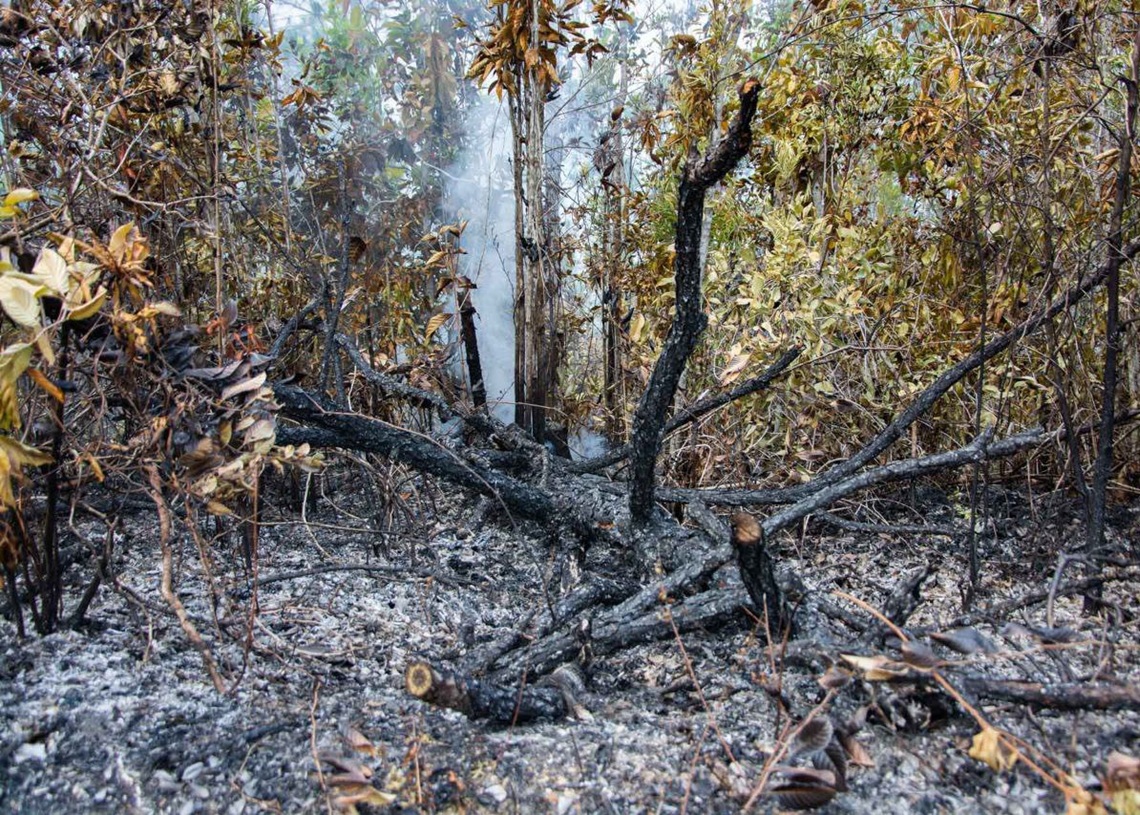
Three forest fires recorded in the first week of 2026 affected about 27 hectares of forests in Artemisa, Matanzas and Isla de la Juventud.
The Cuban Forest Ranger Corps (CGBC) confirmed that Artemisa had the greatest impact, with 25 hectares damaged, followed by Isla de la Juventud (1.20) and Matanzas (0.50), as reported by the national headquarters of the institution to the Cuban News Agency.
Although Pinar del Río has not reported any accidents of this type to date, the projections for the current season are not encouraging.
Pinar del Río enters the period of greatest risk of forest fires with unfavorable forecasts
At the threshold of the period considered to be the highest risk – between January and May – specialists estimate that this year between 85 and 112 fires could occur throughout the province.
The combination of a high accumulation of combustible material in the forests, the lack of rainfall and the deterioration of forest roads could cause damage of up to 4 thousand hectares, as explained to the newspaper. Granma Rubén Guerra Corrales, head of Fire Management and Management, of the CGBC.
Pinar del Río, the second most reforested province in Cuba, closed 2025 with around a hundred forest fires.
Of them, 13 were classified as large or very large and accounted for nearly 80% of the more than 9 thousand hectares damaged during the year.
The annual campaign runs from January 1 to May, coinciding with the dry period in the country, when risk conditions for the spread of fire increase. Agency authorities warned that the majority of fires continue to be of human origin. Negligence represents around 95% of cases.
Among the main causes are uncontrolled burning for various purposes, poorly extinguished cigarette butts, the traffic of vehicles without spark-killing devices, as well as illegal activities associated with hunting, fishing and the extraction of beehives.
The CGBC stressed that the campaign prioritizes a preventive approach, which includes organizational actions, preparation exercises, communication and coordination tasks with state agencies, social organizations and rural communities.
The authorities insisted on the need to raise the population’s perception of risk, strengthen control in agricultural areas and reinforce the work of inspectors in especially vulnerable areas.
Factors such as drought, the accumulation of combustible material and the effects of climate change reinforce the urgency of taking extreme measures to avoid environmental damage and significant economic losses.














