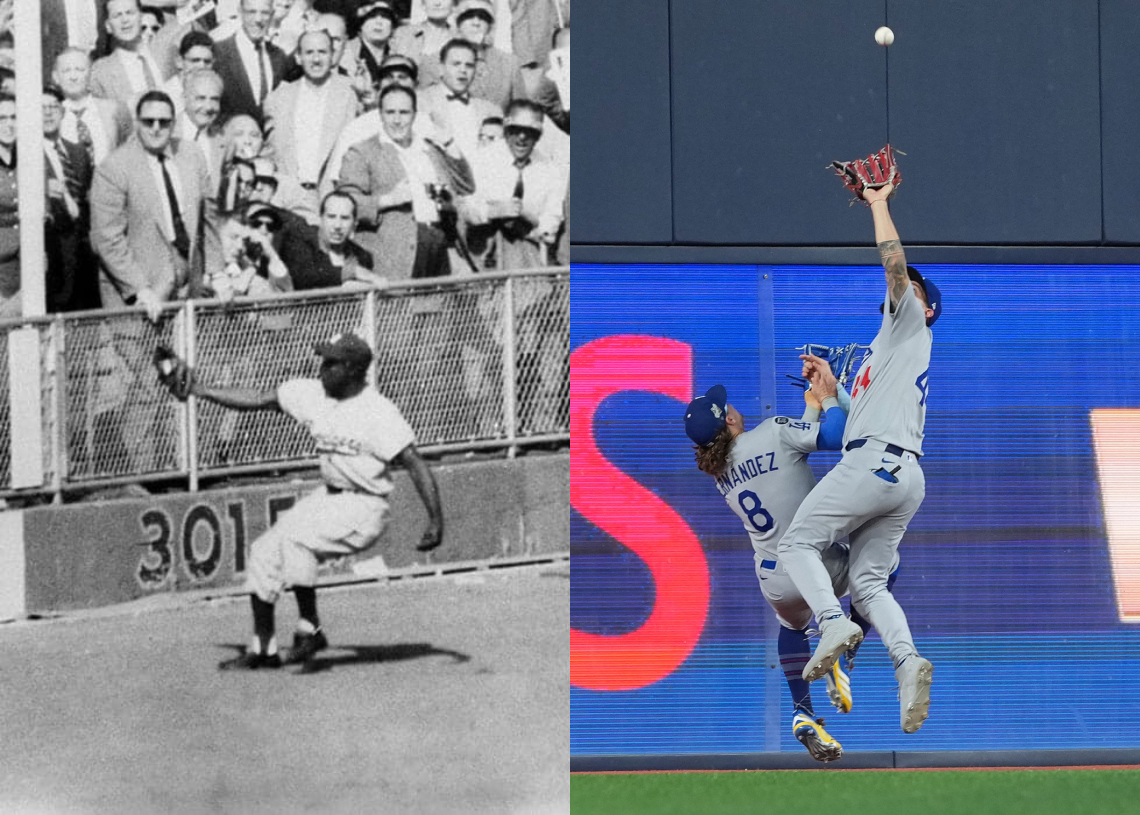
Watching the Major League World Series from Europe is quite a challenge. It necessarily involves getting up early, staying up late and, sometimes, waking up, linking one day to another, if the baseball gods decide that nine innings are not enough to define a winner. The most recent Fall Classic, between the Dodgers and Blue Jays, left a couple of duels of extrainnings which, between them, added up to ten hours and 46 minutes of play.
But if watching the World Series in the European early mornings is already a challenge, it would be difficult to find a qualifier to describe how complicated it can be to follow the MLB grand final from Arroyos de Mantua, in the western end of Cuba. Between blackouts, connection problems and few ways to access a live signal, enjoying a simple ball game seems almost utopian in a country where, paradoxically, this sport is national heritage.
That is why it gave me so much satisfaction to see a video shared on social networks by the digital creator José Raúl Díaz Barrios, precisely from the lands of Mantua in Pinar del Río. It’s just 32 seconds, but it’s enough to feel the Cuban’s baseball passion and his joy at celebrating the coronation, for the second consecutive season, of a son from that small town in the World Series.
The video in question was filmed in the crowded hallway of Andy Pagés’s house, in Mantua. That name has already been heard enough not to go unnoticed in any debate about the sport of balls and balls. strikes on the island. But, if someone still doesn’t know him, suffice it to say that he is only the second Cuban in history with two Fall Classic titles in his first two seasons. Before, only Orlando “El Duque” Hernández had managed to break into the best baseball in the world with such a firm step.
Pagés has made a lot of noise in recent months as a consolidated member of the almighty Dodgers, a franchise that already has the seal of dynasty after becoming the first team with consecutive crowns in the 21st century. The simple fact of playing daily in such a demanding team would be merit enough, but the turnaround player went further: he hit 27 home runs, 55 extra-base hits, drove in 86 runs and had an OPS of .774, among the best on the team during the regular season.
However, in the playoffs His luck went wrong. In 55 trips to the plate he only had four hits, struck out 11 times and his only extra-base hit was a double. The individual fall to hell was felt even in the bones by the return player: “These are things that happen, the bad moments of baseball. Unfortunately it was my turn in the postseason. But I am clear that I will be here for many more years and I hope to give a different version,” he said after the Dodgers’ victory.
Despite Pagés’ offensive decline, in Mantua they celebrated the Angelenos’ title as if it were one of the Vegueros, recognizing the team’s strengths in due measure. “We have to make a pedestal for that Yamamoto,” someone was heard saying on the porch of Andy’s house, on the ground floor, in clear allusion to the pitcher Yoshinobu Yamamoto, elected Most Valuable Player of the World Series.
The Japanese scored three victories in the Fall Classic, all as visitors, something unprecedented in the history of these events. But in baseball, even the brightest star needs the support of his teammates and, in Yamamoto’s case, he would not have been able to win without the exceptional defensive interventions of Venezuelan Miguel Rojas and Cuban Andy Pagés.
The man from Pinar del Río was not a starter in the seventh game, but in the ninth inningwith the bases loaded, the game tied and one out, manager Dave Roberts decided to send him to center field. What came next bordered on the miraculous: Rojas hit a hit on the rubber by millimeters and, immediately afterwards, Pagés caught a very long ball between left and center field to keep the Dodgers alive.
“He is the manager of the best team in baseball. He is here for a reason. His intuition was impressive,” Andy said about Roberts’ decision to send him to the diamond just before the decisive play, a defensive gem in which the Cuban exhibited his athleticism by running 121 feet to catch the ball.
Andy Pagés-Sandy Amorós: the Dodgers’ Cuban connection
For the island’s most loyal baseball fans, Pagés’ catch was reminiscent of Sandy Amorós, who also saved the Dodgers in game seven of the 1955 World Series against the Yankees. In that match, the Bronx Bombers lost 2-0 and were dominated by pitcher Johnny Podres, until they reacted in the sixth inning.
Who are the only Cubans who have gotten the last out of the World Series?
Billy Martin and Gil McDougald reached base and put the tie in circulation when it was the turn of the great Yogi Berra, already recognized three times as Most Valuable Player of his circuit.
The Dodgers could not have been facing a more adverse scenario, but just a few minutes earlier manager Walter Alston had made the move that would change the fate of the game. At the beginning of the inning, he placed Sandy Amorós in left field, and that decision—risky and providential—ended up saving the team’s life, although with a high dose of suspense.
The Cuban patrolman had positioned himself charged towards the center field, aware that Berra, a left-hander, used to take good advantage of batting for his hand. However, with his usual mastery, the Yankees catcher read the rivals’ defensive formation and pushed the ball close to the left field line.
Amorós had to run about 60 yards to the deepest left field. For a moment it seemed like he wouldn’t make it, but at the last minute he stretched out his glove, caught the air ball and immediately threw to the cutter, Pee Wee Reese, who completed an unforgettable double play. On the mound, Johnny Podres breathed a sigh of relief, recovered from the shock and retired 10 of the next 13 batters he faced, to seal the first World Series title in Dodgers history.
Seventy years after that legendary action, there could be no better tribute than a very similar fielding, this time starring Andy Pagés, giving extra life to the Dodgers on their way to a new championship.