The last report of the UN Determination Mission on Venezuela exposes a panorama of political repression and systematic human rights violations. Óscar Murillo, Coordinator of Prova, warns that “the Venezuelan people are going through the most difficult stage of political persecution in contemporary history”
The most recent report of the International Mission for the Determination of Acts of the United Nations re -place Venezuela in the center of the Human Rights debate. The investigation, presented in Geneva, details a pattern of political persecution and documents forced disappearances, torture and sexual abuse against detainees. Óscar Murillo, General Coordinator of Prova, warns that the report reflects not only unprecedented institutional deterioration, but also “A balance of pain and suffering in Venezuelan families.”
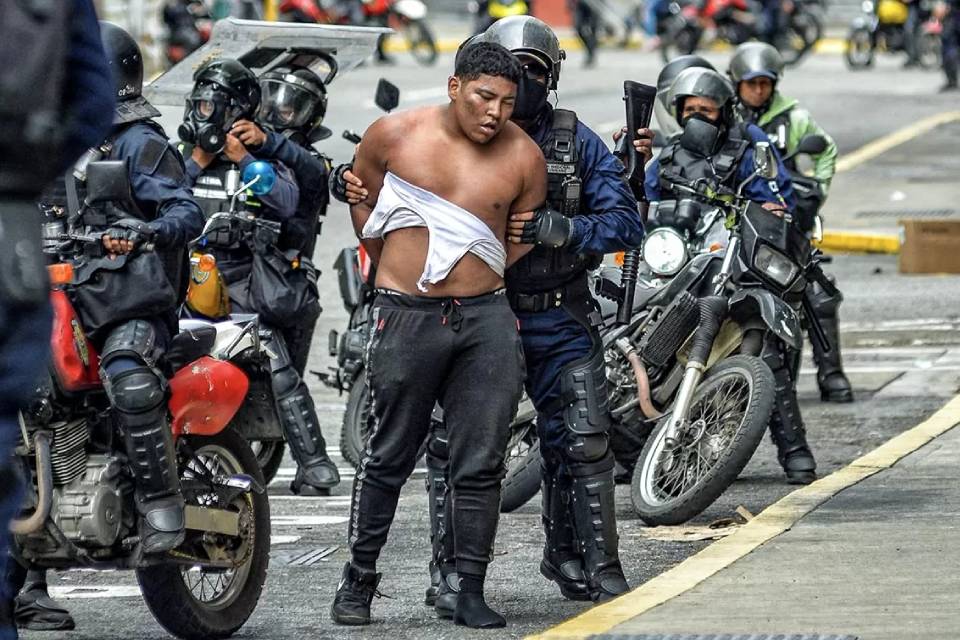
Murillo emphasizes that the document arrives in a context marked by the crisis of legitimacy after the presidential elections of July 28, 2024. “The lock of the electoral output has led the group in power towards an increasingly authoritarian process, which ends up restricting freedoms and deepening the human rights crisis”he explains. The report confirms what national NGOs have denounced: that in Venezuela there is a pattern of crimes against humanity, particularly political persecution.
The turn after July 28
The specialist recalls that in previous protests cycles, as in 2014 or 2017, despite arbitrary arrests it was still possible for defenders to exercise some form of legal representation. Now, on the other hand, justice appears as an active gear of repression. «The Judiciary, which should protect the citizen, It was activated to attack it »says Murillo. This instrumentalization, he adds, led to the Inter -American Commission on Human Rights to affirm that in Venezuela a “state terrorism occurs.”
The UN Mission Report documents 25 deaths in the post-electoral context of 2024, five of them in state custody. It also denounces 22 cases of sexual violence in detention centers and at least 30 possible forced disappearances. For Murillo, the most shocking record is the finding that two of the deaths in prison were due to lack of medical care. «The State is solely responsible for those who are under their custody. That a person dies due to negligence reveals the level of institutional degradation, ”he says.
The provision coordinator, interviewed in Night d of Talcualhe insists that these practices not only seek to punish the dissident, but to sow collective fear. «The Venezuelan people looked for a peaceful exit, voted, and the answer was repression. What has been wanted is to crush hope »holds.
Foreigners as political hostages
One of the most striking aspects of the report is the number of foreigners detained in Venezuela. The mission documents more than 80 cases, and the government itself has admitted between 120 and 150 arrests of people with different nationalities, under accusations of conspiracy. For Murillo, this confirms a pattern: “There is a use of these arrests such as negotiation sheets, a kind of political hostages.”
Criticism, in that sense, the silence of some countries. «Colombia has the greatest number of prisoner citizens in Venezuela and yet it was silent in the Human Rights Council. That cannot happen when the dignity of people is at stake, ”he says.
And he warns that several of the detainees have not even had access to consular attention, which constitutes a flagrant violation of international law.
*Also read: asphyxiation and electric shocks: thus tortured 220 adolescents detained in protests
A clearer dialogue in Geneva
The presentation of the report in the Human Rights Council was followed by A debate in which several countries expressed concern. Murillo highlights the change of tone: «This time there was more clarity and more direct language. Norway denounced the complicity of the judicial system and the Ombudsman’s Office in the violations, something that was rarely said aloud«. He also mentions Brazil, who adopted a more critical position than on previous occasions, and Spain, which he claimed for his citizens arrested.
In contrast, the Venezuelan delegation was limited to disqualifying the work of the mission, accusing her of using “Invented testimonies” and “doubtful sources”. For Murillo, that reaction was predictable. «They condemn the messenger because they cannot refute the facts. And if the mission has not entered the country it is because the government itself prevents it, ”he explains.
PENDING MEMORY AND JUSTICE
Beyond the complaint, the provision coordinator underlines the importance of these reports to build memory. «The victims say it clearly: we do not want this to happen again. For that you have to narrate what happened and leave it registered. Memory is the basis of justice«, He says.
It recognizes, however, that the international community has not yet managed to articulate an effective strategy to stop authoritarian regression in Venezuela. «It is the most serious democratic crisis that South America has seen in 50 years. If it is not attended, a very dangerous precedent can sit for the region, ”he warns.
In a country where institutional counterweights have collapsed, the voice of the victims and the echo of international organizations appear as the few resources to keep alive the requirement of justice. And in that field, Murillo recalls, “the Venezuelan people are not claudicating or resigned: it continues to raise their voice in the most difficult stage of political persecution that contemporary Venezuela has lived.”
https://www.youtube.com/watch?v=Z37LPPNOPPM
*Journalism in Venezuela is exercised in a hostile environment for the press with dozens of legal instruments arranged for the punishment of the word, especially the laws “against hatred”, “against fascism” and “against blockade.” This content was written taking into consideration the threats and limits that, consequently, have been imposed on the dissemination of information from within the country.
Post views: 205